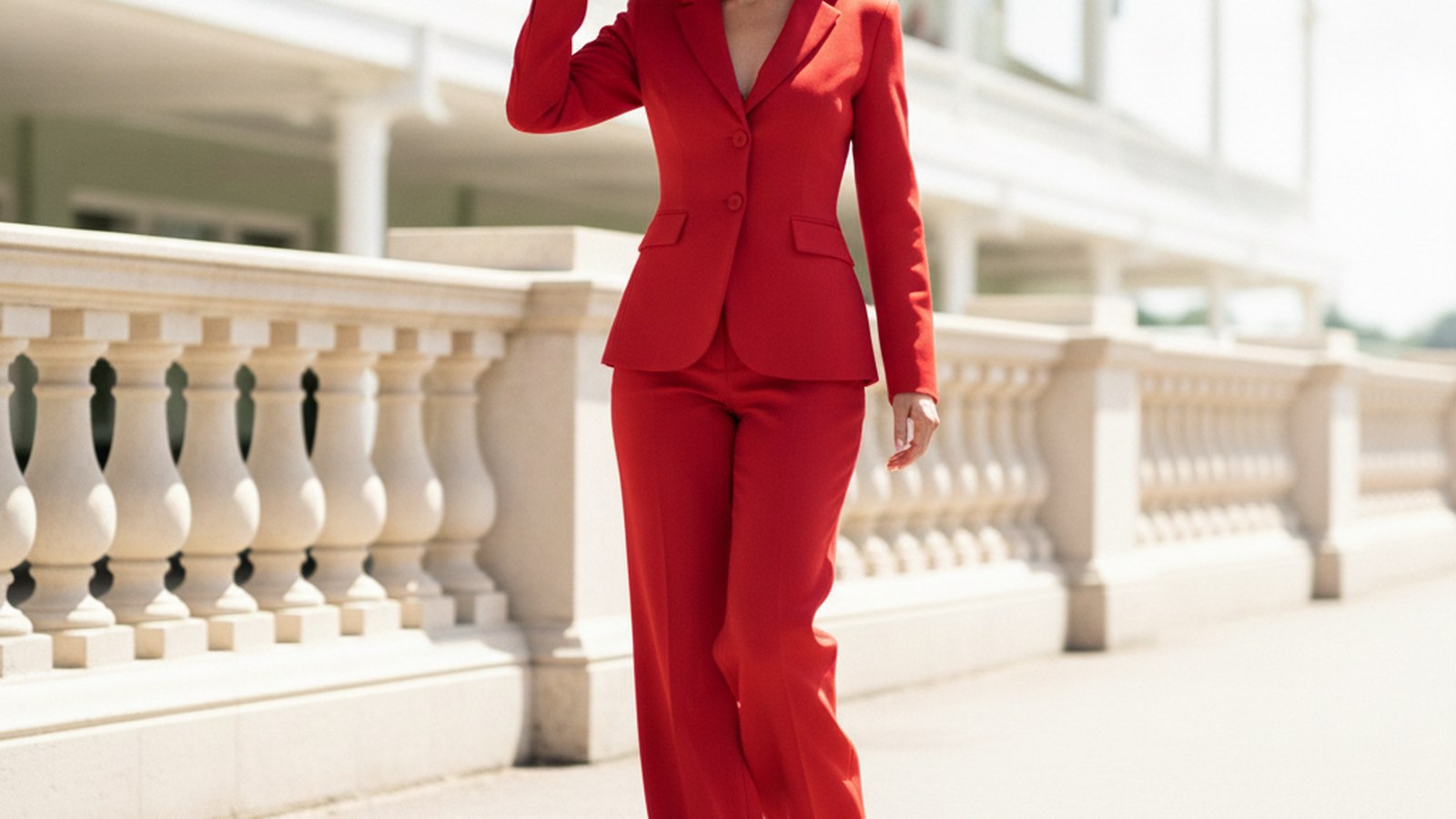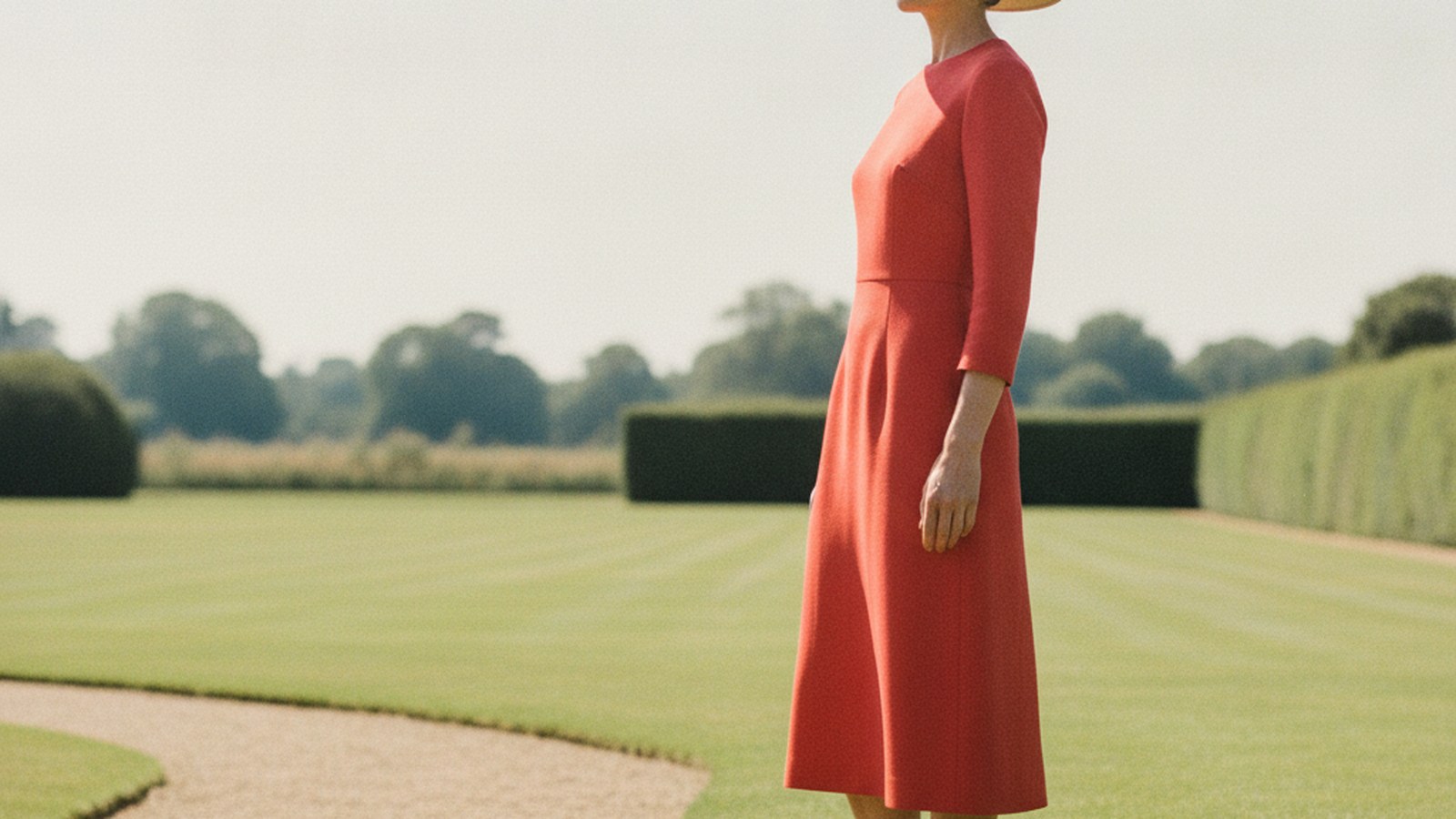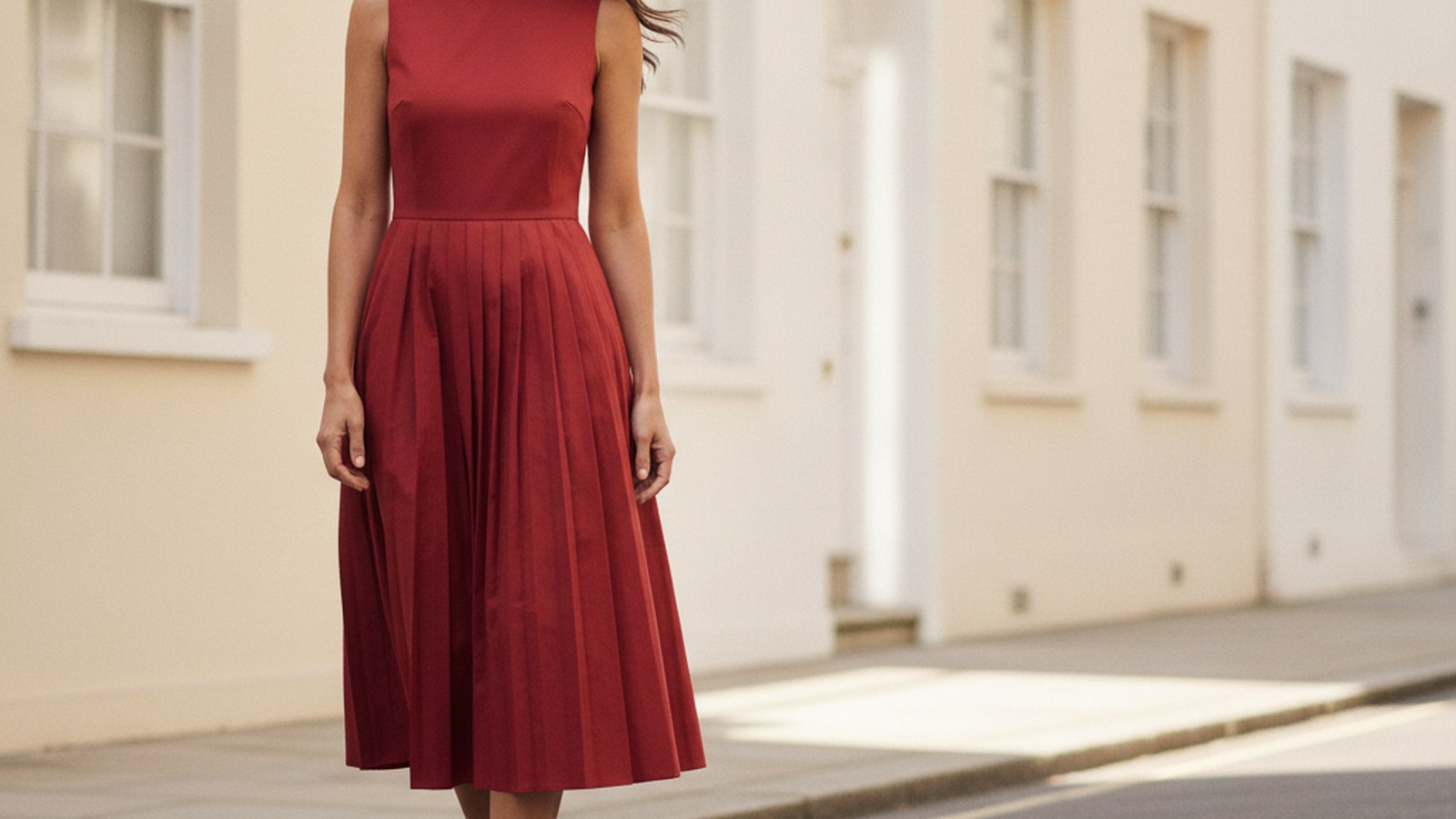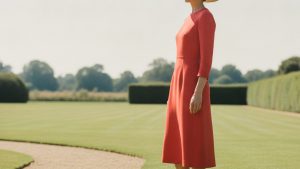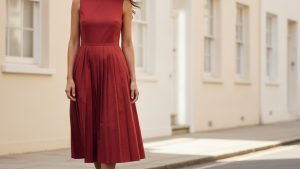
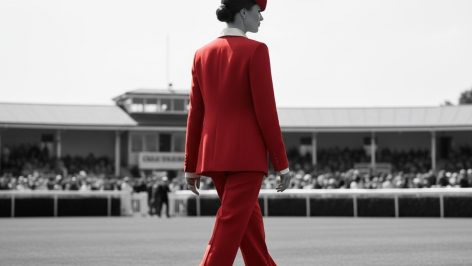
Before any styling advice, the rule that decides everything: a trouser suit is not permitted in the Royal Enclosure. If your badge says Royal, you need a dress or a skirt suit, full stop. If you hold a Queen Anne, Village or Windsor Enclosure ticket for Thursday 18 June 2026, a full-length, matching-colour trouser suit is entirely compliant, and arguably the most interesting thing you can wear on Gold Cup Day.
The 2026 Royal Ascot Handbook, with creative direction from Daniel Fletcher and Erin O’Connor fronting the campaign, has named Bright Tomato the inaugural Colour of the Year, with Ladies Day singled out as the day to wear it. That gives the trouser suit a genuine news peg this season, and a real risk: head-to-toe Bright Tomato in tailoring can tip into costume very quickly. Here is the formula that keeps it on the right side of editorial.
The enclosure rule, in one line
Queen Anne, Village and Windsor allow trouser suits provided the trouser is full length and the jacket and trouser match in colour and fabric. Royal does not. If you are planning a suit, double-check the badge stapled to your invitation before you do anything else. Once you have confirmed Queen Anne (which is where most readers with a smart suit instinct end up), the rest is a question of proportion, fabric and one millinery decision.
Why wide-leg is a code question, not just a style one
The single biggest mistake is wearing a slim or cigarette trouser under a blazer to Ascot. It reads as a Tuesday meeting in Holborn, regardless of how good the colour is. A wide-leg trouser, breaking just above the toe of a block heel, has the volume that occasion millinery demands from the bottom half of the look. It also balances the strong shoulder line of a tailored jacket, which a narrow leg cannot.
Joseph cuts the best wide-leg suiting at its price point, with a fluid drape that flatters most heights. Reiss sits at the accessible-investment end and currently offers a tomato-adjacent red in its suiting range; Whistles, Hobbs, M&S and Next have all extended their occasion suiting for SS26 into warm reds that will pass for Bright Tomato in natural daylight. For a true colour match, expect to pay between £180 and £350 on the high street, with M&S sitting closer to £80 to £120 if you are happy with a slightly cooler red.
Fabric is the difference between occasion and office
The hierarchy for an Ascot suit, in order of credibility: silk or silk-blend crepe, then lightweight linen, then cotton poplin. Anything heavier (worsted wool, structured polyester) will photograph flat and feel punishing by 2pm if June behaves like June. A linen suit needs to be fully lined, otherwise the trouser knee will crumple before the first race and the jacket will look slept-in by the parade ring.
Silk crepe is the most forgiving choice. It holds a clean line, it does not crease in a car seat, and the slight drape softens the tailoring just enough to read as Ladies Day rather than corporate.
The Bright Tomato dilution formula
Head-to-toe Bright Tomato, in a single saturated tailored block, is the costume trap. The way out is straightforward: break the colour with one neutral. The stylist’s version goes like this.
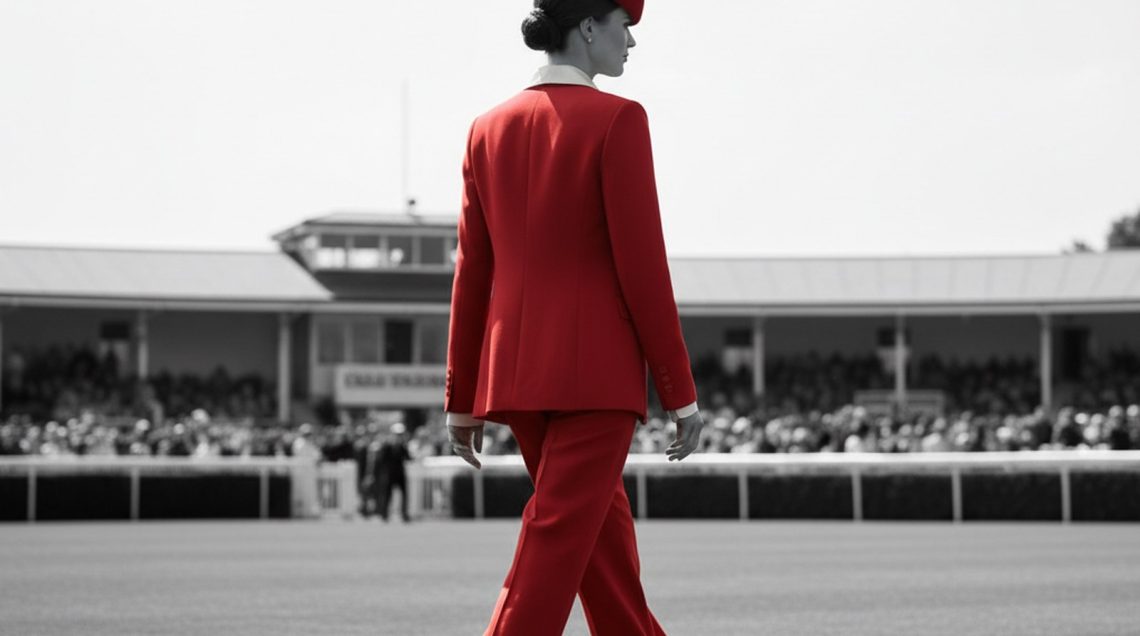
- Option one: Full Bright Tomato suit, ivory or chalk silk shell blouse underneath, bone or nude block heel, and a neutral hat with a single tomato detail (a ribbon, a feather, a contrast band).
- Option two: Neutral suit in ecru, warm beige or stone, and let Bright Tomato carry the entire millinery moment. A structured tomato percher with the right scale will do more work than a full red ensemble.
The contrarian point worth stating plainly: a tomato suit photographed with a neutral hat is more interesting than a tomato dress under a tomato hat. The suit breaks the matchy formula that has dominated Ascot coverage for a decade, and that is precisely why it lands well on the rail and in pictures.
If you find this kind of enclosure-specific styling logic useful, our weekly Mūsmūs newsletter sends one tightly edited outfit formula every Friday morning, built around the British social calendar and the high street pieces actually worth buying. Sign up to get the rest of our 2026 race-season edits, including Ladies Day shopping picks under £200, straight to your inbox.
The blouse trap nobody mentions
Whatever sits under the jacket has to comply with the same enclosure rules as a dress. In Queen Anne, that means straps of at least one inch, no spaghetti straps, no strapless. A silk camisole with hair-thin straps fails the rule even if it never leaves the jacket, because you will inevitably take the blazer off in the Bandstand.
Safer choices: a silk shell blouse with proper straps, a fluid silk poloneck, or a high-neck sleeveless shell in matte silk. M&S and Arket both stock versions in the right neckline shapes around £45 to £85. Avoid anything sheer at the bust; jackets come off for photos.
Hat versus fascinator, when you are wearing a suit
A fascinator is technically compliant in Queen Anne, but it is the wrong call on a blazer. A blazer has a strong horizontal shoulder line and a sharp lapel; a small fascinator floats above it and looks undersized, while a sweeping wide-brim that tips forward visually fights the lapel. The proportionally correct answer is a structured percher or pillbox, sitting forward on the head, with enough sculptural volume to anchor the silhouette.
This is the millinery logic Princess Beatrice tends to apply when she takes a tailoring risk at Ascot: a considered, non-literal headpiece that meets the jacket on its own terms rather than competing with it. Emily London, Jane Taylor, Harvy Santos and Rachel Trevor-Morgan all appear in the 2026 Handbook and all make structured pieces in the right scale; for the high street, the John Lewis millinery concession and the M&S occasion hat range will give you something compliant between £45 and £150.
A jockey silks twist, if you want one
The 2026 Handbook leans on jockey silks as a visual reference, which opens up one slightly riskier styling move: a colour-blocked suit (tomato jacket, ivory trousers, or the reverse) reading as a deliberate two-tone rather than a mismatch. It is interesting, but it sits on the edge of the matching-colour rule. If you are not comfortable arguing it with a steward, go monochrome tomato with the ivory blouse formula above. It is unambiguous, it photographs well, and it leaves nothing to interpretation at the gate.
The full Queen Anne Enclosure formula
- Suit: Wide-leg, fully matching, silk crepe or lined lightweight linen, Bright Tomato (or a neutral if the hat is doing the colour).
- Blouse: Ivory or chalk silk shell with one-inch straps minimum, or a fluid silk high-neck.
- Shoe: Block heel in bone, nude or ivory. LK Bennett’s Sloane court in a block heel is the reliable Berkshire-grass-and-gravel answer.
- Bag: Small structured top-handle or box clutch in matching neutral; nothing that swings.
- Hat: Structured percher or pillbox, forward-tilted, scaled to the lapel.
For visual reference, this pin shows the silhouette and scale of trouser-suit-and-hat at Ascot in practice:
Your one action this week: book a fitting at the suit brand you have shortlisted and try the jacket with the exact blouse and hat scale you plan to wear. If the lapel and the headpiece read as one considered outfit in the mirror rather than two separate decisions, you have it. If they don’t, change the hat before you change the suit.