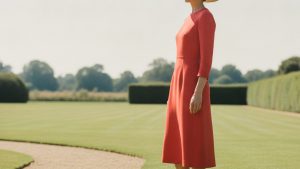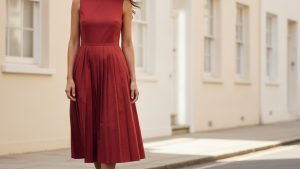
The volume-at-the-hip silhouette is the structural story of summer 2026, and it is genuinely directional in a way most “trend” pieces overstate. Here is the honest version: it flatters narrow shoulders, straighter frames and long torsos beautifully, complicates an already full hip, and lives or dies on where exactly the volume begins. Below, a body-honest guide to the proportions, the fabric truth for British weather, and a three-piece formula that works from the Royal Enclosure to a Cotswolds garden party.
What the trend actually is (and the pannier-versus-puff distinction nobody explains)
On the runway, Simone Rocha pushed the silhouette to its architectural extreme, using literal panniers and bustles, a historical structure that pushes volume outwards from the sides rather than circling the body front to back. That is why the look reads so dramatic in editorial: the hip is not just full, it is engineered. A handful of other houses showed softer iterations, from a gathered leather hip on Chloé to structured balloon shapes at Stella McCartney and a clutch of European labels working with crisp poplin and taffeta.
The high street has translated this into something quite different: a puff or balloon midi skirt, a hip-yoke A-line, or a drop-waist dress that gathers below the natural waist. Understanding the gap matters, because the runway version creates hips through sculpture, while the high-street version creates them through gathering. Both can work; the rules are not the same.
Which body proportions it genuinely flatters
The blunt version, because the “surprisingly wearable” framing in most coverage is not specific enough to be useful.
- Narrow shoulders, straighter frame, no defined waist: this is the trend’s natural home. Hip volume creates the illusion of curve where there isn’t one, and balances a wider shoulder bone structure that has been styled around for decades.
- Long torso, shorter legs: works, with a caveat. The volume needs to sit at the true hip (around the hip bone) rather than dropping to mid-thigh, otherwise the leg shortens further.
- Hourglass: handle with care. The silhouette can read as costume on a body that already has the curve it is engineering. If you want in, choose a version with a deeply fitted hip yoke (not a gathered waistband) so the volume reads as a design line rather than added bulk.
- Full hip or pear shape: this is the one nobody says honestly. Adding architectural volume to an already full hip rarely flatters. A drop-waist with vertical pleats can work; a balloon hem at the widest point of the thigh almost never does.
- Petite (under 5’4″): approach with proportion in mind. A puff skirt that hits at or below the knee can shorten the leg by a third visually. The fix: a knee-grazing or just-above-knee hem, a fitted top tucked in, and a pointed-toe kitten heel to reclaim length below the volume.
The ratio rule that separates flattering from frumpy
The single most useful technical point: the flattering version of this trend needs at least ten to twelve centimetres of clean waist definition before the volume begins. A skirt that flares from the natural waist adds bulk to the midriff. A skirt that drops to a fitted hip yoke (sometimes called a basque or a dropped waistband) and only then gathers reads as architectural rather than rounded.
When you try one on, check three things in the mirror: where does the volume start (true hip, not waist), how deep is the structured panel above it (deeper is more flattering on most frames), and does the hem finish at a slim part of the leg? If the answer to all three is yes, the trend is working for you.
Fabric truth for the British summer
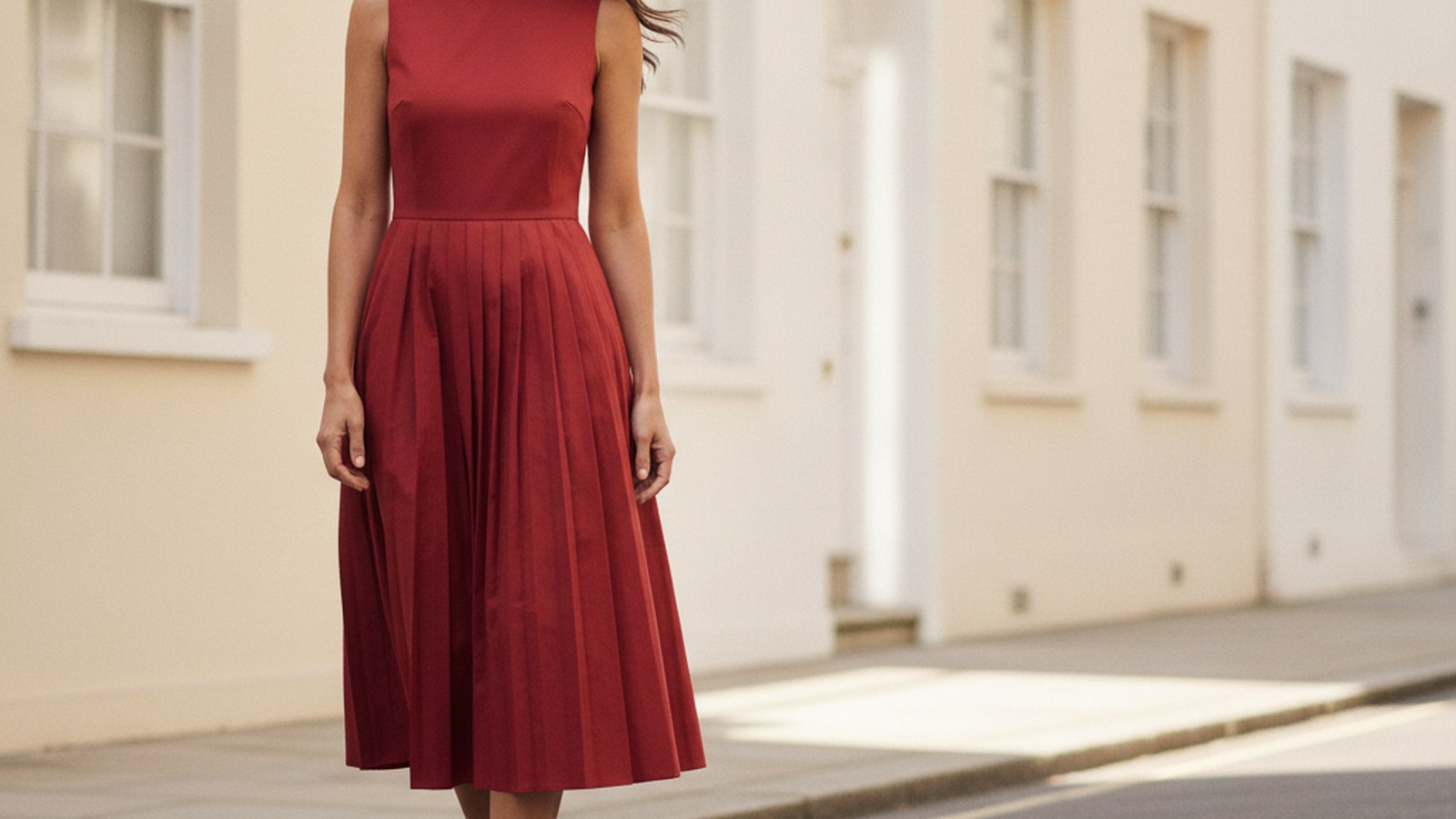
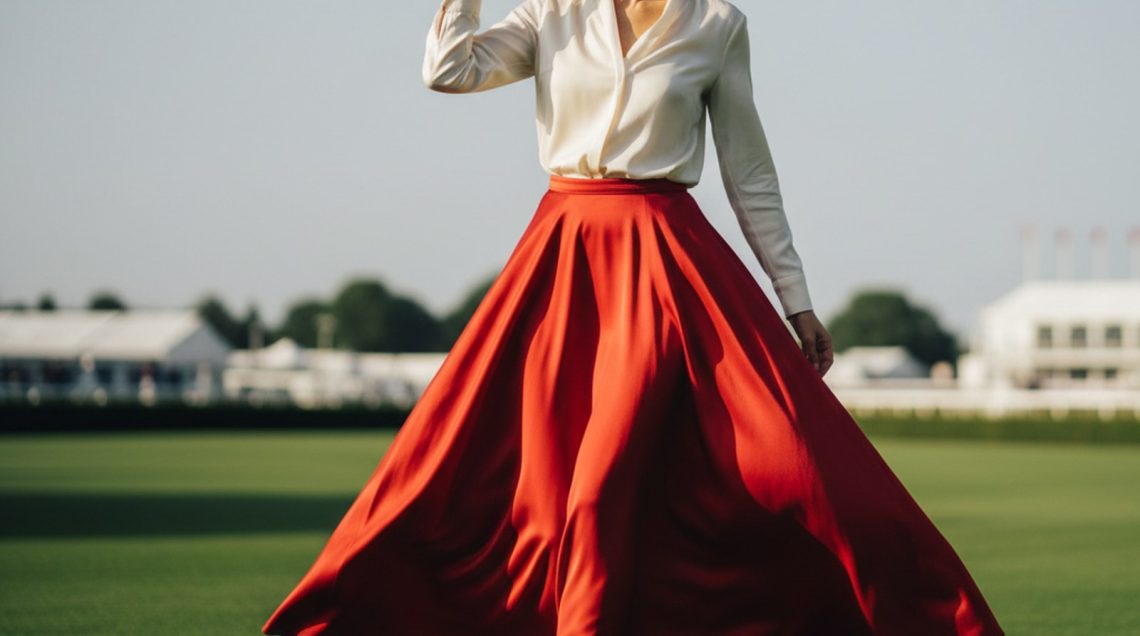
A voluminous summer maxi skirt outfit pin showcasing the hip-volume silhouette central to the article’s body-honest styling guide.
Editorial loves tulle, organza and taffeta. These photograph beautifully and behave badly in a British June. Organza collapses in drizzle and inflates in wind; taffeta crushes the moment you sit on a picnic blanket.
The smarter real-life carriers of this silhouette are structured cotton poplin and a medium-weight linen-cotton blend. Both hold the puff shape, both move with the weather rather than against it, and both photograph well in flat British daylight. M&S have a Pure Cotton Poplin midi at around £30 with pintucks and a shirred hip detail that gets the silhouette right at entry-level price. Arket and COS do the architectural minimalist version in heavier cottons. For an investment piece, Reiss and Me+Em both currently cut hip-volume midis with the deeper yoke construction that actually flatters.
If you want this kind of body-honest trend decoding in your inbox before the rest of the high street catches on, our weekly Mūsmūs newsletter does exactly that: one trend pulled apart properly, one shop-the-look across UK price tiers, and a Friday styling formula you can wear on Saturday. Sign up, and we will see you in your inbox.
The three-piece formula that works from Ascot to a garden party
One outfit logic, scalable across the British summer event calendar.
- Fitted top: a fine-knit shell, a tailored sleeveless top, or a tucked-in poplin shirt with the sleeves rolled to the elbow. The top must hug the waist; an oversize jumper kills the silhouette by erasing the contrast volume needs.
- Hip-volume piece: a structured midi with a dropped yoke, or a drop-waist dress where the gather sits at the hip bone rather than mid-thigh.
- Pointed-toe flat or low kitten heel: a chunky sandal or a trainer makes the ankle area visually heavy and collapses the line you have just built. A pointed toe elongates the leg from below the volume; a block heel under four centimetres adds polish without committing to a stiletto, which is unwise on Ascot grass anyway.
Wearing it to Royal Ascot Ladies Day, 18 June 2026
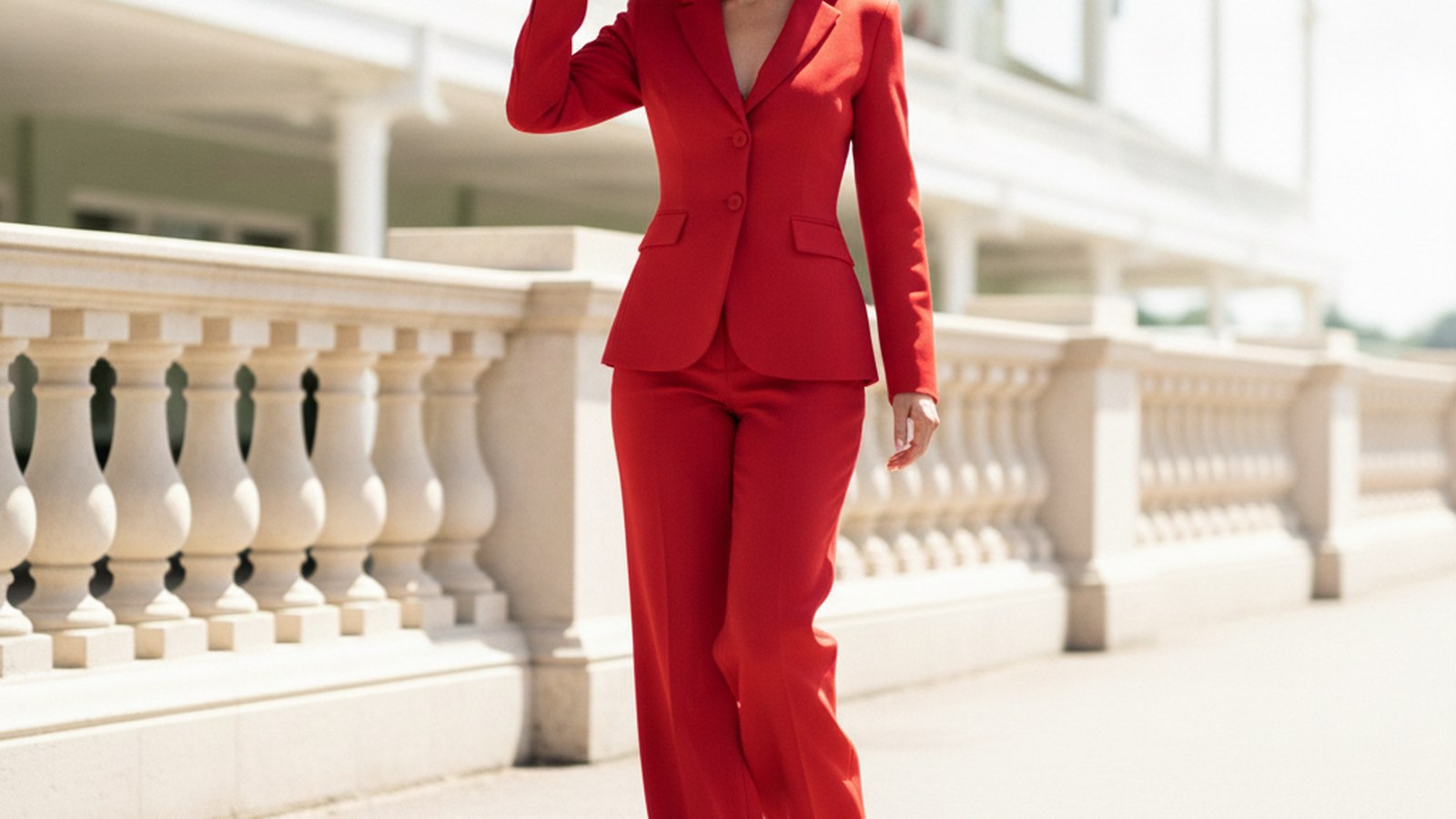
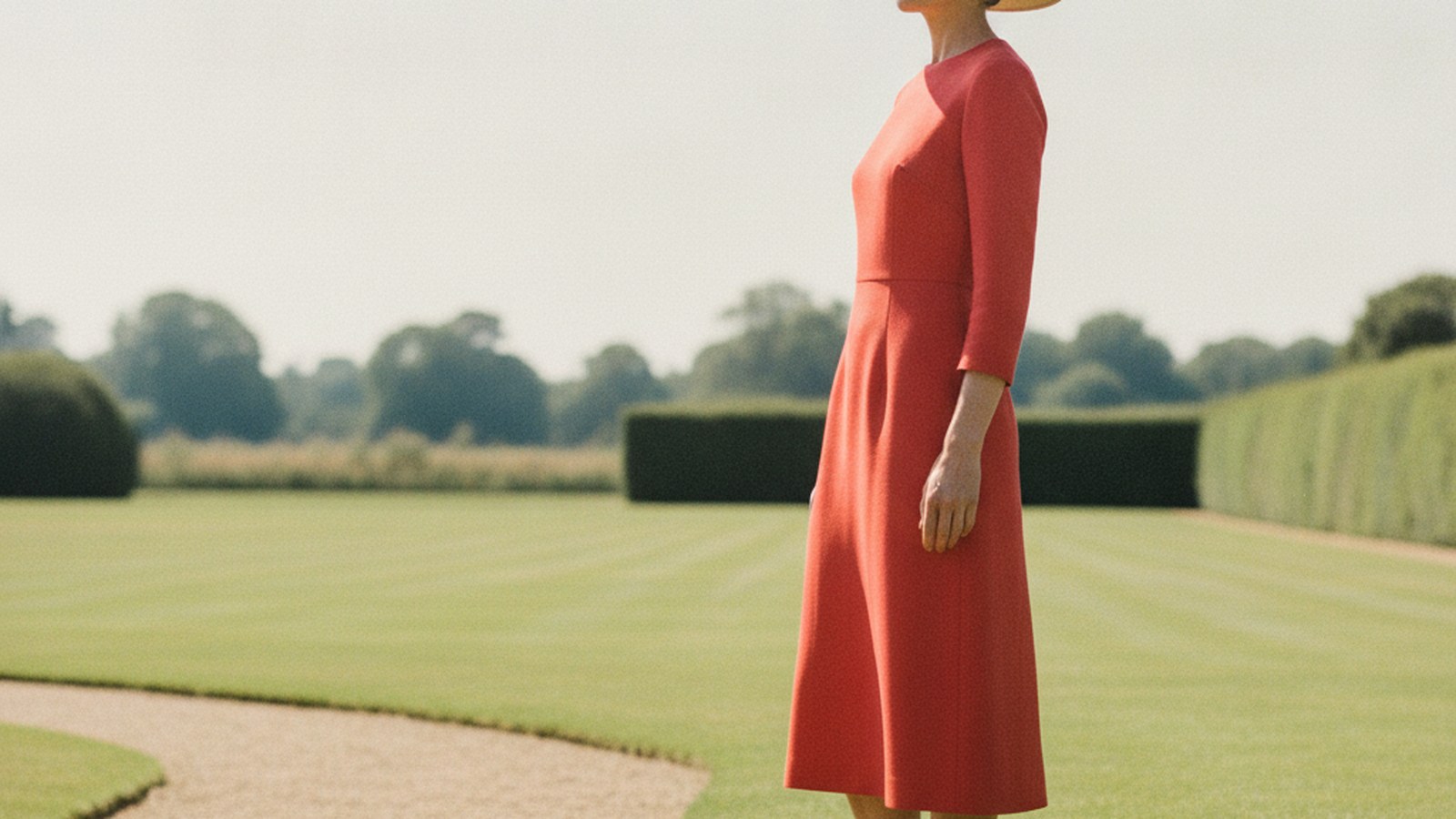
Royal Ascot runs from 16 to 20 June 2026, with Ladies Day (Gold Cup Day) falling on Thursday 18 June. Creative director Daniel Fletcher has named Bright Tomato the inaugural Colour of the Year, with racegoers encouraged to embrace it on the Thursday. The shade has its own quiet British provenance: Catherine, Princess of Wales wore an Alexander McQueen dress in the same scarlet at her last Royal Ascot appearance in 2023, a styling moment that has become the anchor for how this colour reads in an Ascot context.
Royal Enclosure rules are non-negotiable. Dresses and skirts should fall just above the knee or longer; straps must be at least one inch wide; strapless, off-the-shoulder and halter necklines are out; hats are required (a headpiece is permitted only with a solid base of four inches or more).
The trend-aware Ascot outfit: a structured hip-yoke midi in Bright Tomato silk or medium-weight crepe, hem just below the knee, fitted sleeveless bodice with one-inch straps, paired with a sculptural wide-brim hat in tonal red or ivory. A block-heel slingback (Ascot involves grass and gravel; a stiletto is a tactical error). For Queen Anne Enclosure or a garden party afterwards, swap the formal hat for a smaller structured headpiece and lose the jacket. The same dress, dressed down, takes you to a Cotswolds lunch the following weekend.
Where to shop it, by price tier
| Price tier | Where to look | What to ask for |
|---|---|---|
| Entry (£30 to £80) | M&S, Nobody’s Child, Boden | Pure cotton poplin midi with pintucks or a shirred hip; A-line with darting rather than gathered waistband |
| Mid (£90 to £200) | Arket, COS, & Other Stories, Whistles, Phase Eight | Architectural balloon in heavier cotton; drop-waist with deep yoke; structured A-line with hip darts |
| Investment (£250+) | Reiss, Me+Em, Jigsaw occasion edit | Hip-yoke midi in silk or crepe for Ascot; tailored basque-waist dress for weddings |
| Designer | Erdem, Roksanda, Simone Rocha, Stella McCartney | The architectural originals, if budget allows; floral midi (Erdem) and sculpted Bright Tomato (Roksanda) are the most Ascot-credible |
One specific action this week
If Ascot is on your calendar, order one structured cotton poplin midi from M&S or Arket in the next few days, try it on with a fitted shell and a pointed-toe flat, and check the three ratio points in the mirror: where the volume starts, how deep the yoke is, and where the hem lands. If all three pass, you have the silhouette for Ladies Day on 18 June and every garden party between now and Wimbledon. If they don’t, you have an answer faster than a returns window allows.