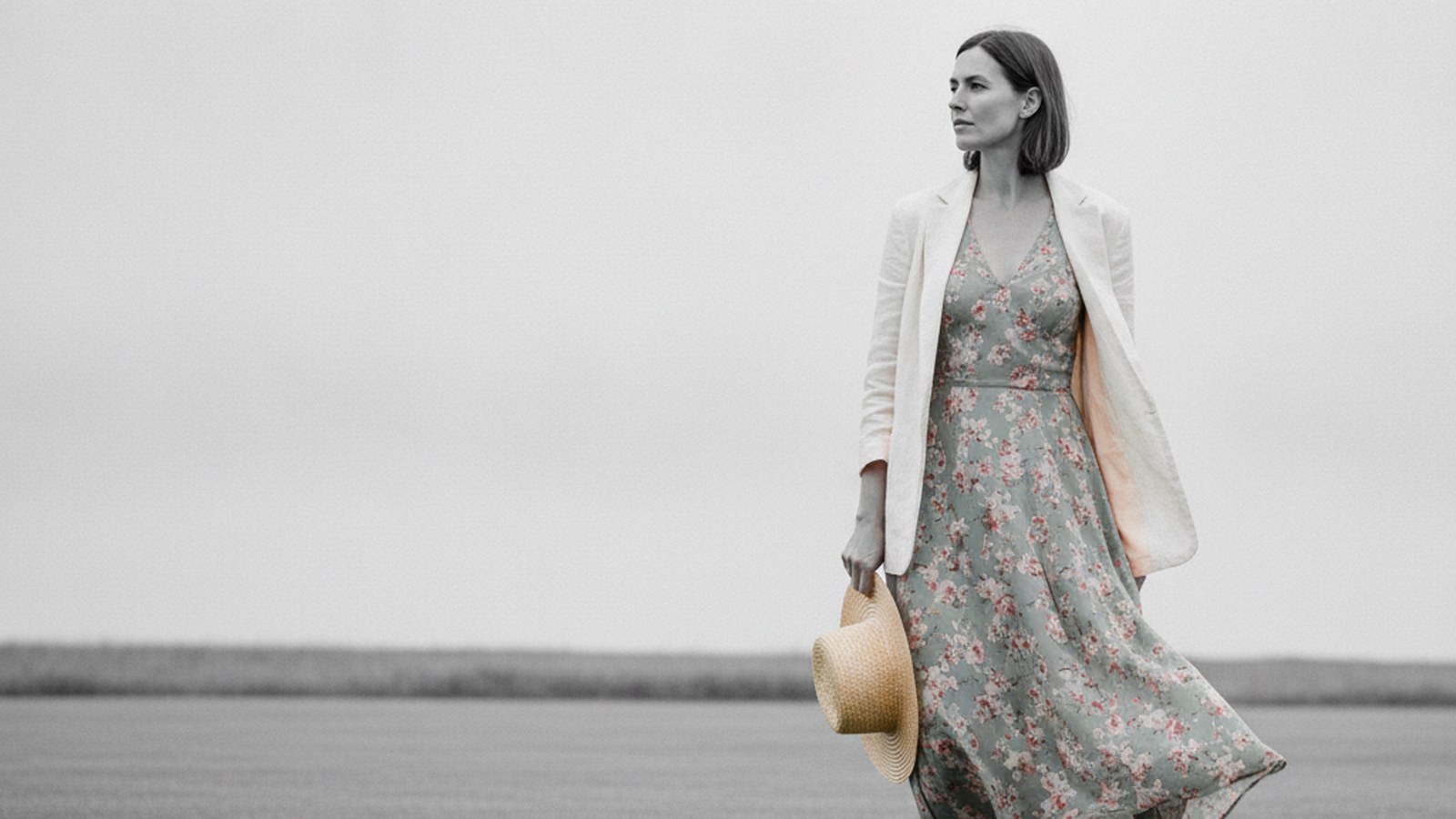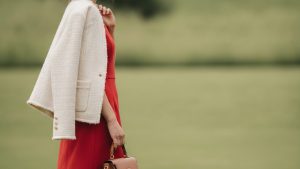
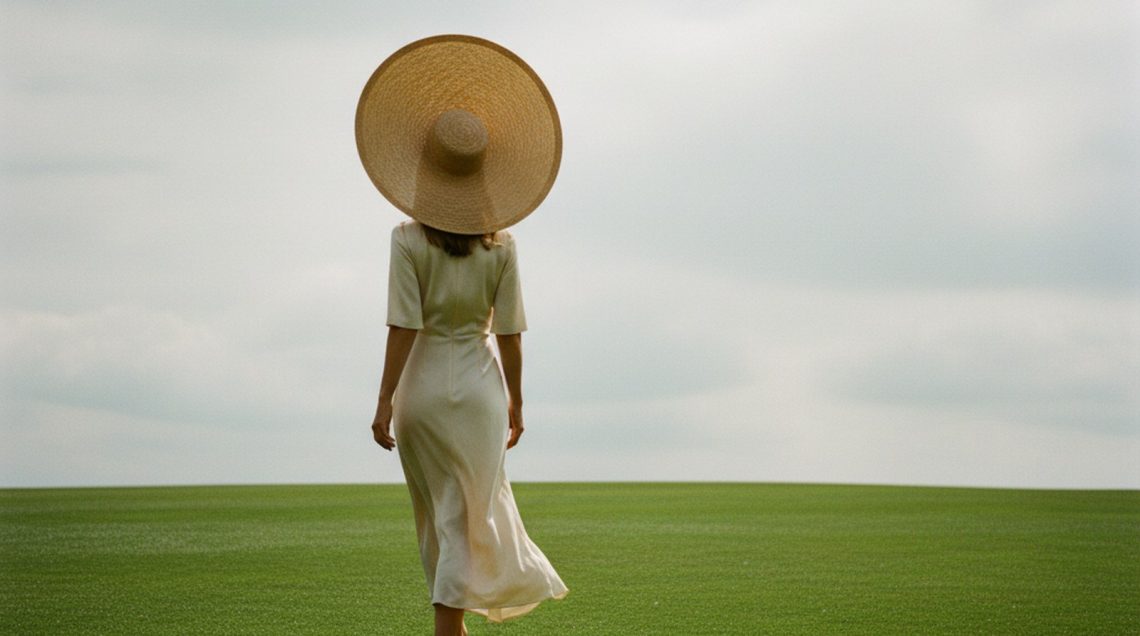

Five pieces, owned outright, will carry a British woman from a Royal Enclosure garden party to a country wedding to a field festival without a single new purchase per event. The formula: a silk-crepe midi dress, a tailored trouser suit, a structured linen shirt, a low block-heel leather sandal, and a tonal knit or lightweight blazer. Everything else, the hat, the bag, the shoe-swap for mud, dials the same five garments up or down by occasion register.
The reason this works in Britain specifically, and rarely on the continent, is the weather. June here is genuinely unpredictable: 24°C and bright at Ascot, 14°C and drizzling at a garden party three days later, mud at a festival the weekend after. Continental dressing assumes consistency. British dressing has to assume change, and that constraint forces piece-versatility into the wardrobe. Layers aren’t a styling choice here, they’re structural. That’s the advantage.
Why this June is the moment to fix the formula
The calendar compresses everything into roughly three weeks. Trooping the Colour falls on 13 June, Royal Ascot runs through the week of 16 to 20 June with Gold Cup Day on Thursday 18 June, summer weddings cluster across every weekend, and the festival season is in full flow at Latitude, Wilderness and Cornbury. (Glastonbury itself is taking a fallow year in 2026, so Worthy Farm sits empty, but the festival styling logic still applies to every other June field event.) The problem isn’t owning enough clothes. It’s owning the wrong ones: five separate occasion outfits, each worn once, none of them speaking to each other.
The stylist fix is to invest in pieces that pivot, then rent the genuinely occasion-specific item. Which, in a British summer, is almost always the hat.
The five pivot pieces, defined
1. The qualifying silk-crepe midi dress
One dress, three registers. To clear the Royal Enclosure it needs straps of at least one inch and a hem at or below the knee; the dress code varies significantly by enclosure and getting this wrong is the most common Ascot mistake, so the safest investment is a midi that satisfies the strictest rule and steps down comfortably for everything else. Silk-crepe is the fabric that does the work: it photographs formal at Ascot, breathes at a country wedding, and reads relaxed at a festival once you layer a linen shirt over the top and swap the sandals for trainers. Polyester satin technically meets the dress code but looks cheap in daylight, which is the only light Ascot has.
Price points: M&S do a clean silk-blend midi under £100, L.K.Bennett’s occasion midis sit around £350 and are cut specifically for the racing season, Rixo’s printed silks (around £295) carry credibly from a marquee wedding to a festival field, and Me+Em’s bias-cut midis are the sub-£400 piece most likely to still be in rotation in three summers.
2. The occasion trouser suit
This is the piece that solves the Queen Anne Enclosure (full-length tailored trousers permitted, fascinators allowed) and most garden parties, while extending into festival territory worn open over a cami. The Royal Enclosure does not permit trouser suits, so this isn’t a Royal Enclosure piece. For Queen Anne, a country wedding or a less formal garden party, it does the job a dress can’t: warmth, practicality on gravel, and an entirely different silhouette in the same wardrobe.
The proportion logic: fitted jacket plus full-length trouser reads occasion. The jacket alone over a midi skirt or the dress above reads garden-party. The trousers alone with a loose linen shirt read festival or weekend. One suit, three event registers. COS and Reiss both cut trouser suits with enough structure to clear formal day codes; Studio Nicholson’s barrel-leg tailoring is the longer investment.
3. The structured linen shirt
The most underrated piece on the list and the one that does the most invisible work. Over the midi dress, it becomes a festival outfit. Tucked into the trouser suit’s trousers, it becomes a wedding-rehearsal-dinner outfit. Worn open over a cami in the Royal Enclosure garden as the temperature drops, it covers shoulders without ruining the line of the dress. With Nothing Underneath’s linen shirts (around £130) are cut narrow enough through the shoulder to layer without bulk; Arket and COS do less expensive versions that work nearly as well.
4. The low block-heel leather sandal
This pin presents a 25-piece summer capsule wardrobe with 80+ outfit ideas, offering readers a visual moodboard that complements the article’s five-piece UK summer events capsule concept.
Stilettos and Ascot grass are not friends. A block heel rather than a stiletto, because Ascot involves significant walking on grass and gravel, and elegance and practicality are not mutually exclusive. The same shoe handles a wedding venue lawn, a garden party’s flagstones, and (with a welly swap for mud) doesn’t need replacing for a festival. The single shoe that travels furthest. Look for a leather upper, a heel between three and five centimetres, and a strap that holds the foot on uneven ground. Russell & Bromley and Reiss both do reliable versions; the welly question is solved by a single pair of short Hunters kept in the car boot.
If you want this kind of practical wardrobe logic in your inbox every Friday morning, our newsletter sends one tight edit a week: the pieces worth owning, the dress codes worth decoding, and the British high street picks that actually work in real weather. No spam, no twenty-item round-ups. Sign up at the top of the page.
5. The tonal knit or lightweight blazer
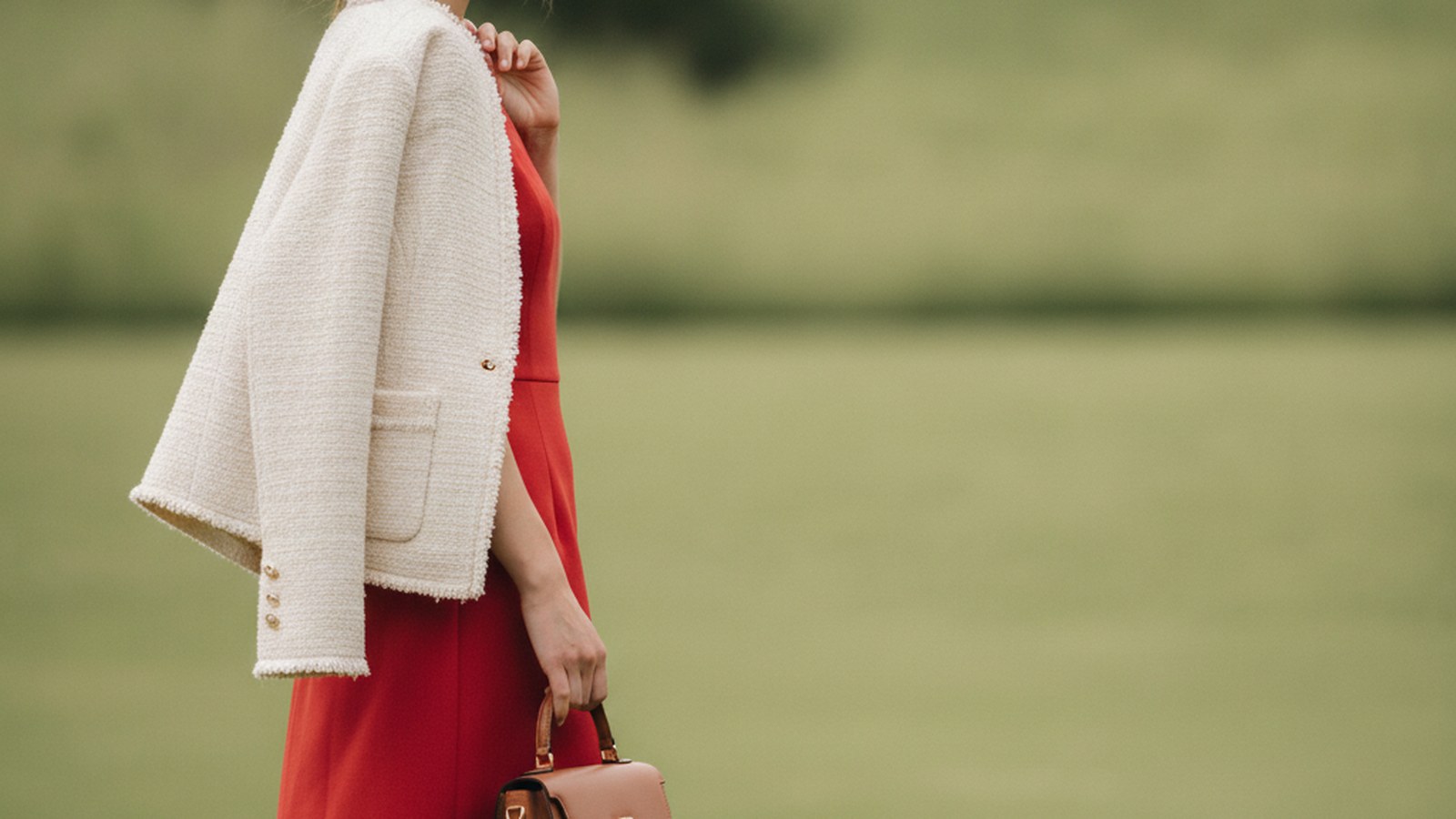
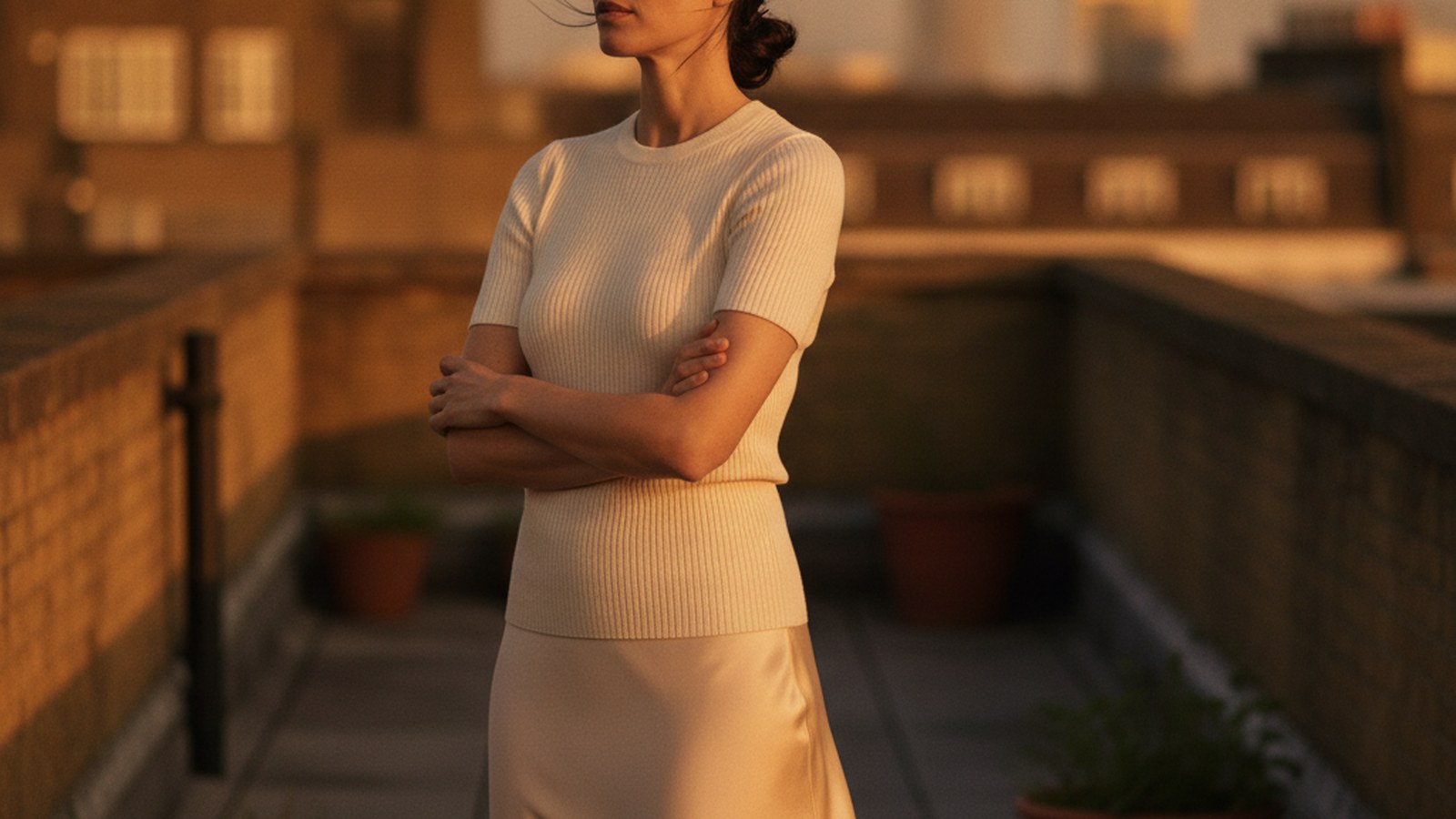
British June is the season that punishes anyone who left the house without a layer. A fine merino knit in cream, oat or black, or a lightweight unstructured blazer in the same palette, is the piece that turns a dress into a weather-proof outfit without changing its register. Hush and Mint Velvet both cut summer-weight knits that don’t bulk under a coat; Whistles’ lightweight blazers carry from a wedding to a city lunch.
The accessory dial: how the same five pieces change occasion
This is the part competitors miss. The garments stay constant. The accessories do the register-shifting.
| Event | Hat/head | Bag | Footwear |
|---|---|---|---|
| Royal Enclosure, Ascot | Structured hat, 4-inch base minimum | Small structured top-handle | Block-heel sandal |
| Queen Anne Enclosure | Fascinator or smaller hat | Clutch or top-handle | Block-heel sandal |
| Royal garden party | Hat or fascinator (no strapless) | Clutch | Block-heel sandal |
| Country wedding | Optional fascinator, or jewellery only | Clutch or small shoulder | Block-heel sandal |
| Field festival | No hat, sunglasses, hair down | Crossbody | Trainers or wellies |
The single stylist rule competitors don’t write down: buy the hat separately, and rent it if necessary. The hat is the only genuinely occasion-specific item in a British summer wardrobe. The five garments can be owned and reworn for years. The millinery should be rented per event through Hurr or By Rotation, or borrowed within a friendship group. A Royal Enclosure hat sees daylight twice in a lifetime for most women; rental is the only honest answer.
Bright Tomato, and the colour question
If you’re going to invest in one new colour piece this summer, the case for red is strong. Ascot Racecourse has launched the 2026 Royal Ascot Handbook, fronted by British supermodel Erin O’Connor, titled The Art of Dressing Well, curated by creative director Daniel Fletcher, and it introduces Royal Ascot’s first Colour of the Year, a bold shade named Bright Tomato. The shade featured prominently at Chanel, Celine, Proenza Schouler, Loewe and Stella McCartney on the spring/summer runways, which means investing in a Bright Tomato piece is not a one-occasion purchase, this is the shade that will be in rotation for the entire season.
The pivot-piece argument: a Bright Tomato midi works at Ascot on Gold Cup Day, at every summer wedding for the next two years, at a garden party with a straw bag, and (with denim cut-offs swapped in below a tied linen shirt) reads festival without trying. Butter yellow and cobalt blue do similar work if red feels too loud; the principle is the same. One strong colour, owned in a fabric that flatters, will out-earn five neutral occasion buys.
The fabric truth
Natural fibres are the only materials that hold credibility at both ends of the formality spectrum. Silk, silk-crepe, linen, fine merino and cotton voile photograph well at Ascot, breathe at a festival and don’t look cheap at a country house wedding. Polyester satin is the cheat code that always shows on camera. If a piece has to do five jobs across four months, the fabric is the first thing to check on the label.
The styling reference worth borrowing
The clearest real-world proof of the pivot formula is the British woman who’s been doing it for twenty years: a fluid wide-leg trouser, a silk or linen blouse, a flat sandal, and an attitude that treats a festival field and a film premiere as variations on the same outfit grammar. Sienna Miller has built an entire style identity on the principle that the same foundational pieces can travel anywhere if the accessories do the talking. The British woman in her thirties or forties watching from home has been borrowing this logic from her for two decades. It works because it’s true.
The one specific action
Before the next big June weekend, lay all five pieces on the bed, plus the three accessory swaps (hat, crossbody, wellies), and physically build the outfit for each event in your diary. The gaps you find are the things to rent, not buy. If your diary has Ascot on it and you don’t own a structured hat with a four-inch base, open Hurr now. Don’t go shopping for a fifth dress.