Who What Wear UK’s round-up, headlined “Fact: People With the Best Taste Are Wearing These 6 Print Trends Right Now”, has set the autumn conversation, and the UK is clearly paying attention. After seasons of safe neutrals and wall-to-wall leopard, prints are back in a bigger, stranger way.
The six on the list are brocade, paisley, Bambi, dalmatian, zebra and plaid. They don’t behave like one trend. Some are fabrics, some are animal motifs, and some are tonal rather than loud. Here is what each one means, why the shift from predator to prey matters, and how to wear them without looking like you’ve raided a dressing-up box.
So what are the six print trends everyone with taste is wearing right now?
Brocade, paisley, Bambi (deer) print, dalmatian, zebra and plaid. That’s the line-up in Who What Wear’s original piece. Each has solid AW26 or recent-season backing behind it, so none is a flash-in-the-pan TikTok moment.
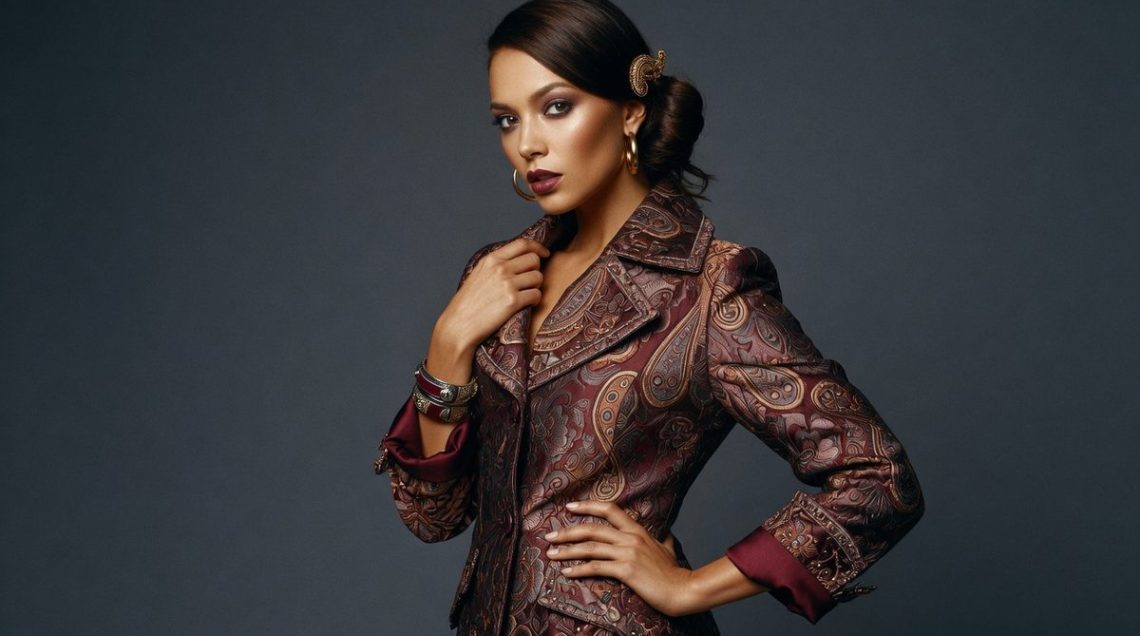
Here is the quick tour. Brocade is the season’s most luxurious option, seen in Dries Van Noten’s AW26 runway and in Erdem’s brocade florals. Reformation’s Stella Coat is the high-street-adjacent version. Paisley is in Zimmermann, Vivienne Westwood and Isabel Marant for AW26, following Chloé’s SS26 outing under Chemena Kamali.
The Instagram post Who What Wear embedded in its coverage shows how easily these prints move from the runway into real outfits. Dalmatian is the one you’ll see everywhere: Rixo, Reformation’s halterneck and even Dr Martens mules. Plaid, pushed by labels such as With Nothing Underneath, is the quiet sixth.
One thing the original list doesn’t spell out is that brocade is not technically a print at all. It’s a jacquard weave, with extra weft threads woven in to raise the pattern. That makes it heavier and more structured than the other five. It drapes differently, so it needs different styling logic.
Why has Bambi print replaced leopard as the fashion crowd’s favourite?
Because the mood has moved from predator to prey. PureWow has written about “leopard fatigue”, and the replacement is softer: doe-eyed, woodland, a bit fairy-tale. Brandon Maxwell showed deer in AW25, and Tory Burch carried it through AW25 and AW26. David Koma got there earlier, in Resort 2025, and Marc Cain’s AW26 version arrives in a rich aubergine colourway.
It has crossed over to the mainstream too. Sandy Liang x GAP put Bambi on a mass-market footing, and Sofia Richie Grainge’s SRG Atelier makes a deer-print Blake jacket. Katie Holmes has been photographed in Tory Burch’s deer print. Mango’s Bambi Skirt and Bambi Balloon Jeans bring it to a lower price point. In the UK, CAWLEY’s deadstock deer-print jacket is a nice indie alternative, and Axel Arigato has made deer-print trainers.
The cultural reading goes like this. Grazia USA has framed the look as “Bambicore” or “doecore”, and the microtrend is often linked to recession-era mood-softening. Leopard says you’re dressed to hunt; Bambi says you’d rather escape. That’s a plausible reading of why dalmatian and zebra, both gentler animal prints, are rising alongside it. Think of it as quiet wildness: the animal print without the aggression.
How do you actually style brocade, paisley and dalmatian without looking costumey?
Start with the silhouette. Match each print to a shape that does half the work for you. Brocade suits the season’s structured, column-shaped skirts, which is what Who What Wear’s autumn skirt coverage points to. Its weight needs that kind of structure to look intentional rather than like curtains. Keep everything else plain: a fine knit, a sleek boot, nothing competing.
Paisley is a colourway game. Stylist’s coverage points out that its autumn strength comes from deep olives, burnt siennas and dusky plums. So pair paisley with shades from its own colour family, not with safe black or beige. A dusky plum paisley dress with a burnt-sienna bag looks considered. The same dress with a black blazer looks like a uniform.
Dalmatian is the easiest of the three, as long as you remember it is not polka dot. Its spots are irregular and uneven, which is why Who What Wear says it “styles like stripes”. Grazia UK’s coverage supports that reading. Treat it as a graphic neutral and anchor a tailored outfit with it: a sleek dalmatian trouser or coat with a plain shirt. Save Bambi for voluminous outerwear, where its soft texture really shows, as in Reformation’s Veda Miller Jacket. Zebra’s wavy stripe works as a length-extending vertical on midi and maxi cuts.
There’s one more rule that changes how all six prints work together, and it’s the one almost nobody is talking about yet.