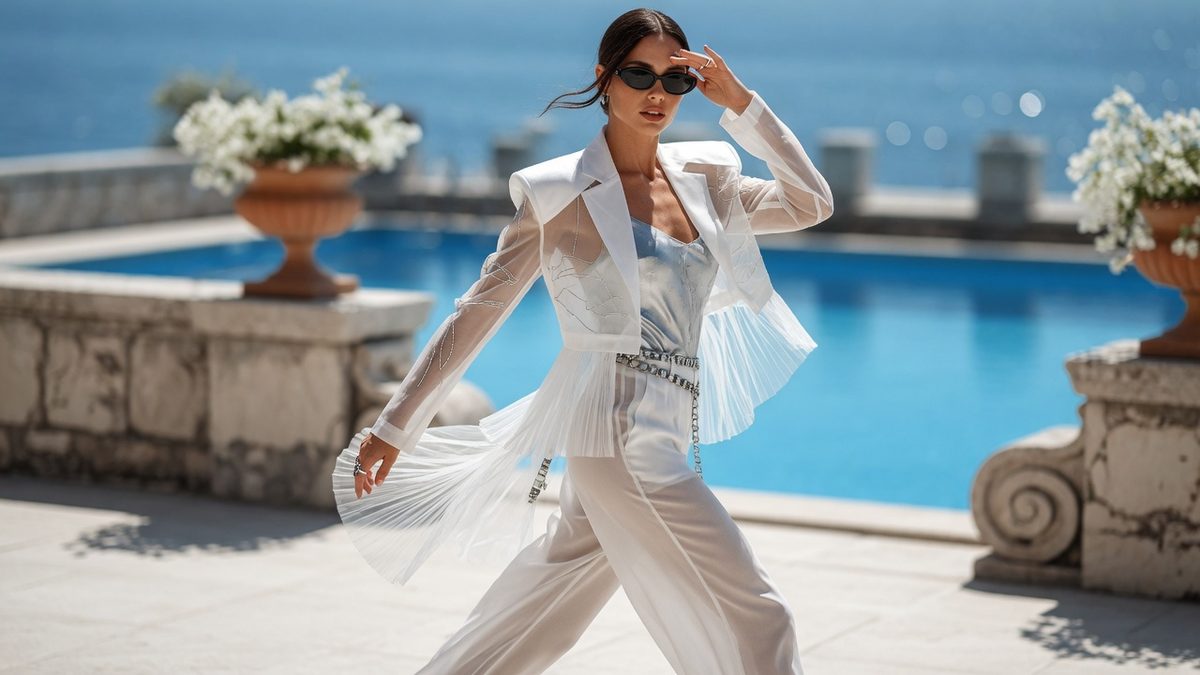
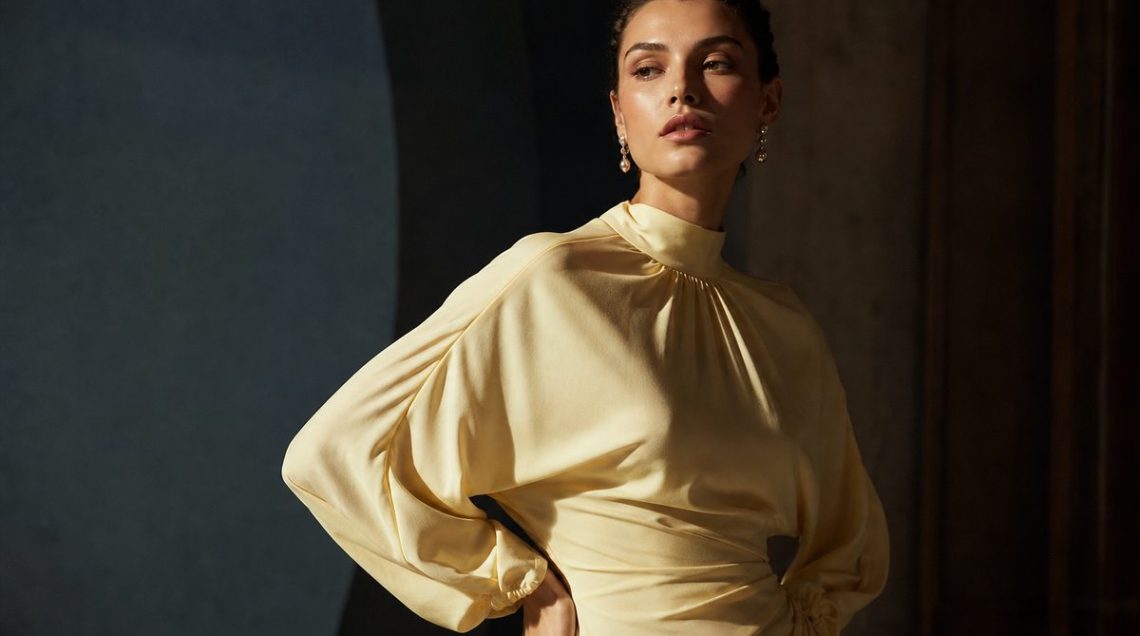

We must begin with a confession: for too long, we have conceded ‘très chic’ to the French. We have accepted the myth that refinement lives exclusively on the Left Bank, that polish is a birthright of the 6th arrondissement, that the rest of us merely aspire. No longer. The ‘très chic 7’, a capsule of seven pieces currently saturating UK search traffic, is not a Parisian invention. It is, in fact, a British resurrection of what refinement truly means: structural rigour, fabric intelligence, and an instinctive understanding of proportion that Paris has lately abandoned for the easy theatre of logomania and the lazy luxury of obvious codes. Britain is quietly reclaiming the aesthetic high ground, and the evidence is in the details no one else is discussing.
The très chic 7 wardrobe is a stylist’s blueprint that borrows Coco Chanel’s old rule, remove one item before leaving the house, and reframes it for 2026. This is subtraction as strategy. The seven pieces are precise: a two-tone midi dress with the colour break at the natural waist, not the hip; ruched loafers that collapse the boundary between polish and comfort; bootcut jeans in a mid-weight denim that photographs as tailoring; a raffia bag large enough to be useful; a silk scarf worn as a belt, not a neck accent; maximalist brooches that anchor an otherwise minimal silhouette; and a V-neck sweater in pastel checks for layering. Each item is a device. Together, they form a system that works because it refuses ornament for ornament’s sake.
The très chic 7 wardrobe, decoded: taffeta, two-tone midis and the loafer question
Let us address the fabric question first, because this is where the très chic 7 diverges from every derivative ‘quiet luxury’ guide published in the past eighteen months. Taffeta, not satin, not silk charmeuse, is the textile anchor of summer 2026. Satin has the sheen, yes, but taffeta has the structure. It photographs crisper, it survives the British outdoors without wilting, and it holds a silhouette in motion. Emilia Wickstead, Erdem, and Roksanda have all deployed taffeta across their SS26 collections, understanding that refinement in Britain requires a fabric that can withstand both a garden party and a sudden squall.
The two-tone midi dress is the hero silhouette of the très chic 7, but only if you respect the proportion rule that Parisian street style has already adopted: the colour break must sit at the natural waist. This is not negotiable. A hip-level break elongates nothing; it bisects the body awkwardly and photographs as indecision. The waist-level break, by contrast, clarifies the frame and allows the hem to fall with intention. Pair it with ruched loafers, the silhouette that has replaced ballet flats as the polished neutral, and you have a formula that translates from Mayfair to Margate without adjustment.
The loafer question is worth isolating. Ruched loafers, as seen in recent collections from The Row and reinterpreted by COS, solve the perennial British problem: how to look polished without sacrificing walkability. The ruching softens the formality of a traditional loafer while maintaining its architectural line. Worn with bootcut jeans, mid-weight, never distressed, the loafer becomes the hinge between casual and considered. The bootcut proportion, critically, must skim the instep without pooling. This is the difference between chic and costume.
Why British designers, not the Parisians, are winning the refinement war
Here is the uncomfortable truth for Paris: the most refined examples of the très chic aesthetic in 2026 are not coming from Saint Laurent, not from Chloé, and certainly not from the post-Blazy Chanel. They are coming from London. Emilia Wickstead’s SS26 collection is a masterclass in controlled volume and fabric discipline. Erdem’s use of pastel checks, deployed across V-neck sweaters and midi skirts, elevates a traditionally dowdy pattern into something precise and modern. Roksanda’s structural dresses, with their asymmetric waist seams and taffeta body, are doing the work that Paris used to do before it became distracted by celebrity front rows and influencer partnerships.
The objection will be raised: what about Caroline de Maigret, the Parisian stylist whose entire career is built on effortless refinement? We admire her, but we note that her recent collaborations have leaned heavily on British tailoring codes, Burberry trenches, brogues from Northampton, because she understands what Paris has forgotten. Refinement is not insouciance. It is not the studied carelessness of an unbuttoned shirt. It is the rigour of knowing exactly where a hem should fall, which fabric will hold in humidity, and how a single brooch can anchor an entire outfit. British designers, trained in pattern-cutting rigour and fabric sourcing pragmatism, have never lost this knowledge. Paris, by contrast, has outsourced it to the cult of personality.
Consider the evidence from the SS26 runways. Prada, an Italian house, is currently the only continental brand consistently matching British precision, and that is because Miuccia Prada shares the British instinct for intellectual dress. The French houses, meanwhile, are chasing virality over longevity, noise over nuance. The très chic 7 exists as a corrective to this drift. It is a wardrobe built on pieces that will be photographed well in five years, not just five weeks.
How to wear the très chic 7 from Wimbledon to the Edinburgh Festival
Theory without application is decoration. The très chic 7 works because it maps directly onto the British summer calendar, occasion by occasion. For Wimbledon, the two-tone midi dress in pastel checks pairs with ruched loafers and a raffia bag large enough to carry a cashmere wrap for Centre Court air conditioning. The silk scarf, worn as a belt, adds definition without fuss. For garden parties, the Glyndebourne circuit, Chelsea Flower Show, swap the loafers for block-heeled sandals and add a maximalist brooch to the dress shoulder. The brooch, critically, should be worn singly, never in multiples. One statement piece anchors; three pieces clutter.
The Edinburgh Festival in August demands a different calculus. The V-neck sweater in pastel checks becomes the layering anchor, worn over the two-tone dress during unpredictable Scottish afternoons, then removed for evening performances. Bootcut jeans replace the midi dress for daytime gallery visits, paired with the ruched loafers and the raffia bag. The silk scarf belt threads through the jeans, providing waist definition that British denim often lacks. For coastal holidays, Cornwall, the Hebrides, the taffeta dress is too formal, but the bootcut jeans, V-neck sweater, and loafers form a trio that photographs beautifully against whitewashed cottages and works practically on coastal paths.
The final rule, borrowed from Chanel but updated for the très chic 7 era: before you leave the house, remove one item. If you are wearing the two-tone dress, the brooch, the scarf belt, and statement earrings, subtract the earrings. If you are layering the V-neck sweater over the dress with the scarf belt and a necklace, lose the necklace. Refinement is not addition. It is the confidence to stop one gesture before excess. This is the principle that British designers understand instinctively, and it is why the très chic 7, despite its French name, is a definitively British achievement. The question now is whether Paris will notice before the rest of the world does.