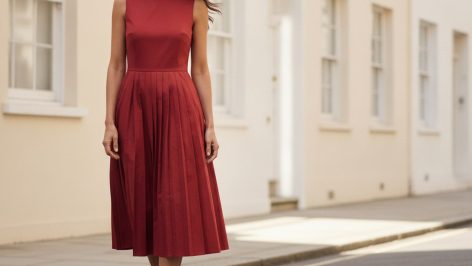
The drop-waist dress flatters when the seam sits just above the widest point of your hip, not across it. That single rule, roughly 2 to 3 cm above the fullest hip circumference, is what separates the silhouette that elongates from the one that swamps. Everything else (fabric, shoe, what you do with the bodice) follows from there.
Most styling advice tells you to add a belt, tuck something, or pair it with trainers. The contrarian truth: because the waistline has already dropped, the lever isn’t at the seam itself, it’s above and below it. Keep the bodice architectural, let shoe height carry the elongation, and the dress does the rest.
The one proportional rule that makes or breaks it
Stand in front of a mirror and run your hand down your side. The widest point of your hip (where your hand naturally curves out furthest) is the line you do not want the dropped seam to cross. When the seam bisects that fullest point, the eye reads horizontal width. When it lands 2 to 3 cm above it, the eye skims past and registers a longer line from shoulder to hem.
This is why two women can wear the same dress and only one looks lengthened. It isn’t body shape in the apple-or-pear sense. It’s where the seam falls on your specific hip geometry. Try the dress on, mark the seam mentally, and check whether it sits above or across the widest point. If it lands across, size up (the bodice will hang longer) or move on.
The belly-button hand-stack self-test
Before you buy, work out whether you have a short or long torso. Stack your hands flat, one on top of the other, below your belly button. If your navel hits the centre of the upper hand, your torso is on the shorter side and a drop waist will naturally elongate you. If it sits well above the stack, you have a longer torso, and a very low seam can throw your proportions off.
- Short torso: go for a true drop, hip-level seam, mini to midi length. A V-shaped or diagonal seam guides the eye downward.
- Long torso: choose a gentler drop that sits just below the natural waist rather than at hip level. A horizontal seam at true hip level can look proportionally odd.
V-seam versus horizontal seam: the buying filter
Scroll past any dress where the dropped seam runs as a hard horizontal line across the hip. A diagonal or V-shaped seam (dropping into a soft point at centre front) flatters more body types because it directs the eye down rather than slicing across. On product pages it’s the detail that gets buried in the third or fourth image. Look for it before you check out.
Fabric is the silhouette, not the silhouette’s friend
Thin polyester is the reason the drop waist looks shapeless in 80% of online photos. It collapses at the seam, so the dropped line goes invisible, and you end up with what reads as a slightly off shift dress. The seam needs to hold. That means structure, not weight.
The UK summer shortlist:
- Crepe. Holds shape in drizzle and a stiff Berkshire wind. Best for Ascot, races, weddings.
- Cotton poplin (structured, not papery). Holds the seam line cleanly. Office, lunch, daytime.
- Washed linen. Slight texture stops it clinging when humidity rises. Pub gardens, weekends, festivals.
- Avoid: thin polyester, viscose-heavy jersey, anything described as “fluid” without weight to it. Jersey kills the silhouette because it follows the body rather than holding the dropped line.
The Ascot formula
Royal Ascot runs Tuesday 16 to Saturday 20 June 2026, and the Royal Enclosure code is unambiguous: dresses or skirts of modest length (just above the knee or longer) with straps wider than one inch, plus a hat rather than a fascinator. A drop waist works here, but only in the right fabric and length.
This TikTok by Alison Hope Murray demonstrates a practical tip for testing whether a drop waist silhouette flatters a curvy midsize body before committing to the dress, directly supporting the article’s how-to styling guidance.
@alisonhopemurray Wondering if that drop waist dress is going to work on your curvy midsize body? Try untucking your shirt to see how you feel about the silhouette first. As always I will link everything I can on stories and save to my monthly highlight *contains gifted items. #ootd #grwm #millenialfashion #midsize
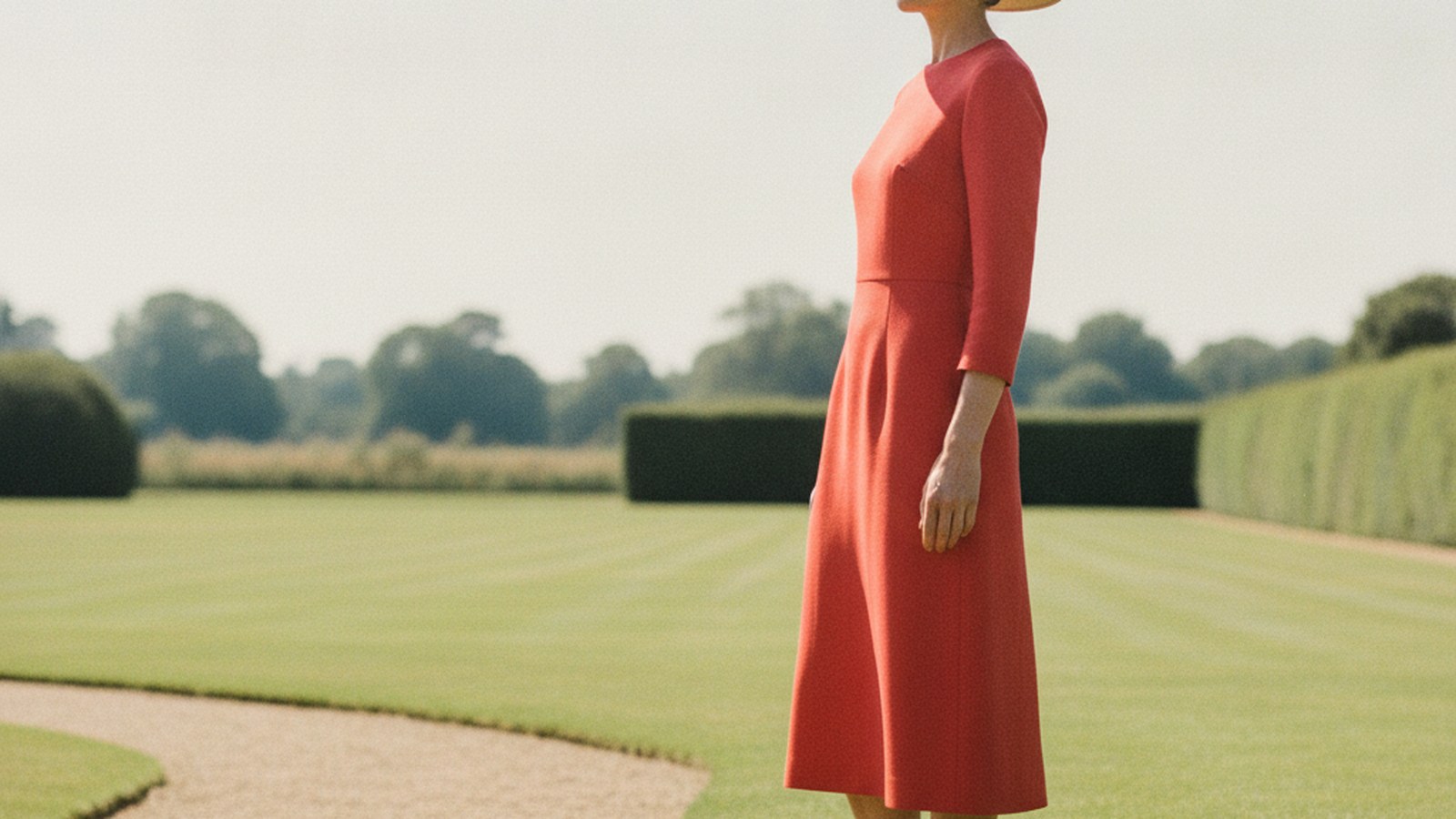
Build it like this: a drop waist midi in crepe or structured chiffon, knee-length or longer, straps confirmed at over an inch wide, paired with a sculptural hat and a nude court shoe to extend the leg line below the dropped seam. Creative director Daniel Fletcher has named Bright Tomato as the defining shade for 2026 occasionwear, describing it as the bright orangey-red of a ripe tomato. Women attending on Gold Cup Day, 18 June, are being encouraged to wear it in statement dresses or unmissable hats. A tomato-red drop waist midi in crepe is therefore an unusually ownable purchase this season: dress code compliant, on-brief for the colour direction, and a silhouette you can wear again at every summer wedding through to September.
Reiss does a more structured bodice version that holds for the long standing-around hours; Roksanda, featured in the Ascot campaign, is the architectural splurge end if you want a real heirloom piece.
If you want the rest of the summer season mapped out like this (proportion rules, fabric shortlists and UK occasion formulas you can actually copy), our Friday newsletter lands every week with one outfit problem solved properly. No shopping spam, no recycled trend lists. Sign up below and the next edition covers wedding-guest dressing for an unpredictable British forecast.
The Wimbledon formula
Wimbledon begins 30 June. The Centre and No.1 Court enclosures lean smart-casual rather than formal, and there’s an enduring all-white visual code in members’ areas. A white drop waist linen or cotton-poplin midi reads correctly in either context. Navy accessories (a slim leather belt at the natural waist if you want one, a navy slingback, a small structured bag) keep it from going bridal.
The practical reason the silhouette works here: you’re sitting for hours. A relaxed bodice that doesn’t dig at the natural waist is genuinely more comfortable than a fitted dress, and the dropped seam means nothing pulls when you cross your legs.
The pub garden formula
The least-covered context and arguably where the drop waist earns its keep. Washed linen or relaxed cotton, mini or midi, flat tan sandals, a small cross-body. This is the only occasion where a slightly oversized drop (skimming rather than fitted bodice) works, because formality is low and you want to be able to eat a Sunday roast in it.
Nobody’s Child and ASOS own-label both do midi-length drop waist options that work for this; H&M is the entry point for a ditsy print; Mango’s drop waist T-shirt dress is the truly casual end. For taller frames, Aligne’s organic cotton maxi reads more considered. For the apple or oval shape, stylist AK Brown has flagged Never Fully Dressed as the British brand that cuts the silhouette best, because the fluid bodice bypasses the waistline rather than constricting it. That’s the genuinely contrarian point: this is one of the few silhouettes you can wear without shapewear.
Shoes, belt and the British weather problem
Tone your shoe to your bare leg, not to the dress. Nude or warm beige for lighter skin tones, caramel or chocolate for deeper skin tones. White trainers and black shoes both create a hard contrast at the ankle and chop the leg again, below an already low seam. You don’t want two horizontal breaks.
If you belt it, use a medium-width belt at the natural waist (around 3 to 4 cm). Thin belts visually slice the torso in half; very wide belts shorten it. Most women reach for a thin belt by default, which is precisely the wrong call.
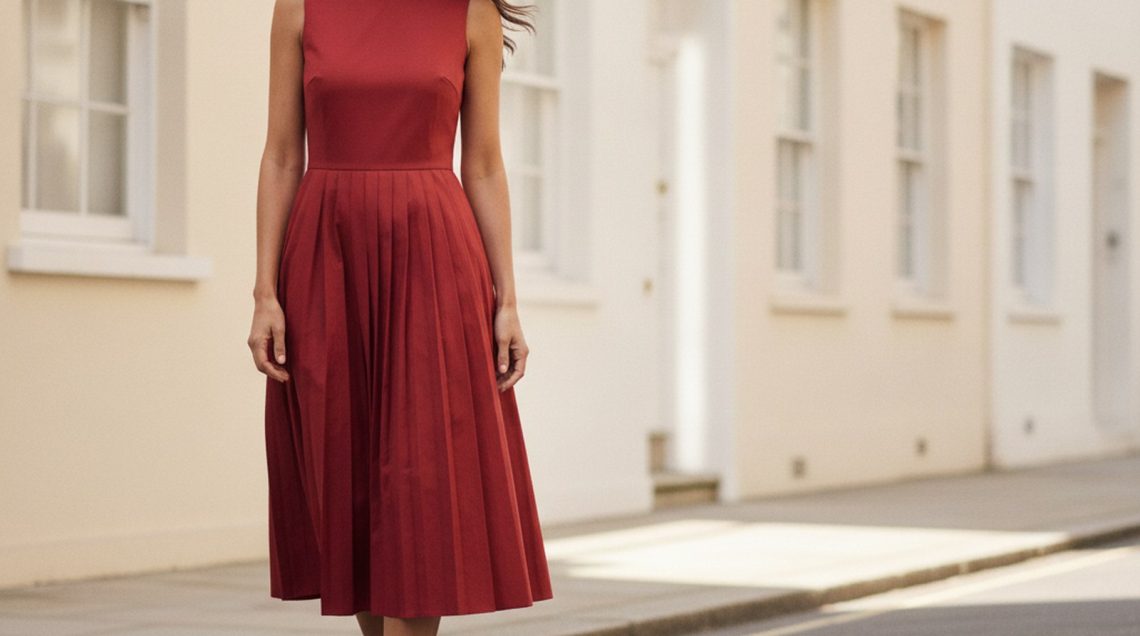
For the warm-ish day that turns cool by 6pm (which is most British summer days), layer a fine merino long-sleeve under a sleeveless drop waist in cotton-poplin. The poplin’s structure means the knit underneath doesn’t bulk the silhouette, and you’ve solved the temperature drop without carrying a jacket. This is the London answer the American shopping edits will never give you.
One thing to do this week
Before you buy, try on the dress you’re considering and photograph yourself side-on. If the seam crosses the widest point of your hip, the dress isn’t wrong, the size or the cut is. Size up, switch to a V-seam version, or pick a fabric with more structure. The proportion rule is the only filter that matters; everything else is a question of which UK occasion you’re dressing for.