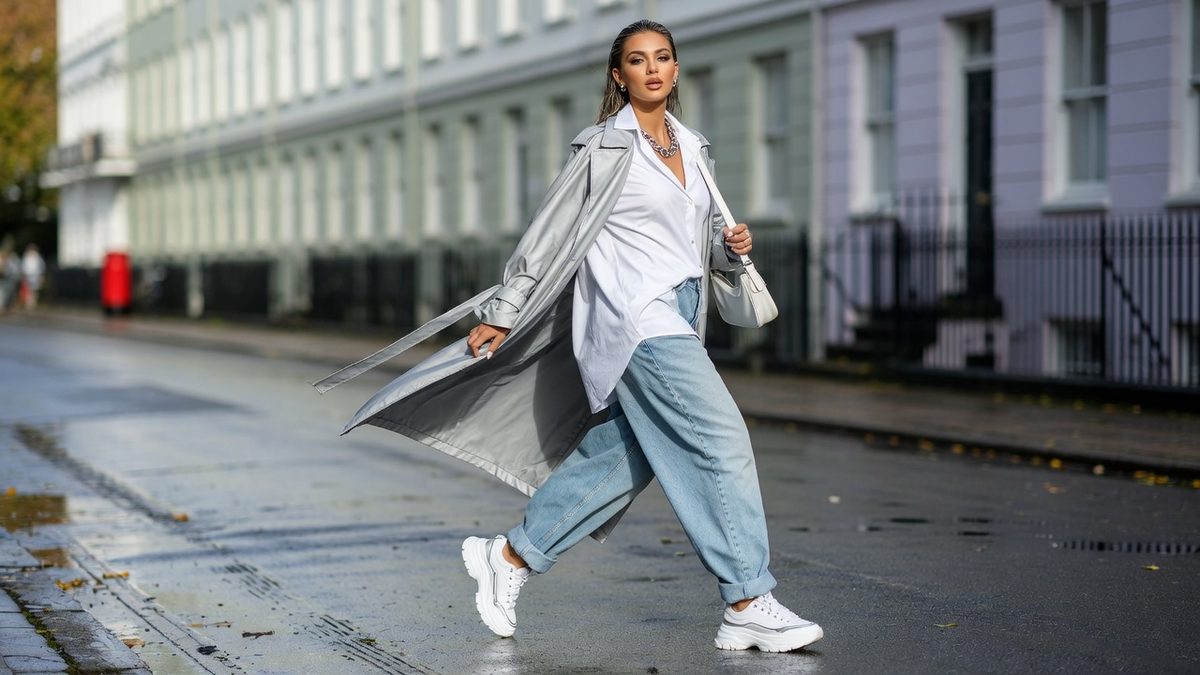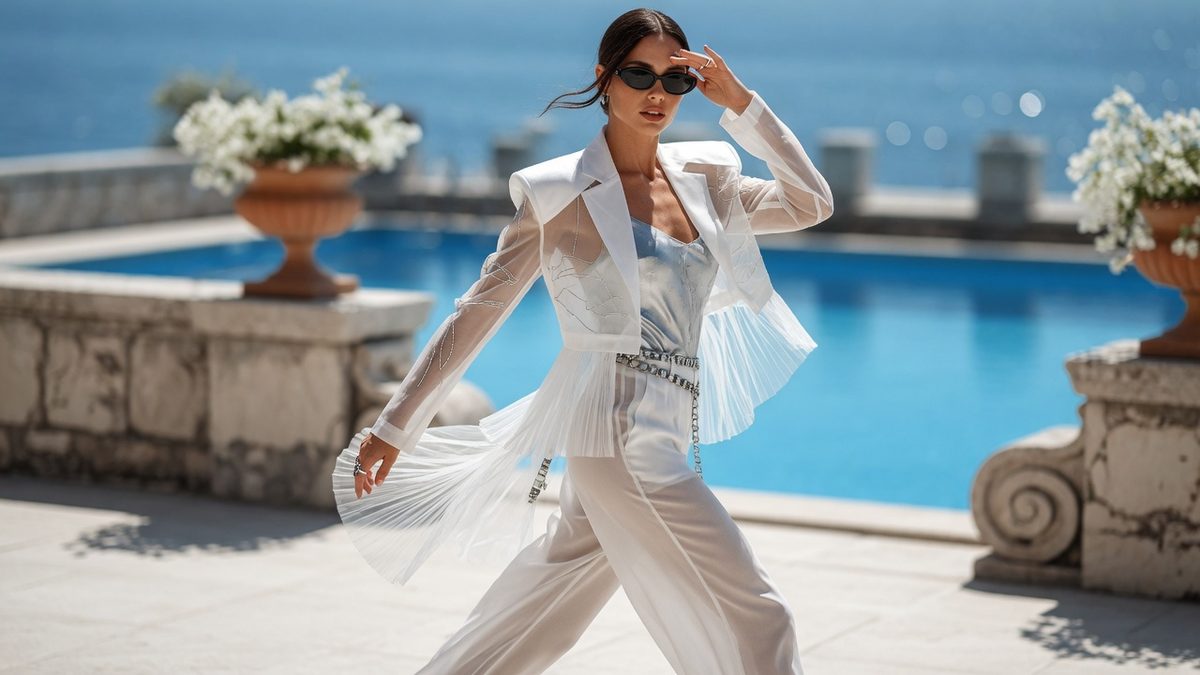
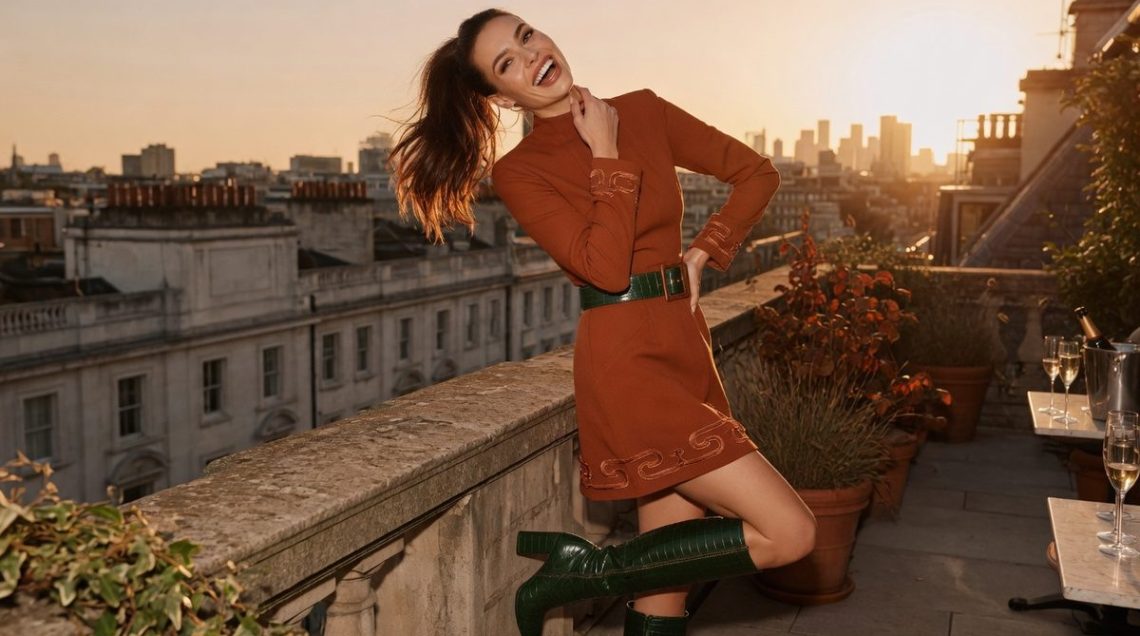

A very specific hem length has taken over UK search behaviour this week: the six-inch mini dress, worn with a knee-grazing or thigh-high boot, is the outfit formula suddenly dominating fashion search interest. It isn’t one celebrity photograph driving the spike, it’s a proportion formula that stylists have been refining since London Fashion Week SS25, and it has now crossed over from runway analysis into everyday, practical search intent.
The reason it’s landing hard in the UK specifically is timing. This is the exact fortnight when wardrobes pivot from bare legs to tights and boots, and shoppers are working out whether their summer mini dresses can survive the transition. The dress-and-boots combination answers a very British problem, how to keep wearing short hemlines once the temperature drops, and that practical urgency, layered onto the aesthetic credibility runway houses gave it, is why the term is spiking now rather than back in June.
The 6-inch dress and boots search surge, decoded
What’s notable about this search spike is what’s missing from most of the coverage around it: gallery-style ‘shop the look’ content that treats the six-inch dress and boots pairing as one uniform silhouette. In reality, the combination follows a strict internal logic that most existing content skips entirely. The rule that public styling guidance keeps circling back to is a proportion one, not a vibe.
The working principle is that the hem should sit at least two to three inches above where the boot shaft ends, or several inches below it, never level with it. Land the hem exactly where the boot stops and the leg reads as visually cut off at an odd point, which is the single most common styling error in this category. That two-to-three-inch buffer is doing more work than any specific dress or boot brand.
That’s also why the six-inch dress and boots search term is trending as a formula rather than a single product: shoppers aren’t hunting one dress, they’re hunting the ratio that makes any dress and any boot work together.
From Twiggy’s mod minis to Hermes SS25 riding boots
The proportion isn’t new, it’s a revival with a runway paper trail. Twiggy’s Mod-era minis established the original silhouette decades ago: a hemline several inches above the knee, worn with flat or low-heeled boots that kept the leg line unbroken rather than interrupted by bare skin and heel. That same logic resurfaced on the SS25 circuit, most visibly at Hermès, where riding boots were paired with brief hemlines to give the leg one continuous shape rather than three competing sections of skin, boot and dress.
London Fashion Week’s SS25 shows sharpened the point further. Emilia Wickstead and Kent & Curwen both leaned into mod-adjacent mini silhouettes on the schedule, reinforcing an aesthetic that street style has since pushed towards a genuinely ultra-mini six-inch hem, a more extreme reading than the shows themselves proposed. Jonathan Anderson’s work at Loewe has, in a broader sense, kept this kind of precise, almost architectural proportion play in the fashion conversation for several seasons, which is part of why stylists are primed to read hem-to-boot ratios so exactingly right now.
It’s worth separating this from adjacent reference points. Sienna Miller’s boho-mini silhouette of the mid-2000s is a different lineage entirely, looser, festival-inflected, and reaching for it as shorthand for the current trend muddies what’s actually happening. The current wave sits closer to the crisp, tailored precision Alexa Chung has long been associated with than to boho layering, which is a useful distinction for anyone trying to shop the look accurately rather than generically.
How to nail the hem-to-shaft rule without hitting the dead zone
Start with boot height before dress length, not the other way round. Over-the-knee boots and thigh-high riding boot silhouettes pair most reliably with the shortest hems, because they leave a wide gap of visible thigh, exactly the buffer zone the two-to-three-inch rule is protecting. Mid-calf and ankle boots are the higher-risk options with an ultra-mini dress: mid-calf boots in particular tend to cut across the widest point of the calf, which shortens and thickens the leg line rather than lengthening it.
Toe shape matters more than it gets credit for. The square-toe boot that dominated recent seasons is, per wardrobe styling commentary circulating this year, giving ground to a sleeker, more pointed or almond toe, and that shift changes the maths of the pairing, because a narrower toe visually extends the leg further, giving a little more room for error at the hem-to-shaft junction. Biker boots and western cowboy boots sit somewhere between the two extremes, and tend to reward a hem closer to the higher end of that two-to-three-inch buffer.
For the UK’s actual fixation this week, keeping summer’s mini dresses in rotation through autumn, the bridge technique is tights, not extra layers. Matching opaque tights to the boot colour removes the visual break between skin, tights and boot shaft, turning three separate elements into one continuous line. It works whether the dress itself is a structured neoprene mini or a floatier chiffon piece, since the tights-to-boot match does the proportion work regardless of fabric.
The formula is simple enough to repeat safely, hem, gap, shaft, no overlap, but the trickier question is which boot silhouette UK shoppers will actually commit to as the weather turns colder: the biker boot for edge, the riding boot for polish, or the western boot as the wildcard. That’s where this search term looks set to head next.