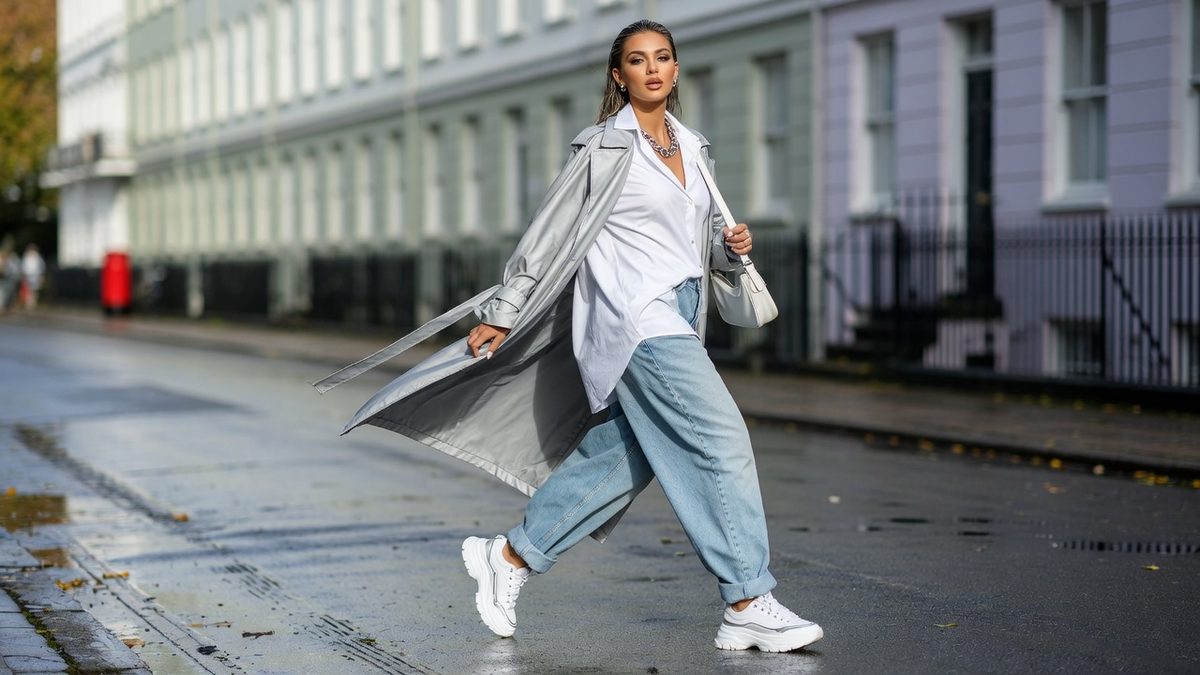
Walk through Marylebone or Shoreditch on any given Tuesday in early August and you’ll clock something curious: fashion people are already dressed for October. Not in transition pieces or light layering, proper autumn. Chocolate suede jackets, knee-high stretch boots, belted tailoring in off-white and camel. The leaves haven’t turned, but the insiders have.
This isn’t aspirational mood-boarding or wishful thinking. It’s the six-week signal, a quiet, consistent pattern where what London’s fashion set wears in early August becomes the dominant visual language of high-street windows by mid-September. If three or more editors are photographed in a trend before the first of September, it will define the season. Right now, that trend is suede, structure, and a return to polished femininity that feels deliberately, defiantly grown-up.
The chocolate suede signal: how London’s fashion set called A/W 26 early
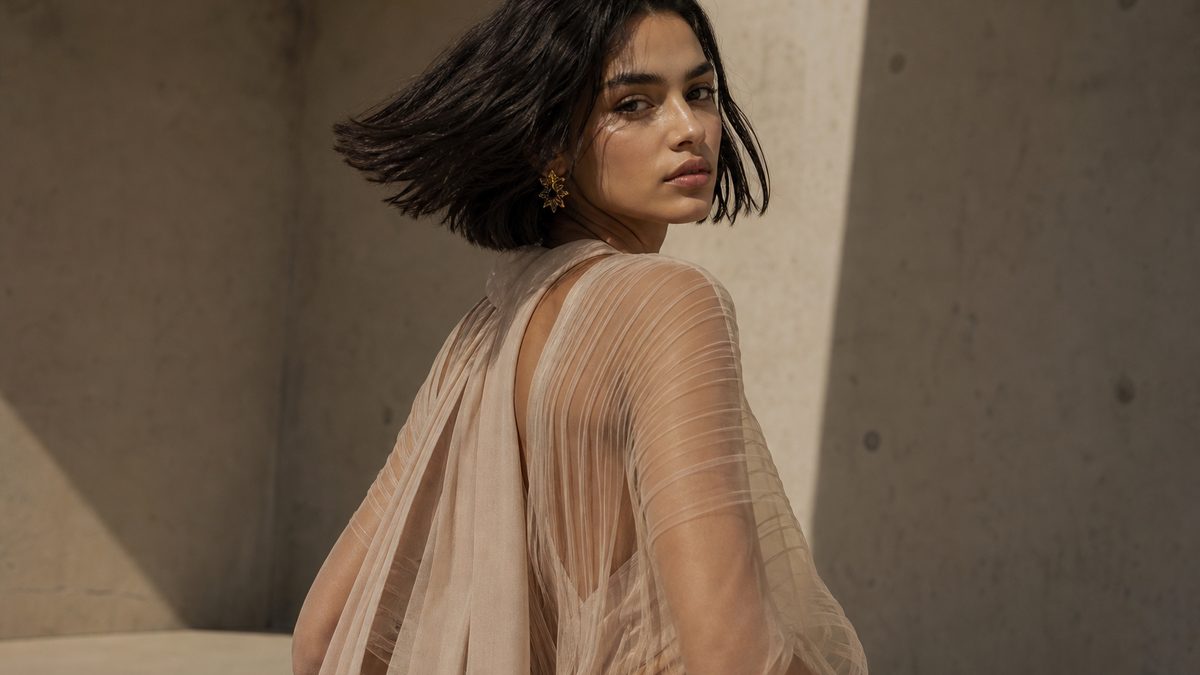
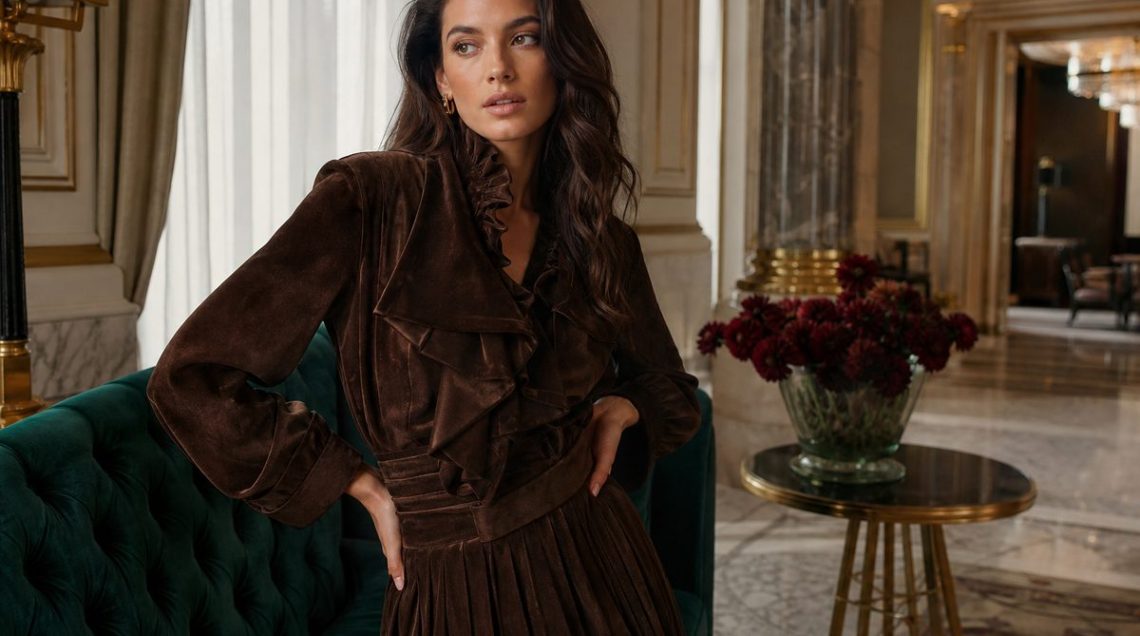
Chocolate brown suede is everywhere among London’s early adopters, not as an accent, but as the hero fabric. Rixo’s suede jacket is already layering over summer dresses in pavement café shots; The Row’s new everyday bag, released quietly in August, arrived in chocolate suede and sold through its first allocation within a week. The fabric itself is the message: tactile, nostalgic, immune to the athleisure creep that defined the past three seasons.
There’s a practical calculus here, too. In British drizzle, suede demands commitment, darker tones, treated finishes, the kind of styling confidence that signals you know what you’re doing. Patrick McDowell showed 1950s feminine tailoring at LFW A/W 26; Erdem sent strong shoulders and off-white tonal palettes down the runway. But on the street, it’s chocolate suede doing the translating work, making those references feel lived-in rather than costume-y.
Miu Miu’s stretch knee-high boots are the other half of the equation. They’re appearing now, paired with midi skirts and belted coats, because they solve the perennial British autumn problem: how to look polished when the weather refuses to cooperate. Carel offers a more accessible alternative, but the silhouette, sleek, high, uncompromising, is non-negotiable.
From Erdem to Schiaparelli: why ‘ladies who lunch’ tailoring is the new stealth uniform
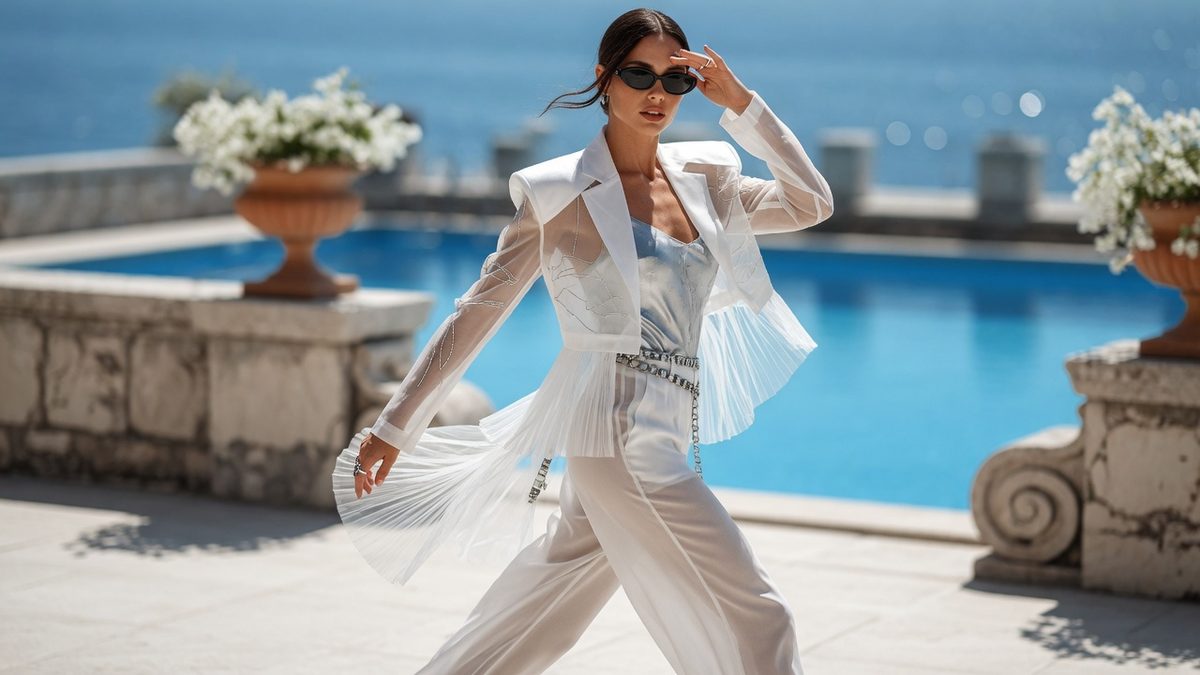
The phrase ‘ladies who lunch’ hasn’t carried this much cultural weight since the 1990s. But A/W 26 has reanimated it, not as parody or irony, but as a genuine aesthetic proposition. Jacquemus, Celine, Jil Sander, Proenza Schouler, Schiaparelli: all showed tailoring that privileges structure, waist definition, and a kind of unapologetic formality. British Vogue’s August issue hinted at the shift, but the street has run with it faster than any editorial could schedule.
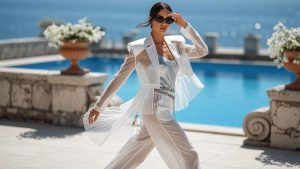
Burberry, Alice Temperley, and Joseph all leaned into belted waist silhouettes for LFW A/W 26. Julien Macdonald’s show reinforced the mood. But what makes this different from previous tailoring revivals is the lack of subversion, no oversized tropes, no ironic sportswear hybrids. This is tailoring that wants to be taken seriously, worn by people who have nothing left to prove.
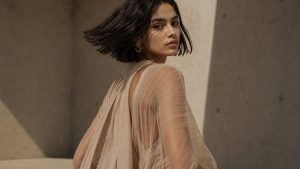
Stephen Jones’s Think Pink But Pack Black collection, shown LFW-adjacent, captured the tension perfectly: millinery that nods to mid-century femininity but refuses nostalgia. Conner Ives and Sandy Liang both worked soft pink into A/W 26 collections, but on the street, the palette has shifted darker, off-white, camel, chocolate, the occasional jolt of Meryll Rogge’s electric blue. Loewe, Dior, and Fendi all championed bold block colour, but London’s adopters are filtering it through a more restrained, old-money lens.
How to read the six-week signal (and shop it before the high street catches up)
The six-week signal isn’t about clairvoyance; it’s about watching what gets repeated. If you see the same shape, fabric, or styling trick three times in a single week, across different people, in different contexts, it’s not coincidence. Longchamp’s Le Cadence bag launched for A/W 26 and is already appearing in street style archives. Bella Freud’s collaboration with Marks & Spencer for A/W 26 hasn’t dropped yet, but insiders are already talking about it as the accessible entry point to this mood.
Net-a-Porter’s buyer recently flagged patterned and coloured tights as a key styling tool for A/W 26, a micro-trend virtually no one else has named yet. But if you look closely at early-August London, they’re already there: worn under tailored shorts, layered beneath midi skirts, turning knee-high boots into a full styling statement rather than a functional afterthought.
The logic is simple: fashion people dress for the season they want, not the one they’re in. By the time the high street windows catch up in mid-September, the early adopters will have moved on to the next signal. But for now, chocolate suede and ladies-who-lunch tailoring are the codes that matter. If you’re watching closely, you already know what October looks like, even if the calendar hasn’t flipped yet.