Who What Wear’s spring/summer 2027 round-up landed with a verdict British shoppers don’t usually get this early: which fashion-week trends are actually wearable, and which ones cost nothing to copy. The headline act is Prada, where Miuccia Prada and Raf Simons sent out an entire show built around one single garment, and every stylist’s group chat has been buzzing about it since.
It’s blowing up in the UK right now because the trend lines from New York to Paris have, for once, converged into something coherent rather than contradictory. Skirts, bra tops, jazz shoes, sheer fabric and a very specific shade of lilac are all pointing the same way, and the high street has already started stocking affordable versions before the glossy magazines finish their analysis.
Prada built a whole show on one garment, and it worked
Prada’s all-skirt show, nicknamed ‘The Skirt’ by the industry press covering it, stripped the collection down to a single silhouette repeated in dozens of fabrications. WWD and Fashionista both flagged it as the moment fashion month tipped from maximalist layering back to one disciplined idea, executed obsessively.
Gucci echoed the same instinct with tartan and plaid A-line skirts, proving the shape wasn’t a Prada-only flourish but a genuine cross-house signal. What makes this trend different from the usual fashion-week spectacle is that the skirt itself needs almost no translation for real wardrobes, it’s a boxy, structured midi, not a runway-only fantasy.
That’s exactly why COS and M&S have been quick off the mark with their own boxy midi and A-line skirts this season, sitting at a small fraction of the designer price without copying the exact print. Zara and H&M have moved in the same direction, which means the Prada effect is already visible on UK high streets, not just on the Paris runway.
Why skirts, bra tops and jazz shoes converged this season
Khaite, Tom Ford and Fendi all showed bra tops this season, worn exposed or peeking out from under tailoring, while Altuzarra, Celine, Ralph Lauren, Bottega Veneta and Erdem independently revived the low-heeled jazz shoe. Loewe, Tory Burch and Burberry leaned into embellishment, and Ahluwalia and Toga brought fringe and tassels to London Fashion Week, with Marks & Spencer picking up the same texture on the high street.
Decoding what the runway actually showed matters more than the headline trend names. The bra top only reads as daywear when it’s layered, not worn alone, on several runways it appeared under a sheer shirt or blazer rather than bare, which is the version doing the heavy lifting for anyone who isn’t dressing for a show. Dior, Chanel, Louis Vuitton and Hermès pushed the sheerness further still, sending out mousseline and transparent tweed that favoured lightness over coverage.
Jazz shoes split cleanly down the middle depending on what’s underneath them. Paired with tailored trousers, as Celine and Ralph Lauren showed them, they read as a quieter, flatter alternative to the stiletto. Styled bare-legged with a skirt, which is closer to how Altuzarra presented them, they shift into pure fashion-week territory rather than something built for a commute.
How to wear spring 2027 in a cold, wet British spring
Not every trend Who What Wear, Marie Claire and Stylist UK are converging on survives contact with a British March. Bra tops and bare-leg styling are the clearest case: on a Paris runway under studio lights they’re a complete look, but in genuinely unpredictable UK spring weather they need a layering fix, a roll neck, a sheer shirt, or a tailored blazer underneath rather than instead of.
The fabric choice matters more than most trend coverage admits. Wallpaper and WWD have both reported on the season’s crinkled and sheer textures, but there’s a real difference between a silk mousseline original and a polyester crinkle dupe. A cheaper crinkle fabric tends to show VPL, needs a slip underneath to avoid see-through moments, and loses its shape after a few washes, worth knowing before buying the high-street version, not after.
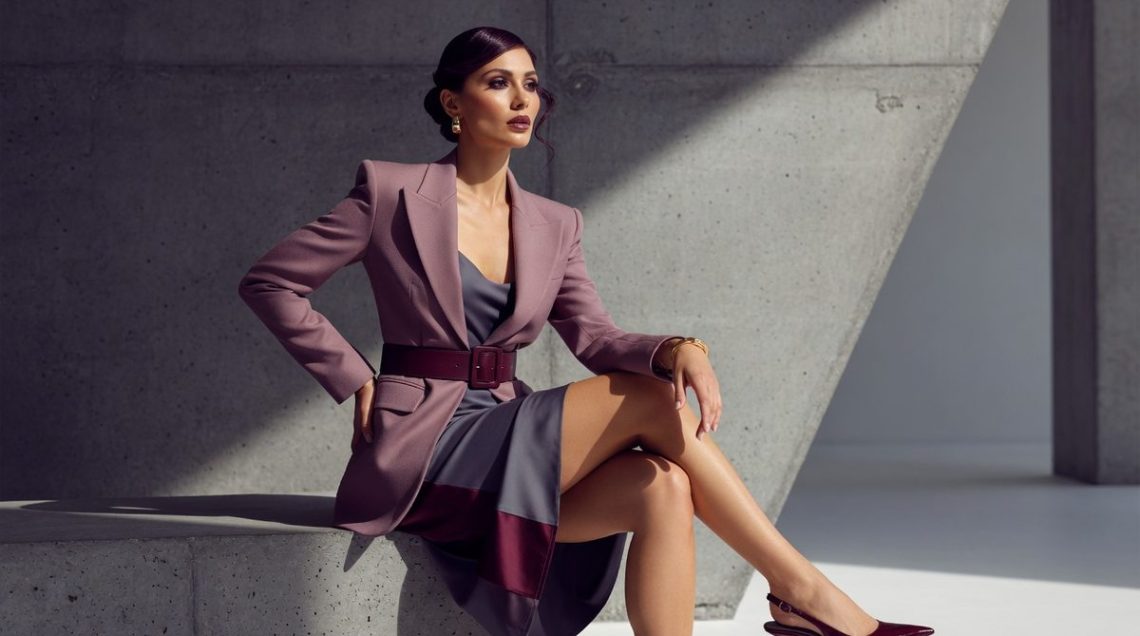
On colour, the reports converge too: Who What Wear points to a fire-engine red, Marie Claire and Conner Ives are both pushing lilac, and Bottega Veneta and Erdem lean into deeper jewel tones. Rather than picking one in isolation, the smarter move is pairing by skin tone, fire-engine red reads warmest against deeper or olive undertones, while lilac tends to flatter cooler, fairer complexions most easily. Retailers including Zara, H&M, M&S and COS already report rising demand for both colourways, so stock won’t sit around for long.
Which of these trends has real staying power once the shows end and the returns rails fill up is the question every stylist is already asking next.