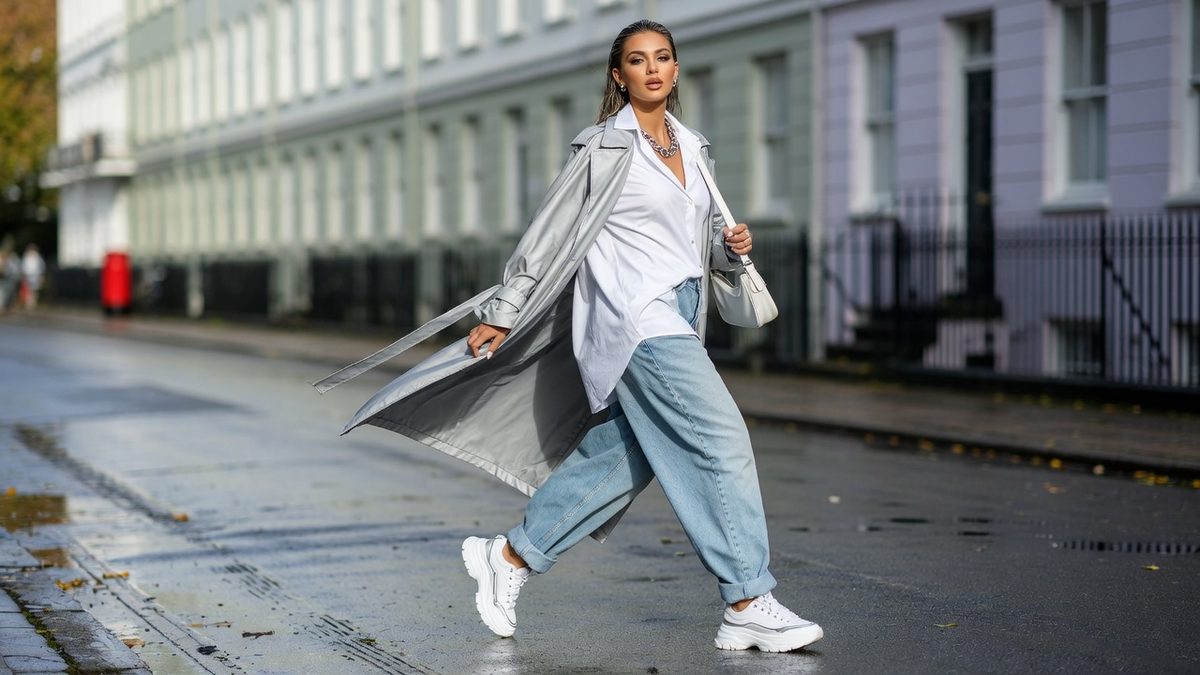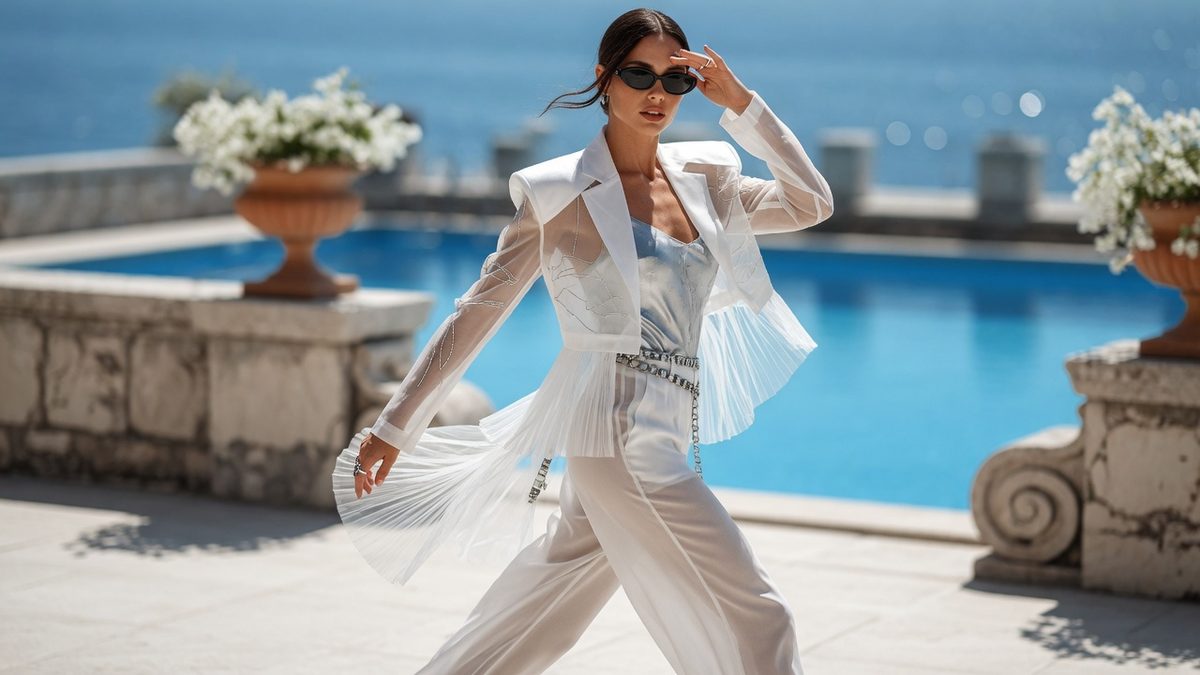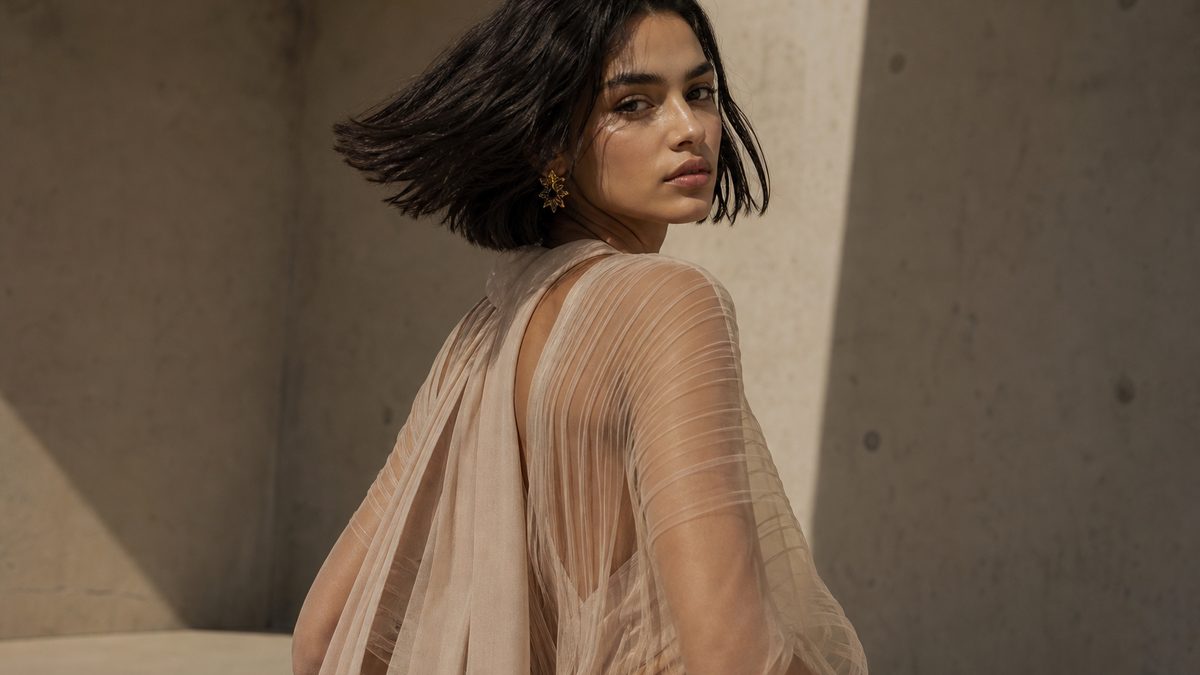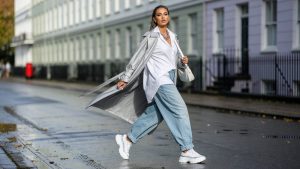

A new format is flooding TikTok, and it’s not a product haul or a #GRWM. It’s women opening with ‘I spend my days…’, office worker, postgrad student, studio artist, then showing what they actually wear for those six-plus hours. No aspiration, no occasion dressing, no ‘if I had somewhere to go’. Just real life, dressed intentionally. And it’s exploding across UK fashion searches not because it’s a microtrend, but because it names something the industry has ignored: context dressing, where your primary setting dictates your wardrobe, not the other way round.
This is fashion’s quiet rejection of aspirational dressing. Women are no longer building wardrobes for hypothetical events or curated feeds. They’re dressing for the desk, the lecture hall, the Tube commute, the all-day studio session, and styling up or down from that anchor point. It’s a shift from ‘what’s in’ to ‘what works for where I literally am’, and the fact it’s being codified via TikTok captions rather than runway reports tells you everything about who’s leading the conversation now.
The ‘I spend my days’ signal: what’s really being said
The format is deceptively simple: state your primary setting, show your formula. But what’s being communicated isn’t outfit inspiration, it’s permission. Permission to stop dressing for an imagined lifestyle and start dressing for the one you’re actually living. A postgrad researcher in Manchester shows her daily uniform: memory-wool trousers, a fine-knit tee layered under a loose button-down, Miu Miu-style flats. An art director in Bristol repeats wide-leg tailoring and a rotation of three ribbed vests, all in neutrals. The through-line isn’t aesthetic, it’s function married to identity, and it’s being built from the ground up by women who’ve realised their ‘primary setting’ isn’t a restaurant terrace or a gallery opening.
UK micro-influencers are leading this, not established fashion voices. They’re naming their context first, ‘I spend my days at a desk in a freezing open-plan office’ or ‘I spend my days cycling between client meetings’, then showing the outfit formula that solves for it. It’s deeply practical, but it’s also quietly radical. Because it reframes the question from ‘what should I wear?’ to ‘where am I, and what does that require?’ Stylist Magazine has touched on daily-wear dressing, but competitors haven’t named the ideology underneath: this is context as the organising principle, not trend, not season, not aspiration.
From Tomato Girl Summer to context dressing: the cultural roots
This isn’t the first time TikTok has named a lifestyle-dressing wave, ‘Tomato Girl Summer’ and the Blokette aesthetic both coded identity through outfit formulas. But those were still aspirational: sun-drenched Mediterranean fantasy, or art-school cool-girl signalling. ‘I spend my days’ is different. It’s rooted in the mundane, the repetitive, the un-Instagrammable reality of most women’s weeks. And that’s why it’s resonating harder. The Blokette was about mixed-identity dressing, yes, but it was still performance. This is about utility first, identity second, and that order matters.
Culturally, it’s also a response to the exhaustion of constant aesthetic pivoting. Quiet Luxury demanded investment pieces. Indie Sleaze required vintage hunting. Y2K rewired entire wardrobes. Meanwhile, most women were spending their days in the same four places, wearing the same three outfits, and feeling like they were failing at fashion because none of the trends addressed that reality. The ‘I spend my days’ framework is permission to stop chasing and start anchoring. Valentino’s AW25 showed layered tees and contextual dressing on the runway, proof that even high fashion is catching up to what women have already figured out at street level.
How to style it: the primary setting formula that actually works
Start by naming your primary setting: the place you spend six-plus hours a day, four-plus days a week. Desk? Studio? Classroom? Outdoors? Build one repeatable outfit formula for that context, then style up or down from there. If your primary setting is an office, your formula might be: tailored trousers in a memory-blend fabric (holds shape across a full London day better than linen or satin, a fabric truth rarely mentioned), a fine-knit tee or ribbed vest, and a loose overshirt or blazer for temperature control. Sandy Liang’s romantic details and Marc Jacobs’ grunge layering both work here because they’re modular, add or subtract pieces without rebuilding the whole look.
Proportion fix: if you’re wearing wide-leg trousers as part of your formula, the rise must hit at the natural waist. Too low and they drag, lose structure, and read sloppy by midday, a stylist’s hack that competitors miss entirely. Fabric matters more than silhouette when you’re dressing for duration: 3D-knit and 4-way stretch fabrications retain shape and movement across a twelve-hour day, while wovens crease and stiffen. Bottega Veneta’s fringe and textural dressing can layer into a primary formula as the ‘style up’ element, same base, different evening energy.
The real shift is this: your wardrobe isn’t a collection of individual pieces anymore. It’s a system built around your actual context, with one strong formula at the centre and modular styling around it. That’s not a microtrend, that’s a structural change in how women are thinking about getting dressed, and it’s only going to deepen as more people name their primary setting out loud and stop apologising for dressing for it.