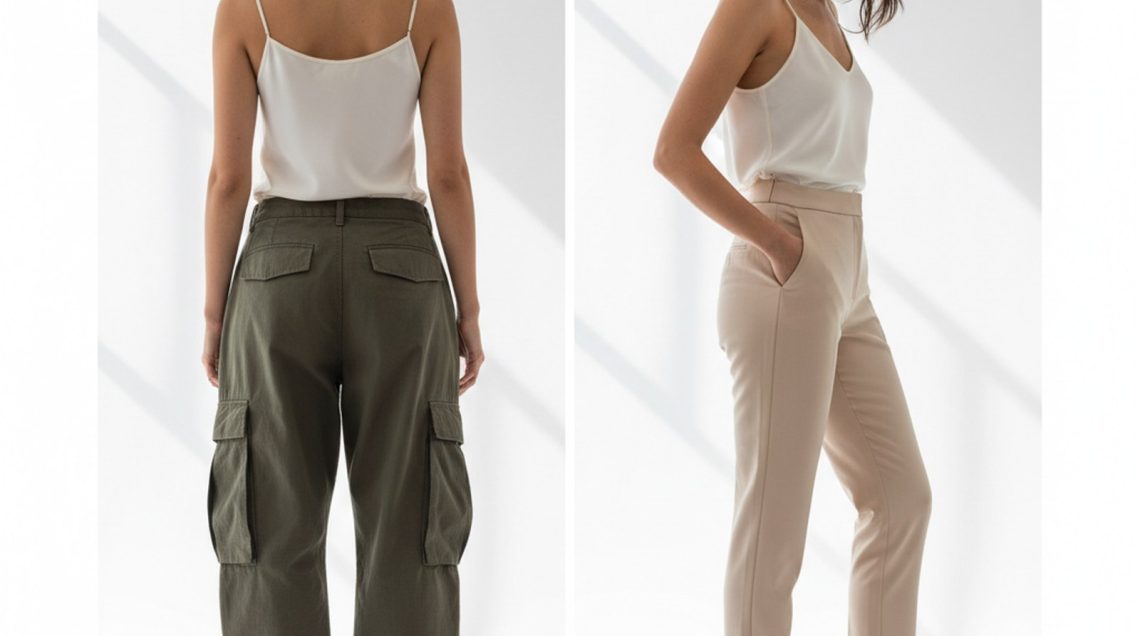
The sheer trend is everywhere this June, from the high street rails at Arket and COS to the Royal Ascot preview shoots, and the question every British woman is quietly Googling is the same: how do I wear this to a real event without looking either underdressed or overexposed? The answer is a single inversion. Treat the slip, not the sheer, as the hero garment. You style the under-layer first; the translucent piece sits on top as texture and silhouette, never as the main event.
That one rule unlocks everything else, including the loophole that lets a sheer-adjacent look pass the strictest Ascot enclosure. It also happens to solve the British summer problem of warm-at-noon, cold-by-four, drizzle-by-six, because a sheer layer over a quality slip traps body heat like a second skin and lifts off the moment the sun comes out.
The slip-as-hero rule, explained
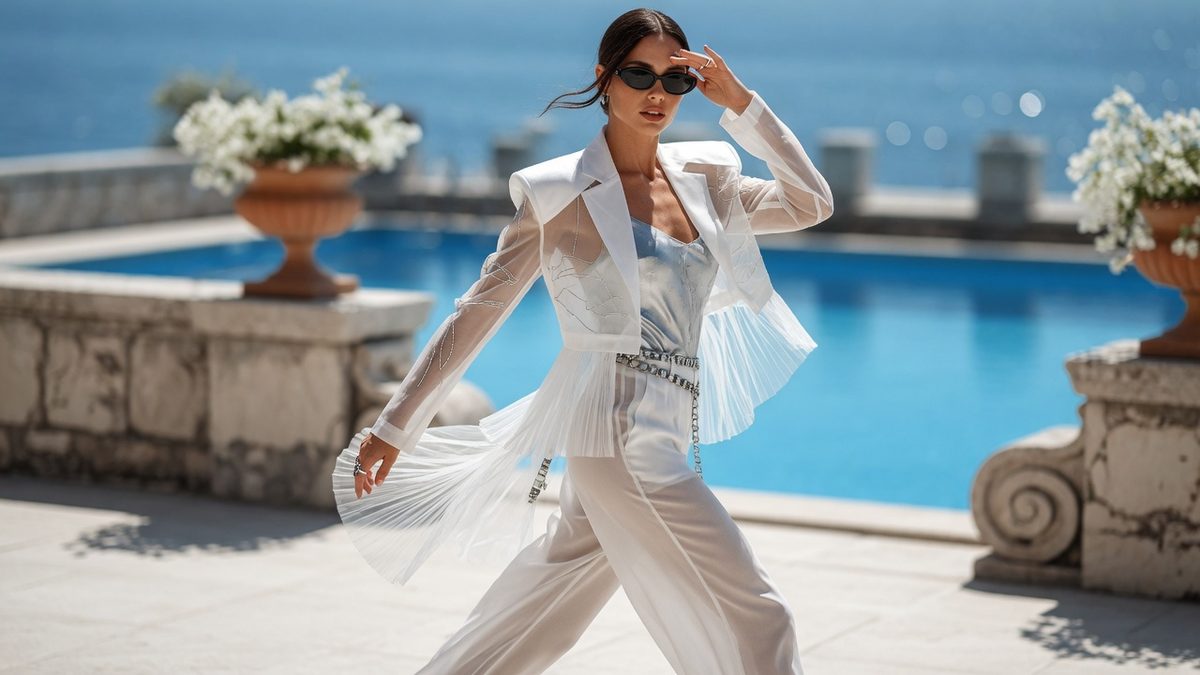
Most coverage of the sheer trend tells you to “pop a cami underneath” and stops there. That is the wrong order of operations. The slip or lining is the garment doing the work: it sets the colour story, it determines the modesty line, it carries the proportion. The sheer layer adds movement and texture on top.
Practically, that means a £30 bias-cut satin slip in the correct length and tone will do more for your outfit than a £300 chiffon dress styled with the wrong base. Buy your slip kit first (knee-length ivory, mid-thigh black, a nude bodysuit, perhaps a Wolford long-line piece) and the sheer pieces in your wardrobe suddenly multiply in usefulness.
There is a proportion rule to follow. On a midi sheer skirt, the slip should end at or above the knee. If the slip hem and the sheer hem are level, the transparency disappears and the look reads as a regular opaque skirt. If the slip ends mid-thigh and the sheer falls to the ankle, you get a reveal panel of soft chiffon over bare calf, which is the visual interest the trend is actually built on.
The Ascot question no one is answering clearly
Here is the tension. Royal Ascot runs from 16 to 20 June 2026, with Ladies Day on 18 June, and the dress codes have hardened around sheer in a way most fashion titles are skirting. In the Royal Enclosure, midriffs must be covered and sheer fabrics are not permitted, and trouser suits and jumpsuits must fall below the knee and adhere to the dress neckline and strap regulations. In the Village Enclosure, adults are not permitted to wear strapless, one-shoulder, off-the-shoulder, or Bardot styles, and sheer clothing is also excluded.
So is the sheer trend dead on arrival at Ascot? No, and this is the bit the competition is missing. In the Queen Anne Enclosure, ladies need to wear a dress, top, or skirt with shoulder or halter neck straps, and lace and chiffon fabrics are allowed with no minimum length. The same applies in the Village Enclosure, where dresses or tops with shoulder or halter neck straps are required and fabrics like lace and chiffon are allowed with no minimum length. Sheer fabrics are permitted only if fully lined; lace, tulle, and organza are allowed.
Translation: the styling formula that works is an opaque slip or lining that meets the dress code, with a lace or chiffon overlay as the outer layer. That is the precise loophole. A fully lined lace midi from Whistles or a chiffon-overlay dress from M&S Autograph reads as sheer-trend on Instagram and as compliant at the gate. A mesh column dress with a slip showing six inches of skin between the two hems does not.
Fabric by fabric: what each one actually does in British light
The single most underrated tip for wearing sheer in this country: always hold the piece up to a window or step into the garden before the event. Indoor lighting flatters and masks. British summer light, even on an overcast Wednesday, exposes everything. The boutique changing-room test is meaningless.
- Chiffon. Diffuses light gently, reads as soft even when technically sheer. The friendliest fabric for garden parties because it blurs rather than reveals.
- Georgette. Slightly heavier than chiffon, drapes beautifully, behaves well in wind. Reliable for a long lunch in a Berkshire marquee.
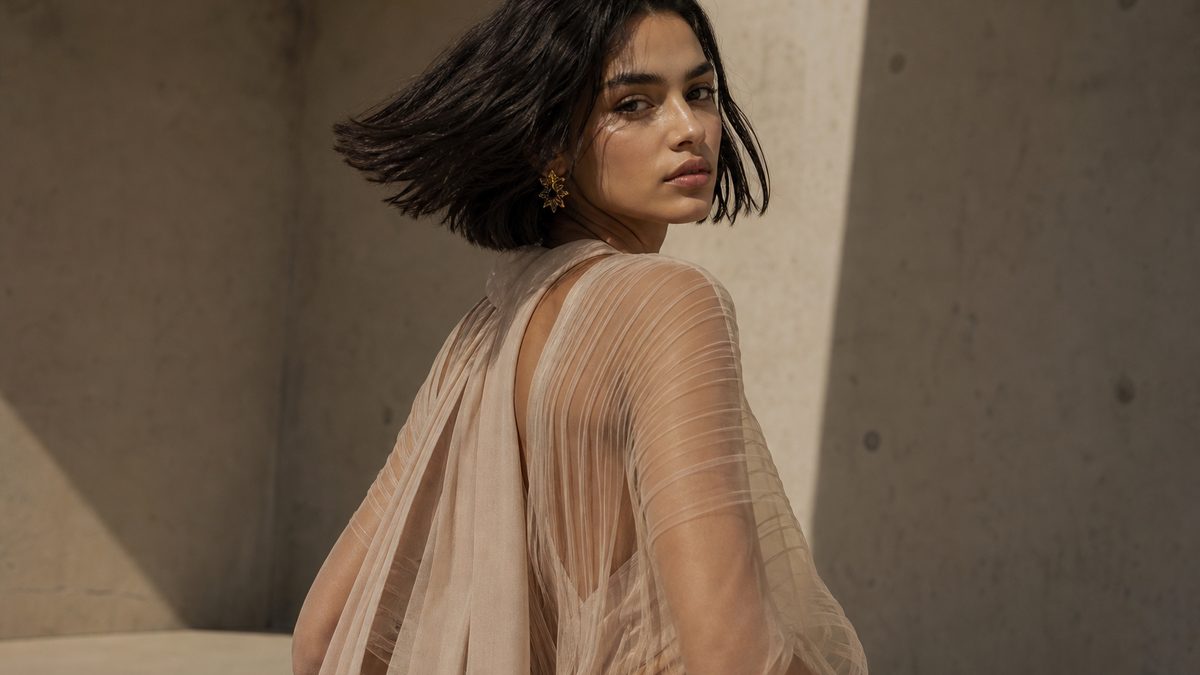
- Organza. Crisp, more transparent, sculptural. Needs a full opaque underlayer in matching tone. Arket’s organza shirts are a good case study: brilliant over a fitted vest, exposing over a bra alone.
- Lace. Has built-in pattern camouflage that reduces visibility anxiety, and crucially is permitted in the Queen Anne and Village enclosures.
- Mesh. The most exposing and the least appropriate for any formal UK occasion. Save it for an evening drinks list, not the races.
If you want the rest of the summer occasion calendar broken down this way (Wimbledon whites, garden party florals, the August wedding circuit, the awkward 14-degree-and-drizzle June Saturday), the Mūsmūs newsletter lands every Thursday with one outfit formula, two high-street picks and zero filler. Sign up below and you will get the Ascot Ladies Day edit before the gates open on 18 June.
The Alexa Chung clue: ruching is opacity
Alexa Chung was photographed this season in a ruched mint-green sheer top styled as a fully grown-up, non-revealing piece. The reason it worked is the part most write-ups skipped: the ruching density made the fabric effectively opaque across the bust and waist. The “sheer” was in the sleeves and at the neckline only, where transparency reads as texture rather than exposure.
This is the lesson to take to the high street. Ruched detail, smocking, gathered panels and dense embroidery all build opacity into a sheer piece without adding a second layer. When you are scanning the rails at & Other Stories or Reiss, look for the gathered bodice or the embroidered yoke. That construction is doing the styling work for you.
For visual reference, this is the layered slip-and-sheer logic in one image:
https://www.pinterest.com/pin/how-to-wear-a-sheer-dress-in-2025–695524736237080353/
Colour: tomato, ivory, and the matching rule
For 2026, the Ascot Colour of the Year is Bright Tomato, a bold, bright hue officially named as the inaugural Colour of the Year in the Royal Ascot Handbook: The Art of Dressing Well. Sheer in tomato red is harder to pull off than sheer in ivory or pastel: the colour is so saturated that any transparency reads as deliberate skin rather than soft texture. If you want the Bright Tomato story, take it via the slip (tomato satin under ivory chiffon) or via accessories, not via a sheer red overlay.
The matching rule is the stylist shortcut. A slip that exactly matches the sheer’s ground colour, ivory under ivory chiffon for example, reads as one elegant garment with depth. A contrasting slip, white under blush, creates a graphic two-layer effect that looks intentional at a garden party and underdressed at a formal enclosure. Choose your contrast based on the venue, not the trend.
The changeable-weather payoff
The contrarian point is worth ending on. A sheer overlay over a quality slip is genuinely warmer than the slip alone, because the outer layer traps a thin pocket of body heat against the skin. For the 14-degree-and-overcast garden party that British June regularly serves up, this is more useful than reaching for a denim jacket. When the cloud lifts and it climbs to 24 degrees, the layer breathes in a way a blazer cannot.
One specific action this week: pull every sheer piece you own out of the wardrobe, hold each one up to a south-facing window at 11am, and sort them by fabric and opacity. Then buy the two slips you are missing (a knee-length ivory and a mid-thigh black will cover ninety percent of summer occasions). That is the entire wardrobe project, and it costs less than a single new dress.