

Yes, linen creases. But how badly, how sharply, and whether it reads as “lived-in” or “slept-in” is decided almost entirely before you reach the till: by the fabric’s weight in grams per square metre (GSM), its weave, and what it’s blended with. Aftercare matters far less than the high street pretends, which is why two linen dresses bought on the same morning can look completely different by 2pm.
Here’s what to look for if you’re buying for Royal Ascot, a Wimbledon afternoon, a humid garden party or a tube commute in 28 degrees, and what to do at home the night before.
The GSM rule nobody on the high street explains
GSM is the single most useful number on a linen label, and the one most often missing. It tells you how dense the cloth is, which determines how it folds, how it drapes, and crucially how a crease behaves.
- Under 150 gsm: beautiful drape, almost handkerchief-light, but it produces sharp, fine wrinkles that read as crumpled rather than relaxed. Best for floaty blouses you’ll wear under a blazer, not standalone dresses for a long day. Often see-through in white or ecru, which forces a lining and traps heat.
- 150 to 200 gsm: the sweet spot for dresses, midi skirts and softer trousers. Wrinkles soften into broader folds rather than knife-edge lines. Breathable enough for British humidity, structured enough to sit down in.
- 200 to 250 gsm: heavyweight territory. Holds silhouette, pleats and tailoring through a full day on grass and a train home. The right weight for linen trousers, blazers and any structured shift dress you want to look intentional in.
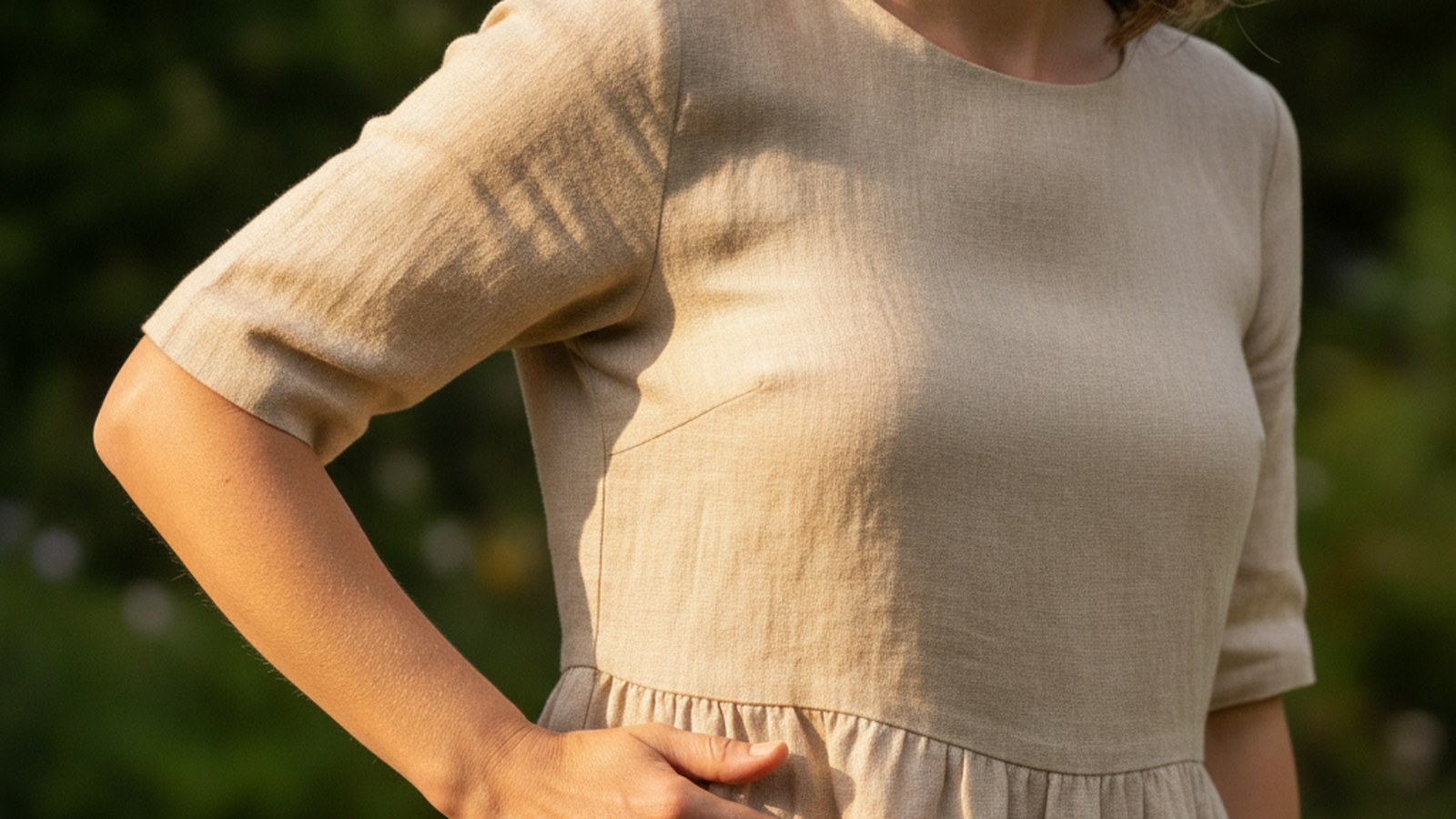
The type of crease changes with weight too. Lightweight linen produces sharp, fine wrinkles that look unkempt under daylight. Heavyweight linen produces broader, softer folds that read as deliberate texture. If you’re standing in line for the Royal Enclosure, that distinction is everything.
Why British humidity is the real enemy
Linen was engineered for dry Mediterranean heat. A muggy July afternoon in Berkshire is a different fabric problem. Linen is cellulose, and cellulose fibres hold their shape via hydrogen bonds. When you add body heat and ambient damp, those bonds re-set quickly in whatever position the fabric is currently in, which is usually creased across the lap and the small of the back from sitting on a Pendolino.
This is why standard linen advice written for Provence holidays doesn’t translate. The practical fix isn’t more steaming. It’s choosing a fabric that’s already been broken in: a washed or stonewashed linen, or a blend that dilutes the cellulose with something more forgiving.
Decoding washed, stonewashed and enzyme-washed
These labels appear on product pages at COS, Arket, Jigsaw and on fabric retailers like Guthrie & Ghani and Fabrics Galore, and almost no one explains what they mean for a Saturday in June.
- Garment-washed: the finished piece is washed before sale, so fibres are pre-softened. Creases appear immediately but stay soft and rounded.
- Enzyme-washed: chemically softened without mechanical abrasion. Gentler on the fabric, often the most sustainable option, and produces a fluid hand from the first wear.
- Stonewashed: the most aggressively broken-down finish. Softest feel, most pronounced slub, wrinkles that look almost intentional from the start.
- Unwashed or loom-state: crispest, most structured, will shrink up to 10% in your first home wash and crease sharply for the first few wears. Avoid for a one-off event.
Slub, those small irregular thickenings in the yarn, is a natural feature of flax, not a fault. Belgian and Irish flax tends to produce a more consistent slub and cleaner hand than cheaper sources, which is why “European flax” on a Jigsaw or Me+Em label is worth the price difference.
The blend cheat sheet
If you want to wear linen for a full British summer day without thinking about it, blends do most of the heavy lifting.
- Linen/cotton: holds structure, less fluid. Best for shirting, wide-leg trousers, structured shirt dresses.
- Linen/viscose: drapes fluidly, reduces sharp creasing dramatically. COS and Rixo use this combination for print dresses, and it’s the reason a Rixo midi survives a wedding better than a 100% linen equivalent.
- Linen/Tencel: the softest hand, the most crease-forgiving option. Worth seeking out for all-day event wear.
- Linen/elastane (even 3%): adds recovery so wrinkles release with movement. Look for it in fitted trousers.
- Linen with Sorona (often blended with viscose and cotton): gives stretch and recovery without elastane, holds shape through a full day, and is quietly available through UK fabric retailers like Guthrie & Ghani if you sew or are buying from independents who do.
This TikTok from The Good Simple Life demonstrates how to use spray starch to set linen fibres and banish wrinkles — a practical, shareable technique that directly supports the article’s “how to stop linen creasing” advice for UK readers.
@thegoodsimplelife Wrinkle-proof your linen pieces with this good, simple tip!You will never shy away from this gorgeous summer fabric once you learn how to set the linen fibres with spray starch and banish wrinkles….#thegoodsimplelife #linen #linentrousers #linencare #laundrytips #laundryhacks #spraystarch #fabriccare #wrinklefree #laundrydayvibes #laundrydayfun
If you want this kind of fabric-led reasoning every week (which weights actually work for British weather, which high street pieces are worth the spend, and the styling logic behind the trends), the Mūsmūs newsletter lands every Thursday morning. It’s the practical edit we’d send a friend who’s just asked us what to wear to a summer wedding in Norfolk.
The linen trouser problem
Trousers crease worst of any linen garment because they bear body weight at the seat and thighs, and they’re seen in full daylight. The rule: linen trousers need to be at least 180 to 200 gsm and ideally cut with a relaxed leg. A skinny linen trouser at 140 gsm will look ruined by lunch. A wide-leg washed linen at 200 gsm with a 3% elastane content can do drinks on the Thames and a dinner afterwards.
The same logic explains why Catherine, Princess of Wales, has appeared at summer engagements in linen-look pieces that don’t visibly crumple on camera. The pieces are cut clean and structured, in heavier weights or blended cloths, with enough ease through the body that sitting in a car doesn’t carve a crease across the lap. It isn’t a steaming trick. It’s the fabric specification and the cut.
A garment crease hierarchy for picking your battles
If you’re choosing one linen piece for a long event, this is the order from safest to riskiest:
- Tops and blouses crease least, especially under a jacket or cardigan.
- A-line and pleated skirts in 170 to 200 gsm hold up well; the volume hides sitting creases.
- Shift and column dresses in mid-to-heavyweight washed linen are reliable for garden parties.
- Trousers need the 180 gsm minimum and a relaxed cut.
- Fitted dresses in lightweight 100% linen are the highest-risk option for any seated, all-day event. Save them for evenings.
The ironing paradox, and what to do the night before
Here’s the contrarian bit. A heavily pressed linen surface creases more aggressively than an un-ironed one, because ironing flattens the fibres into a hard, brittle surface that snaps into new creases the moment you bend. A crisply ironed linen dress at 9am will look worse by 11am than one that was simply hung damp to dry.
The better routine: wash on a gentle 30°C cycle, lift out while still damp, give it a firm shake, and hang on a wide or padded hanger overnight. Gravity does the smoothing. The result is softer, rounded creases that read as intentional texture rather than neglect.
For the morning of, a handheld steamer is more useful than an iron. And for the commuter contingency (creases set into the seat of a dress by a Northern line carriage), a compact travel steamer or a small water-mist bottle in your bag works in a loo cubicle far better than wrinkle-release spray, which barely penetrates 100% linen.
Where to shop with confidence
If you’re buying this week, a quick UK orientation. Jigsaw and Me+Em tend toward mid-to-heavyweight washed linen in structured silhouettes, the safest bet for events. COS leans on linen/viscose blends, particularly in fluid dresses, which crease less but drape more. Rixo’s printed midis are linen-viscose and very forgiving. Lisou uses pre-washed linen where the wrinkles read as part of the print’s romance. Arket and & Other Stories sit in between, often with washed mid-weight pieces worth checking GSM on. M&S has improved hugely on linen blends; check the composition tab carefully, as some pieces are heavier cotton-linen and some are featherweight 100% linen.
Before you commit, hold the garment up to the light in store. If you can see your hand through it, you’re under 150 gsm and you’ll need a slip. Scrunch a handful for five seconds and let go. If the wrinkles release into soft folds, you’ll be fine through a long lunch. If they stay sharp and white-edged, save it for an evening where you’ll be standing more than sitting.
One specific action for this week: if you’ve already bought a linen dress for an event, wash it once on a 30°C cycle and hang it damp on a wide hanger tonight. You’ll arrive on the day with softer fibres, rounded creases, and a much better chance of looking deliberate rather than dishevelled by the time the speeches start.