If your linen looked crisp in June and tired by August, the problem usually starts before the first wash. It is a combination of fibre length, weave structure, spin speed and detergent chemistry, and once you understand those four things you can keep a £45 M&S shirt looking better than a £200 designer one. This guide is written for British summer specifically: humid drying conditions, hard water in the South East, garden parties, queues at Wimbledon, and the particular way linen behaves between wears.
Start at the shop floor: line linen vs tow linen
The single most useful quality test happens before you buy. Linen is spun from flax, but the long, smooth fibres (called line linen) are separated from the short, brittle ones (tow linen) during processing. Line linen, almost always European flax from Belgium, France or Lithuania, softens with every wash and resists pilling for years. Tow linen, often from cheaper supply chains, feels faintly fuzzy on the rack from day one and starts shedding tiny bobbles after three or four wears wherever there is friction: bag straps, car seat backs, the inside of a coat.
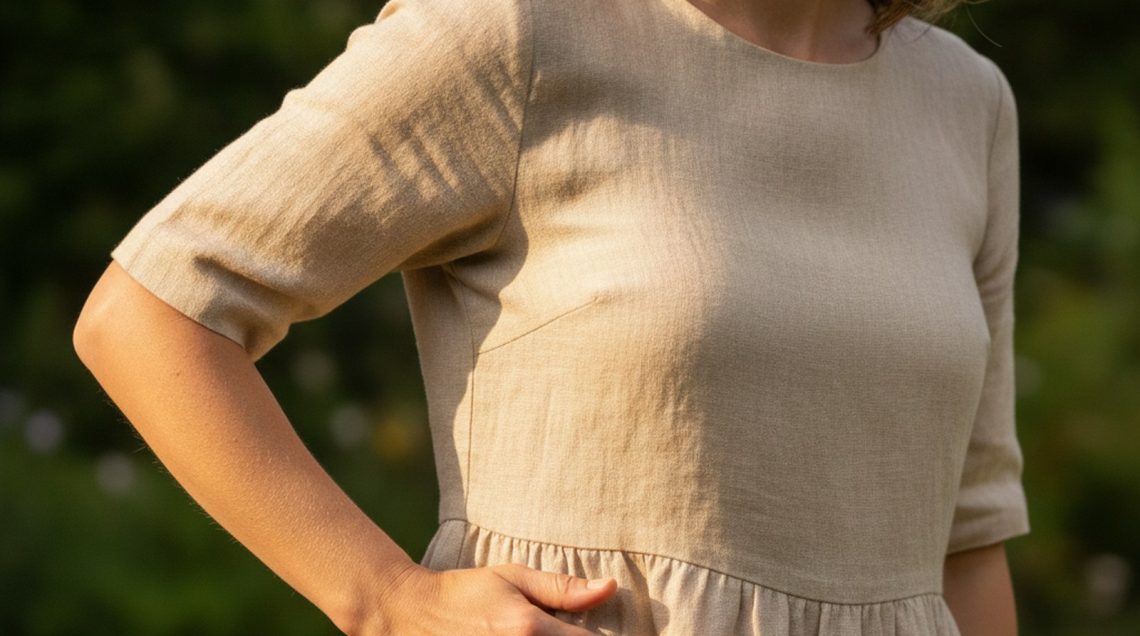
Run the flat of your hand across a linen dress in the shop. If you can feel a faint nap, like brushed cotton, walk away. Proper line linen feels cool, smooth and slightly papery. Look for the European Flax or Masters of Linen certification on the swing tag, both of which guarantee long-staple fibre from traceable EU sources. Kindred of Ireland, Linenfox (Lithuanian, Oeko-Tex certified), Pangaia and Faithfull the Brand all work with this calibre of flax. Komodo UK uses GOTS-certified organic linen, which is another reliable signal.
The GSM number nobody mentions
Linen weight is measured in grams per square metre, and it is the most useful number on a product page if the brand bothers to publish it. For British summer dresses and casual trousers, the sweet spot is 170 to 220 gsm. That weight is opaque in direct sunlight (no surprise lining required when you sit on a Wimbledon hill in afternoon sun), drapes properly rather than standing away from the body, and still breathes on a 26°C day.
Below 160 gsm and you are buying something that will read as sheer the moment a low June sun hits it from behind. Above 260 gsm and you are in jacket and trouser-suit territory, lovely for a structured co-ord but heavy for a garden party. The Marks & Spencer Pure Linen range tends to sit comfortably in the mid-range and is pre-washed, which is why it behaves well from the first wear. Arket’s heavier linen pieces tilt towards the upper end, brilliant for tailoring but warmer than they look. Mango is worth knowing about for drape at a mid price, and The White Company’s linen shirting is typically a finer weight aimed at occasionwear rather than daily wardrobe work.
Weave structure is a crease predictor
Plain weave is the default: a simple over-under construction that creases fast and dramatically. Fine for a beach holiday where rumpled is the point, less fine for a wedding where you are photographed at 5pm having sat through the ceremony, lunch and speeches. Twill-weave linen, recognisable by its diagonal surface line, holds its shape considerably longer through a day on your feet. Herringbone linen is the most structured of the three, the right choice for a tailored co-ord at the races.
If you have ever wondered why one linen blazer looks fresh after Royal Ascot and another looks slept-in by the third race, it is almost always the weave doing the work, not the price tag.
The honest verdict on UK high street linen blends
A 100% linen label is not always the right answer, but a bad blend is worse than honest linen. Hush blends linen with viscose in many of its summer pieces, which improves drape and reduces creasing but means the fabric behaves more like a soft synthetic over time: it loses the cooling property linen is bought for and can pill faster around seams. Boden’s linen-cotton mixes tend to be more honest, retaining linen’s hand while reducing creases. The M&S Pure Linen edit is the strongest mainstream benchmark for the price. Arket’s 100% linen separates are reliable, particularly for trousers, though they need a confident press to look their best.
The rule: if the composition starts with linen and the second fibre is cotton, it usually behaves like linen. If the second fibre is viscose, polyester or modal at more than 30%, you are buying something that drapes nicely on the hanger but will not give you the cool, dry feel of real linen in August.
Want more honest fabric verdicts and a weekly edit of what is actually worth buying on the British high street this summer? The Mūsmūs newsletter lands every Thursday morning with one practical wardrobe piece, one styling rule that works in UK weather, and a short list of pieces we have personally checked in store. Sign up at the foot of this page; it takes ten seconds and you can leave whenever.
The wash rules that actually matter
A TikTok by Bon Savvy covering exactly what to avoid to keep linen clothes looking as good as the day you bought them — directly reinforcing the article’s linen care guidance.
@bonsavvy What to avoid to keep your linen clothes as nice as they were when you bought them! #linendress #linenshirt #linenpants #linensavvy #laundry #laundrytok #laundryhack #laundryday #howto #fashionhacks
Most care guides stop at cold wash and air dry. Those are correct but they are also the easy bit. The fixes that change how linen looks by August are subtler.
Drop the spin speed
British washing machines default to 1200 or 1400 rpm. For linen, that is the single biggest cause of deep, set-in creases that no iron will fully remove. Spin at 600 to 800 rpm maximum. Your linen will come out wetter, which is fine; it dries quickly anyway and reshapes properly on the line.
Skip the fabric conditioner
There is a real contradiction in advice here. Mainstream brands recommend softener; specialist linen producers actively warn against it. The specialists are right. Fabric conditioner coats flax fibres with a lubricating film that feels nice for a wash or two, but the residue builds up, traps body oils, yellows the natural pigment in undyed linen, and weakens the fibre across a season. A half-cup of white wine vinegar in the rinse drawer achieves the same softening effect without residue, and any vinegar smell rinses out completely.
Mind your detergent
Standard UK supermarket detergents contain optical brightening agents (OBAs), chemicals designed to make whites look whiter under UV light. On dyed cotton this is fine. On natural-pigment linen, particularly undyed, oatmeal or stone shades, OBAs interact with the flax to produce a dull greyish cast over repeated washes. Ecover Laundry Liquid, ecological wool washes and most pH-neutral specialist detergents are OBA-free. Worth switching if your linen looks tired sooner than it should.
Hard water in the South East
If you live in London, Kent, Surrey or anywhere with hard water, calcium deposits settle on flax fibres and stiffen the hand over time. A monthly half-dose of citric acid or a scoop of laundry soda crystals in the drum is enough to keep things soft. You will feel the difference within two washes.
Bagging is not damage
Linen has almost no elasticity, which is why it bags at the elbows of a shirt, the knees of trousers and the seat of a dress during wear. It also why washing partially restores those dimensions, which most readers interpret as shrinkage. It is not shrinkage; it is recovery. The practical implication: wash linen slightly more often than instinct suggests rather than less. A linen dress worn twice and washed will hold its shape better across a season than one worn six times then washed once.
Drying, ironing and the suncream problem
Dry flat or on a wide hanger out of direct sun. Direct UV bleaches natural linen unevenly and yellows whites. In a humid British week, indoor drying on a rack near an open window is fine; a damp wardrobe is not. Linen needs air circulation to avoid the musty smell that, once set in, rarely washes out fully.
Ironing: press damp on the reverse, with steam, to a soft finish. The instinct to iron a hard crease into trouser pleats actually weakens the fibre along the fold line with repeated pressings. A soft press holds its shape on the body and looks more expensive anyway, which is the look most British style references (think the loose, lived-in linen Sienna Miller has worn for years) actually favour.
For suncream stains, which are unavoidable at any garden party, do not run water on the stain first. Water sets oil into the open weave. Blot the excess, then apply a drop of washing-up liquid directly to the mark, leave it for five minutes, cold rinse, then run a normal wash. This works on white linen too.
Storage: roll, do not fold
Folding linen on a wardrobe shelf for three months creates permanent crease lines at the fold points. Roll dresses, trousers and shirts loosely instead, the way you would pack a suitcase, and stack them upright in a drawer. Hang structured pieces with the wardrobe door left slightly ajar in summer; British wardrobes hold humidity and the resulting musty smell is the source of most of the linen complaints I hear in July. A cedar block in the drawer helps.
One specific thing to do this week: check the GSM and fibre origin on the next linen piece you are tempted by, and feel the surface for fuzziness before you queue at the till. That single shop-floor habit will save you more money than any wash routine.