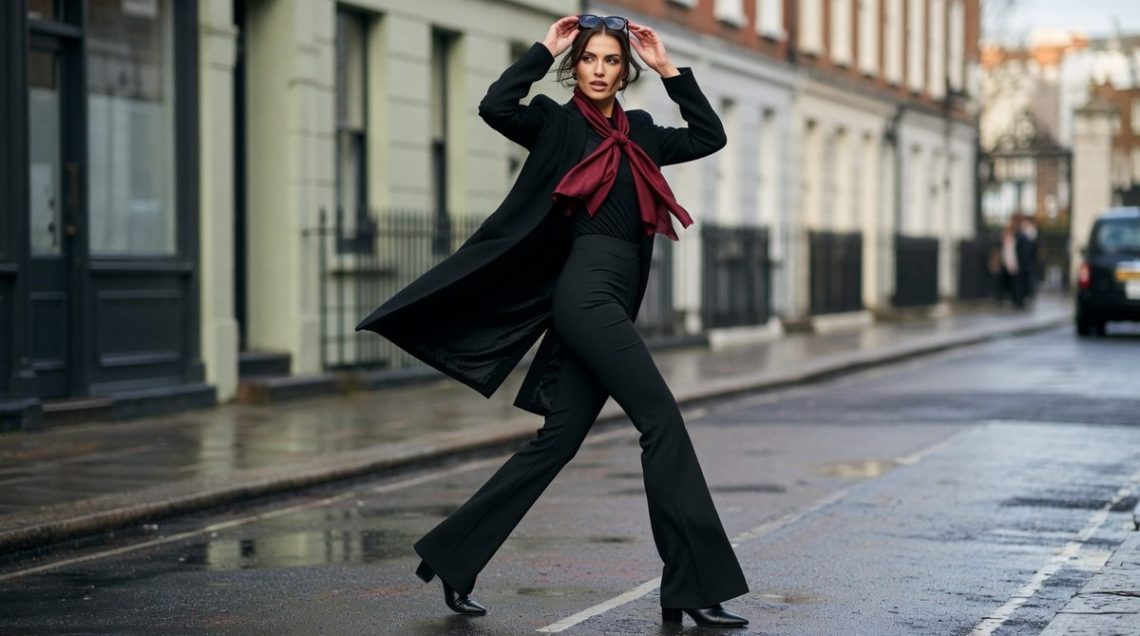
Zara isn’t shouting about it, but the brand’s TRF stretch flare trousers have quietly become the autumn purchase stylists keep circling back to. At £22, they’re priced like a basics buy, yet they’re doing the job that rigid denim has dominated for years: covering the leg in a shape that moves, not just sits.
The reason this is gathering pace now isn’t a single viral moment, it’s a shift in what “dressed up” is allowed to feel like. Marie Claire’s fall 2026 trouser coverage has already pointed to brown trousers, leather and velvet as the season’s directional pieces, and stretch flares slot neatly into that same comfort-first, still-polished register. Jeans are no longer the default answer for a put-together bottom half, and that’s the real story.
The Zara stretch flare signal: ponte, not rigid denim
Here’s the detail most coverage skips: these aren’t denim at all. Zara’s £22 flares are built from a ponte or jersey-blend stretch fabric, not the rigid cotton weave that gives traditional flare jeans their structure. That distinction matters more than the price tag.
Rigid cotton denim holds a flare’s shape by resisting the body, which is exactly why stiff flare jeans can feel restrictive at the knee and dig in at the hip when you sit, bend or stride. A ponte-based flare does the opposite: the fabric flexes with the hip and knee instead of fighting them, which is why it reads as both tailored and comfortable rather than one at the expense of the other. It’s less a styling trick and more a materials one.
That ponte-versus-denim split is also the quiet rebuttal to every roundup treating flares as interchangeable. Zara, Woman & Home’s own under-£30 jeans coverage, and the broader fall trouser conversation are circling the same rail, but the fabric is doing the differentiation, not the cut alone.
How boho exaggeration gave way to a sharper flare
To understand why this shape feels fresh rather than recycled, it helps to trace where flares have just come from. The exaggerated boho flare, think wide, swinging hems built for maximum drama, has spent the last few seasons as the loudest version of the trend, often worn with the deliberately undone layering that defined that look.
The post above, picked up in Who What Wear UK’s recent flare coverage, captures the pivot clearly: the silhouette has tightened. What’s rising now is a high-rise slim flare that skims rather than swings, a far more controlled line than its boho predecessor. Who What Wear’s Imani-Nia Francis-Tsolaki, Maxine Eggenberger and Josephine Hadjiloucas have all been tracking this move toward sharper, less costume-y flare dressing.
It’s also worth being honest about what this shape is replacing. Barrel jeans had their moment through 2025, but their rounded, ballooning leg is a different proposition entirely, more sculptural, less fluid. The stretch flare’s return suggests shoppers are drifting back toward a line that elongates rather than exaggerates.
Styling the stretch flare: proportion, hemline and footwear
Getting this silhouette right comes down to precision, not instinct. Stylists have long repeated the short-top, long-bottom proportion rule, but it needs adjusting for softer stretch fabric: a fitted or tucked top with a hem cropped above the hip balances the flare’s volume, where a looser top on already-fluid jersey just reads shapeless rather than relaxed.
The hemline is the detail that separates polished from dated, and it’s the one most guides leave out entirely. The rule stylists apply is specific: the hem should sit roughly 1 to 1.5cm from the floor, skimming rather than pooling or stopping short. Heeled boots, platform shoes and pointed-toe loafers all work because they maintain that line without interrupting the leg’s length.
It’s also worth being clear-eyed about the trade-off. Stretch jersey flares can lose their shape or bag at the knee with repeated wear in a way structured cotton denim doesn’t, so the “effortless comfort” pitch isn’t the whole picture. If you’re choosing between categories, tailored wide-leg trousers suit a sharper, more formal day, barrel jeans suit a boxier, statement moment, and skinny jeans still answer for anything needing a closer leg line, which leaves the stretch flare as the specific answer for when you want movement and polish without denim’s rigidity. Whether Zara keeps this exact style in stock through the rest of autumn is the detail worth watching next.