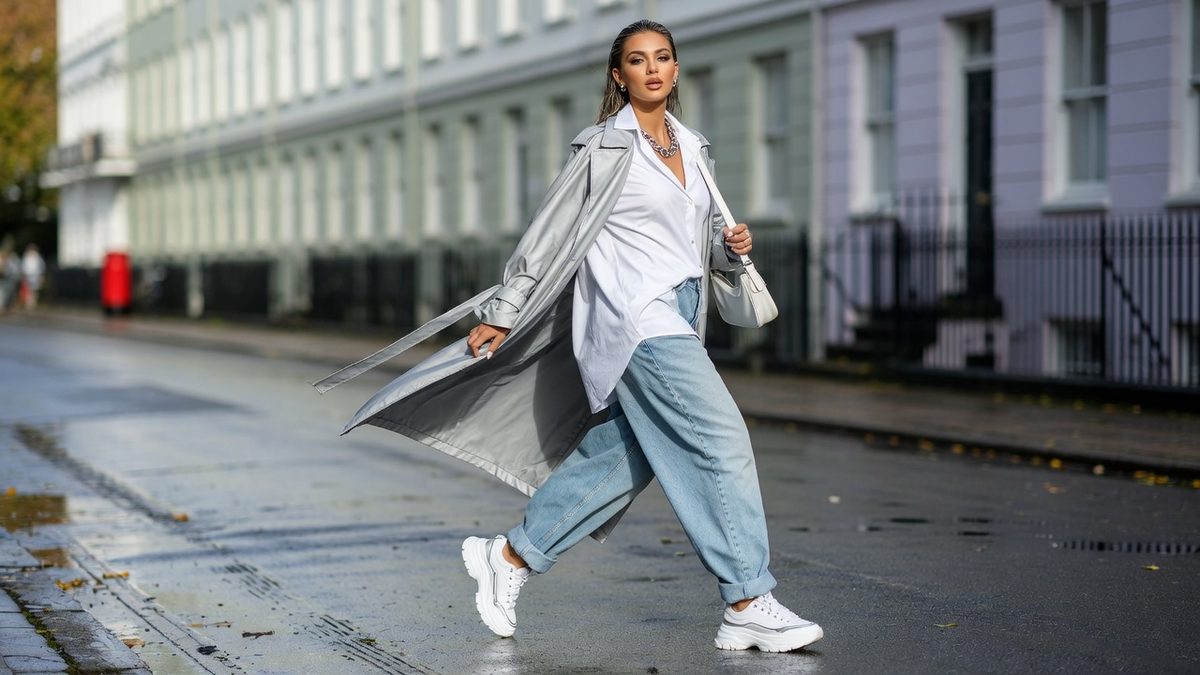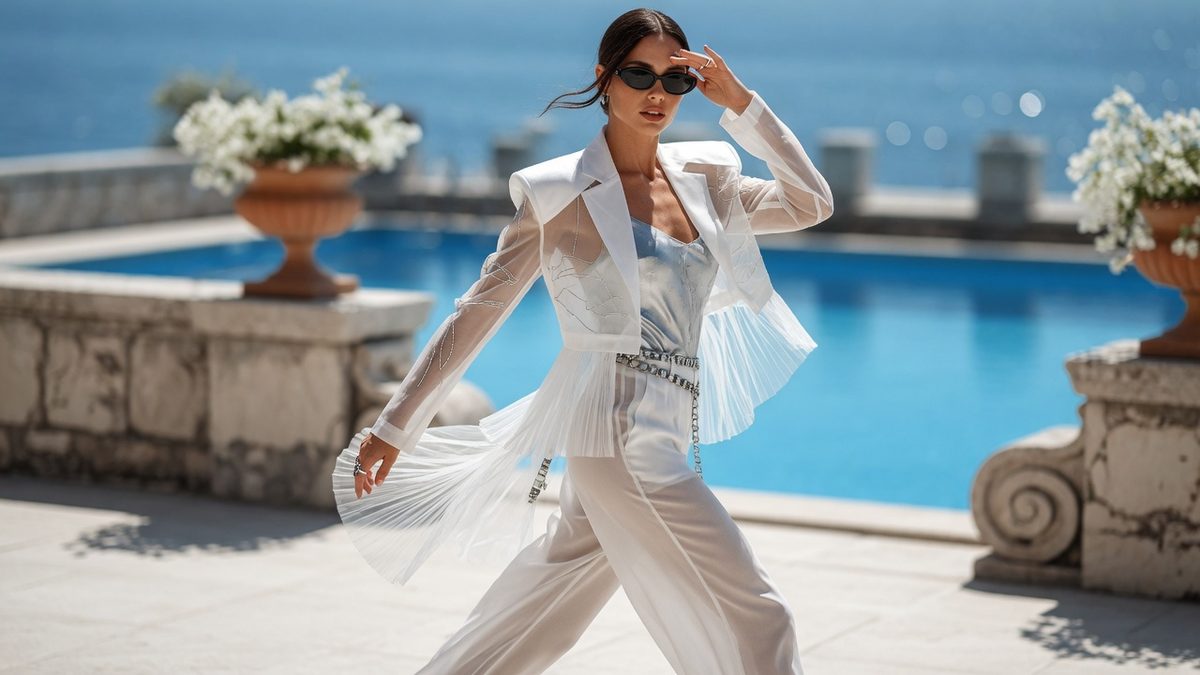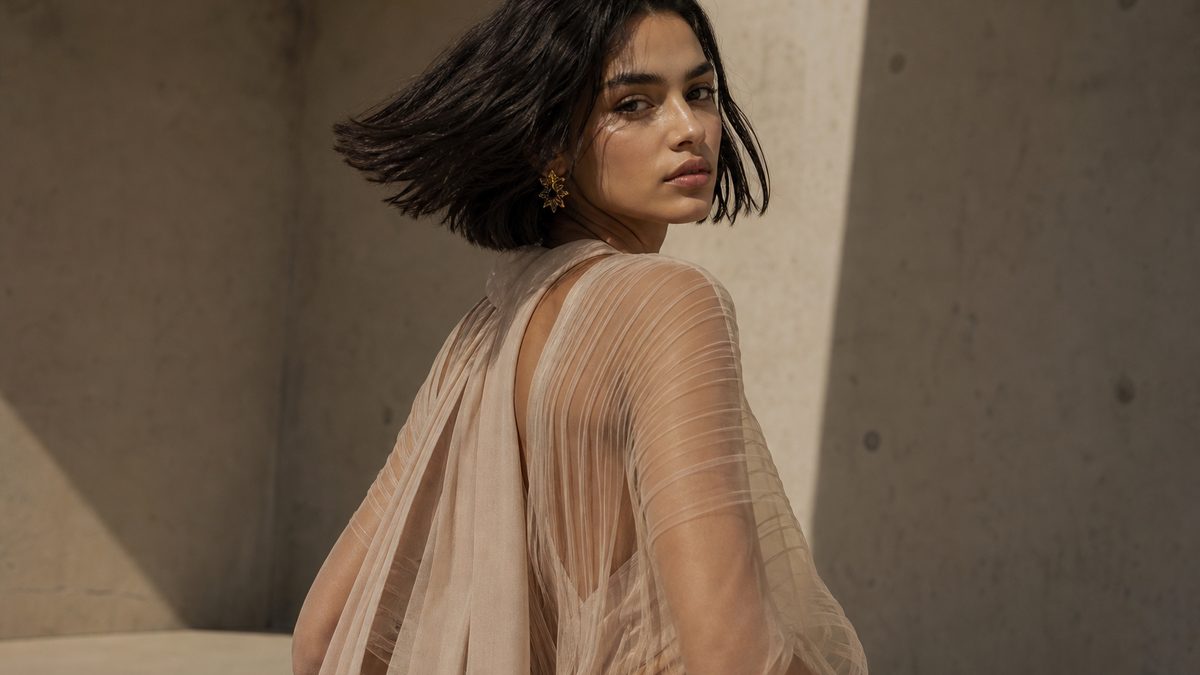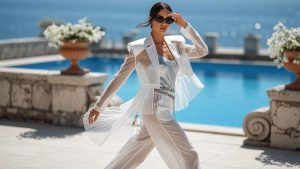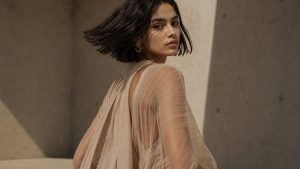


Victoria Beckham has spent two decades translating the micro-gestures of her own wardrobe, upturned collars, rolled hems, a sleeve pushed to the elbow, into a design vocabulary that now defines her label. What began as off-duty styling quirks documented by paparazzi has crystallised into a formal runway language, one that positions instinct as method and repetition as house code. The Netflix documentary released earlier this year offered a controlled glimpse into that process, yet the brand’s recent commercial momentum suggests the real story lies not in behind-the-scenes access but in how those personal tics have been codified into wearable, gesture-based details that drive revenue.
This is not incidental. By making her own styling habits the architecture of her collections, visible in the FW25 show at Château de Bagatelle and the SS26 palette notes referencing Jean-Michel Basquiat, Beckham has constructed a brand identity that feels both aspirational and oddly familiar. The upturned collar becomes a house signature; the rolled cuff, a commercial asset. It is a strategy that mirrors the wider luxury shift toward imperfection as design intention, yet Beckham has claimed it as her own, turning the personal into the institutional without losing the sense of spontaneity that made it legible in the first place.
The signal: why Victoria Beckham is trending right now
Victoria Beckham is dominating UK search behaviour because a constellation of cultural signals has converged: the Netflix documentary directed by Nadia Hallgren positioned her as a designer worthy of serious reconsideration, while high-profile wearers including Catherine, Princess of Wales, Zendaya, and Nicole Kidman have amplified the brand’s visibility. Time magazine framed the documentary as a ‘much-needed reconsideration’ of Beckham’s design credentials, yet IMDB audience reviews critiqued it as a ‘long-form advertisement’, suggesting the film’s controlled aesthetic may have undermined the vulnerability it sought to project. That tension, between curated authenticity and perceived commercialism, is precisely what makes Beckham’s brand culturally potent right now.
The documentary featured contributions from Anna Wintour and Tom Ford, lending institutional weight to Beckham’s narrative of transformation from pop-culture figure to legitimate designer. Yet the real driver of search interest appears to be the brand’s recent repositioning during Paris Fashion Week, where the FW25 and SS26 collections were presented not as aspirational fantasy but as extensions of Beckham’s own wardrobe logic. Studio 99, the Beckham production company behind the documentary, has effectively turned personal style into a marketable origin story, one that positions the designer as both subject and curator of her own mythology.
The cultural roots: from Diana’s shoulders to Bagatelle’s runway
Beckham’s shoulder pad revival was explicitly framed by Hello Magazine as ‘taking style cues from Princess Diana’, a lineage that positions the designer within a British fashion continuum while exploiting the cultural nostalgia for Diana’s power-dressing era. That connection is not merely symbolic: Catherine, Princess of Wales, has been publicly documented wearing Victoria Beckham designs, creating a feedback loop in which the brand borrows Diana’s codes and receives royal endorsement from the next generation. The shoulder pad, once a signifier of Eighties excess, has been recontextualised as a gesture of quiet authority, a shift that mirrors the broader industry move toward ‘imperfection as design intention’ seen at Loewe and Bottega Veneta.
The FW25 show at Château de Bagatelle in Paris marked a deliberate repositioning, with Beckham presenting her collections in a venue that evokes both historical grandeur and intimate domesticity. The SS26 palette notes referenced Jean-Michel Basquiat, signalling a desire to align the brand with fine-art credibility rather than celebrity adjacency. This is a calculated distancing from the pop-culture baggage that once defined Beckham’s public identity, yet the strategy depends on a contradiction: the brand’s commercial success is driven by its ability to make aspirational pieces feel personal and accessible, a quality derived directly from Beckham’s own styling habits as captured by street-style photographers.
FashionUnited drew comparisons between Beckham’s approach and Céline under Phoebe Philo, a reference that situates the brand within a lineage of ‘instinctive dressing’ that privileges wearability over spectacle. Yet where Philo’s Céline was defined by restraint and intellectual minimalism, Beckham’s codes are more visibly gestural, collars turned up, hems rolled, belts cinched, making them easier to adopt and, crucially, easier to commodify. The reported 52 per cent revenue uplift, with dresses and belts as the biggest drivers according to WWD, suggests that this approach is not merely aesthetic but strategically commercial.
How to wear the Beckham codes without looking like a copy
The key to adopting Beckham’s runway language lies in understanding that the codes are designed to be worn incompletely. A structured shoulder does not require a full power suit; a rolled cuff works best when the rest of the silhouette is neutral. The trick is to isolate one gestural detail, an upturned collar, a belt worn slightly off-centre, and let it function as punctuation rather than statement. Beckham’s own wardrobe logic, as documented in street-style coverage of Paris Fashion Week, relies on repetition and restraint, allowing a single styling habit to become a recognisable signature without tipping into costume.
Accessories offer the most direct entry point: the Philip Treacy hat Beckham wore to David Beckham’s knighthood ceremony demonstrated how a single piece can anchor an entire look, transforming a simple dress into a studied composition. Victoria Beckham Beauty, the brand’s cosmetics extension, operates on the same principle, minimal, repeatable gestures that feel instinctive rather than prescribed. The challenge is to borrow the codes without literalising them, to treat the upturned collar or rolled hem as a starting point for personal variation rather than a fixed formula.
The broader lesson is that Beckham’s runway language works because it is rooted in habit, not fantasy. The codes are visible, repeatable, and, crucially, wearable in contexts beyond the runway. As the industry continues to shift toward ‘imperfection as design intention’, the question is whether other designers can replicate Beckham’s success in turning personal styling tics into house signatures, or whether this particular alchemy depends on a public figure whose every off-duty choice has been documented, dissected, and ultimately commodified for two decades.
Photo: Owl Bridge Media, CC BY 3.0, via Wikimedia Commons — modified: subject cutout on an editorial collage background.