British shoppers are searching ‘over flip flops and’ at record volume this August, signalling something more urgent than a seasonal sandal curiosity. The phrasing itself, ‘over’, betrays the real intent: people aren’t asking what to wear with flip-flops, they’re asking what to layer on top to make the pairing credible. The Row’s Dune Thong Sandal dominated Lyst’s Q2 2025 hottest-item data, Balenciaga’s Pierpaolo Piccioli debut in March 2026 sent platform jewel-adorned thongs down the runway, and Alaïa’s heeled iterations have appeared on Kendall Jenner and Riley Keough at Cannes. The flip-flop has crossed from beachwear to wardrobe cornerstone, but only if the equation above it is correct.
This isn’t about casual styling, it’s about a deliberate contrast that rewrites the rules of formality. The flip-flop demands a structured ‘over’ garment to signal intention rather than accident. Chanel’s Spring 2024 crystal-CC logo flip-flops opened the luxury gateway, but it’s the SS26 runway cycle, The Row, Prada’s hyper-coloured leather Havaianas-riff, Max Mara’s wide-leg tailoring pairings, that has codified the formula. The UK’s climate makes this equation sharper still: the flip-flop is no longer a warm-weather compromise but the anchor of a three-piece layering system that requires precision.
The ‘over flip flops and’ signal: from Chanel gateway to The Row’s Dune Sandal
Chanel’s Spring 2024 runway moment established the luxury flip-flop as a viable proposition, crystal CC logos elevating a silhouette previously coded as disposable. But it was The Row’s Dune Thong Sandal, launched in their SS26 collection, that turned curiosity into urgency. The design strips away ornamentation entirely, relying on leather-strap construction and a sculptural footbed to carry formal authority. Zendaya has worn platform iterations; Zoë Kravitz pairs flat thong sandals with loose trousers and oversized shirting. The material matters: leather-strap flip-flops hold enough structural weight to sit beneath suiting and outerwear without collapsing the silhouette.
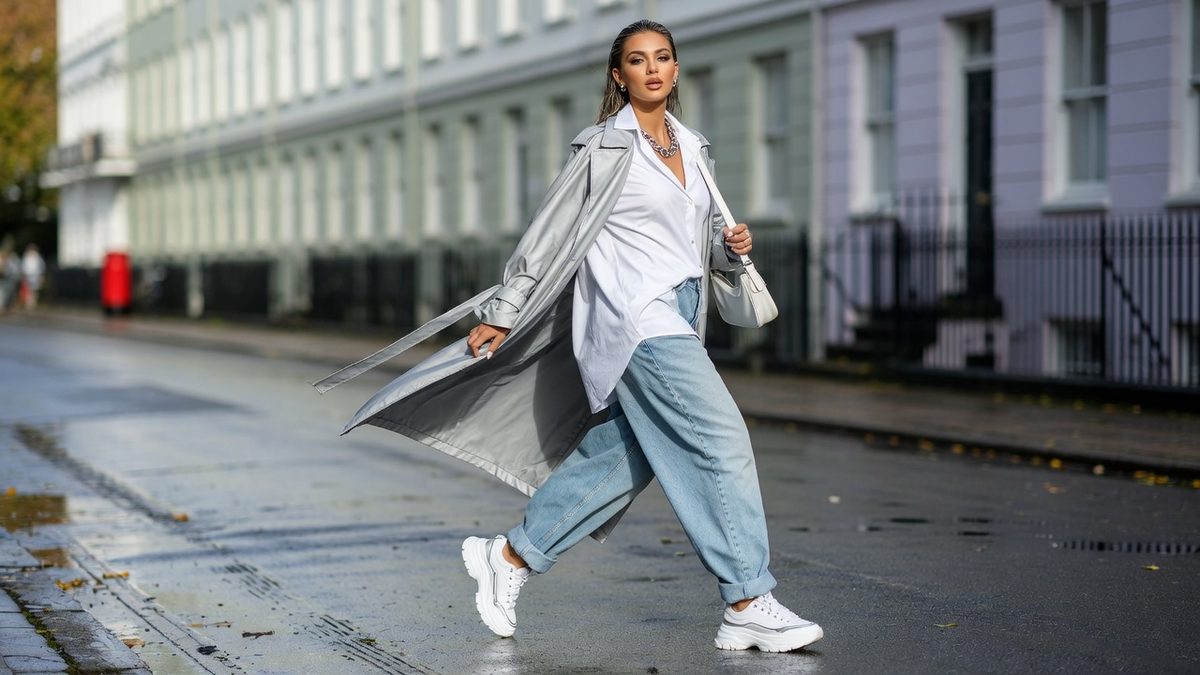
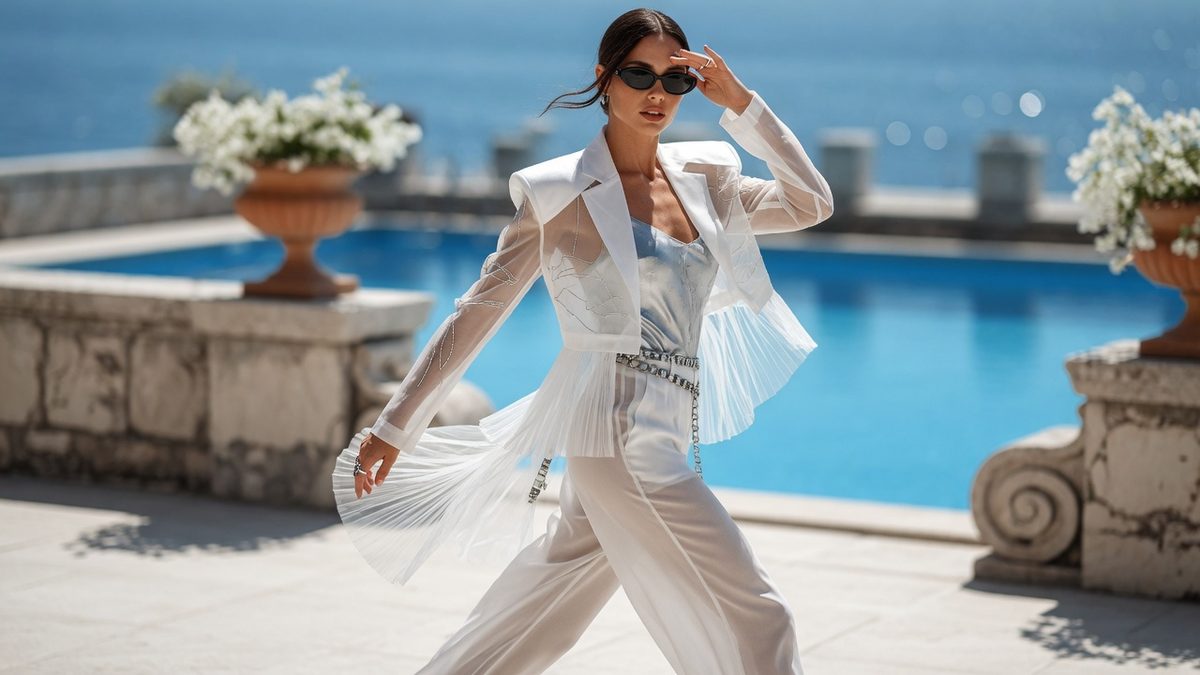
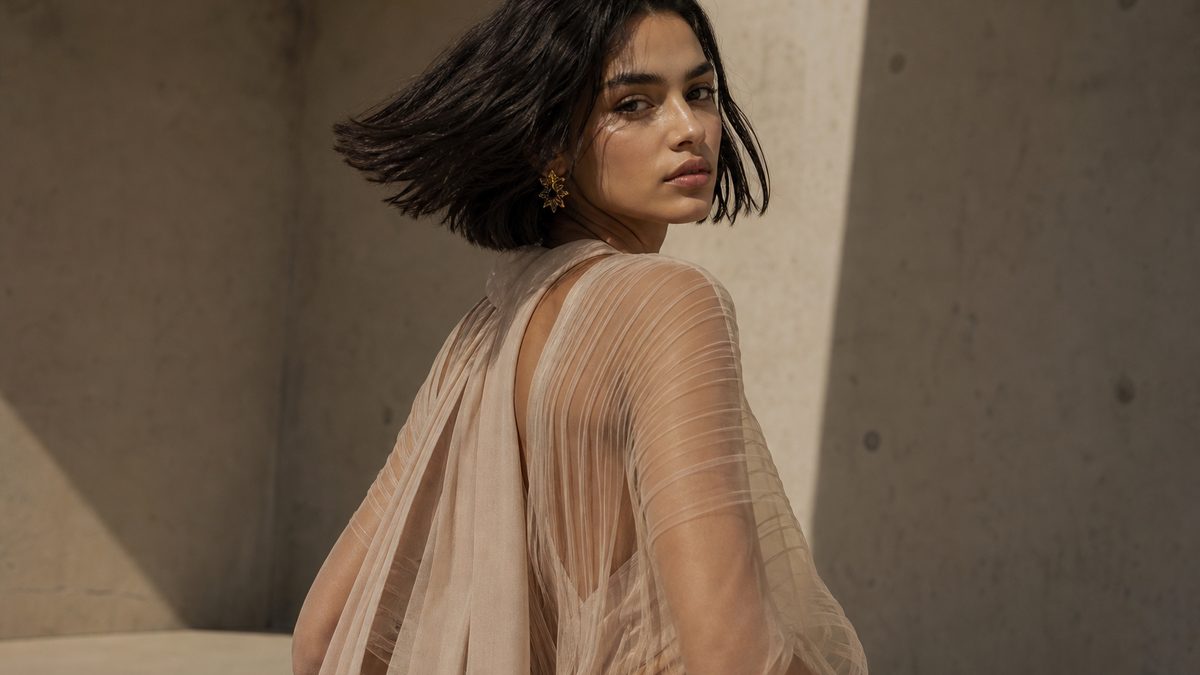
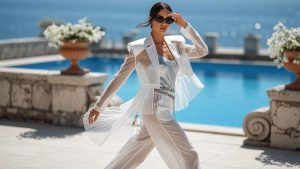
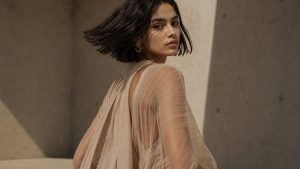
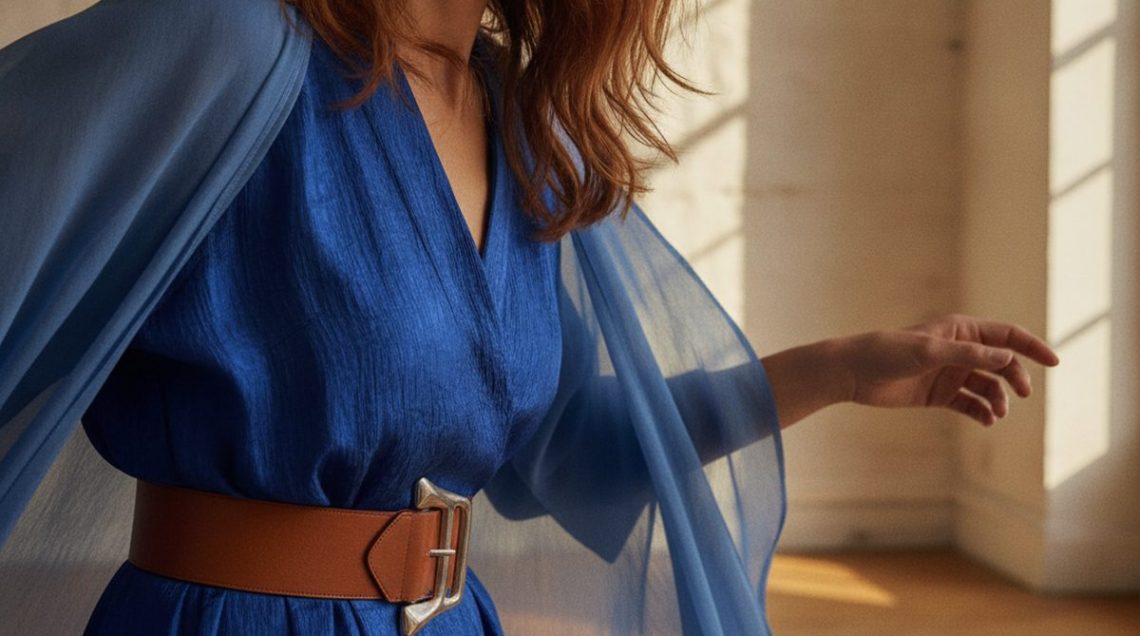
Balenciaga’s SS26 collection, Pierpaolo Piccioli’s first for the house, deployed platform and jewel-adorned thong styles styled with sharp tailoring and draped outerwear. The runway imagery above shows the deliberate contrast at work: the flip-flop’s casual signifier is neutralised by the garment layered over it. Alaïa’s heeled flip-flops, worn by Kendall Jenner in stiletto form and by Riley Keough at Cannes 2026, introduce elevation, solving the proportion challenge that flat styles create when paired with full-length tailored trousers. Prada’s brightly coloured leather Havaianas-riff and Auralee’s Ryota Iwai-designed brightly hued sole flip-flops confirm the palette has expanded beyond minimalist neutrals, but the styling principle remains: rubber or jelly styles demand a structured blazer or shirt jacket above to avoid looking accidental.
Why the flip-flop is fashion’s sharpest rebuttal to quiet luxury
The flip-flop’s timing is legible. Quiet luxury’s grip on the fashion discourse, muted palettes, whisper-thin cashmere, the studied absence of logos, has generated its own fatigue. The flip-flop, with its unapologetic casualness and visible construction, reads as a contrarian move. It refuses the stiffness that quiet luxury demands, introducing a deliberate looseness that still operates within elevated taste codes. This isn’t maximalism returning; it’s a recalibration of formality that acknowledges comfort without abandoning structure.
The cultural thesis is already circulating in fashion commentary: the flip-flop’s revival is a pushback against the rigidity of investment dressing. Dries Van Noten’s textured, hairy thong sandals and Burberry’s velvet gown styled with flip-flops at their SS26 presentation both signal that the jarring contrast is now the point. The flip-flop destabilises the outfit just enough to make it feel current rather than composed. Havaianas remain the accessible entry point, but the luxury versions from The Row, Alaïa and Prada demonstrate that the silhouette now carries enough fashion capital to anchor a considered wardrobe rather than function as a placeholder.
How to wear it: the UK trench, tailoring and thong-sandal formula
The proportion fix is material. Flat flip-flops work best with cropped or wide-leg trousers that sit above the ankle, the Row’s Dune Sandal styled with voluminous linen trousers exemplifies this. Heeled or platform flip-flops, as seen at Alaïa and Balenciaga, pair correctly with full-length tailored trousers, preventing drag and maintaining a clean leg line. The ‘over flip flops and’ equation resolves into a concrete three-piece formula for British summer: flip-flop, lightweight trench or draped blazer, and wide-leg trouser. The trench provides the structured top layer that signals intention; the wide leg balances the sandal’s minimal footprint.
Leather-strap flip-flops from The Row, Russell & Bromley’s accessible UK leather thong options, or Alaïa’s heeled iterations carry enough authority to pair with suiting and heavy-fabric outerwear without undermining the formality. Rubber or jelly styles, Havaianas, Prada’s coloured leather versions, require a deliberate contrast piece above: a sharp blazer, structured shirt jacket, or trench coat. UK influencer Monikh has demonstrated the formula with flat flip-flops worn beneath oversized shirting and tailored trousers, a pairing that reads as intentional rather than accidental. The flip-flop is no longer the weak link in the outfit, it’s the anchor that makes the rest of the equation legible, and the search data suggests British wardrobes are still working out what sits convincingly on top.