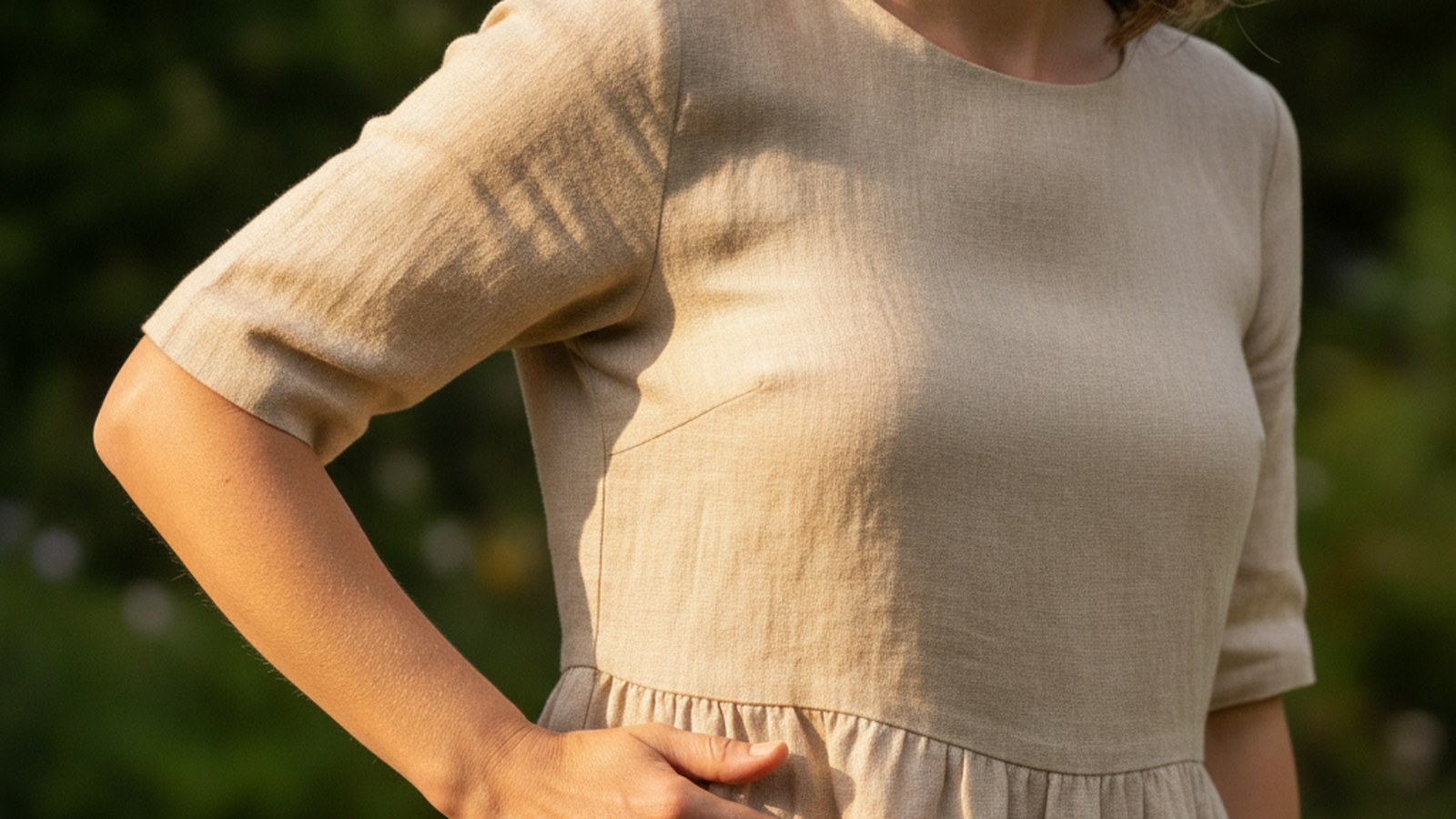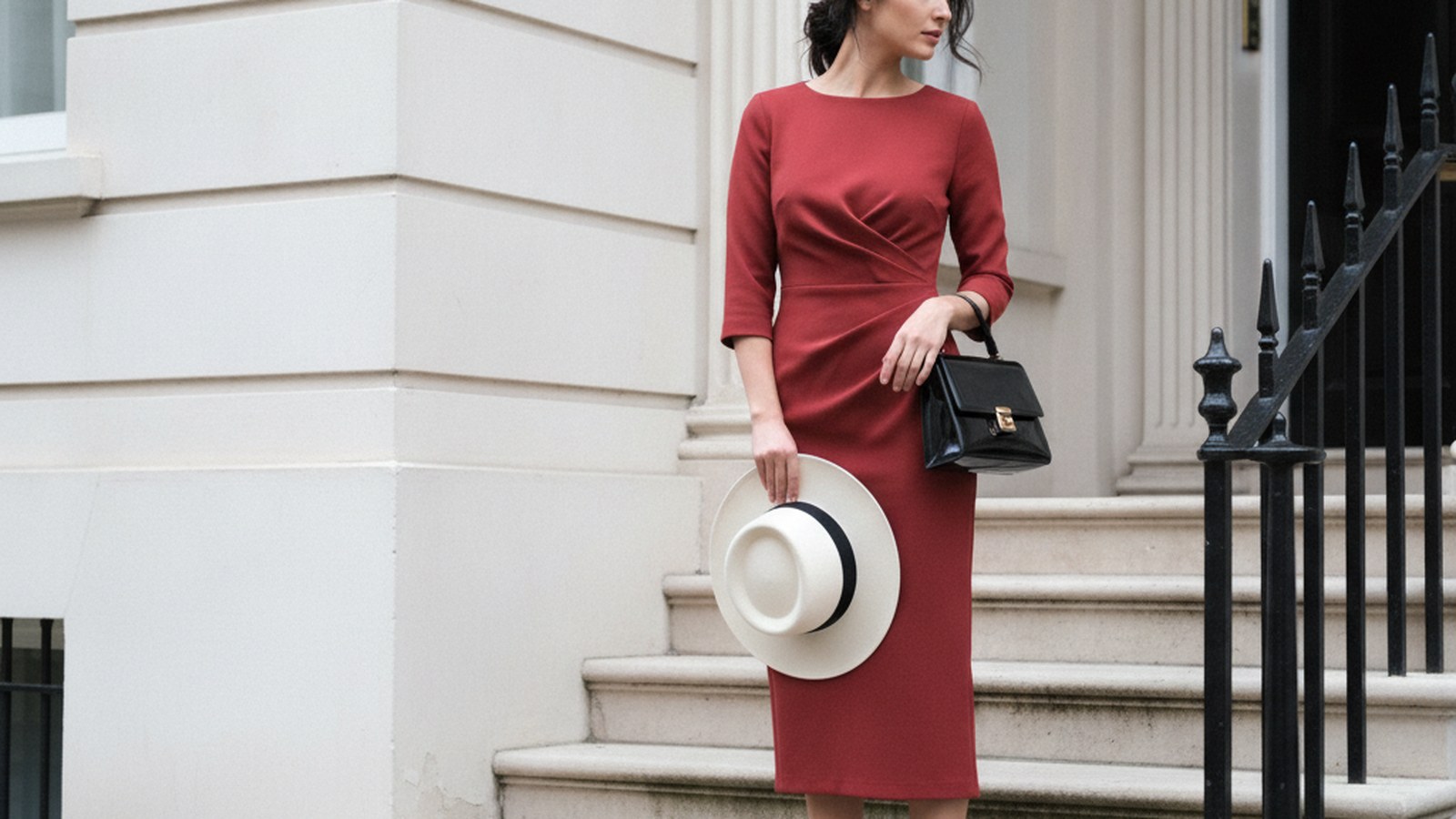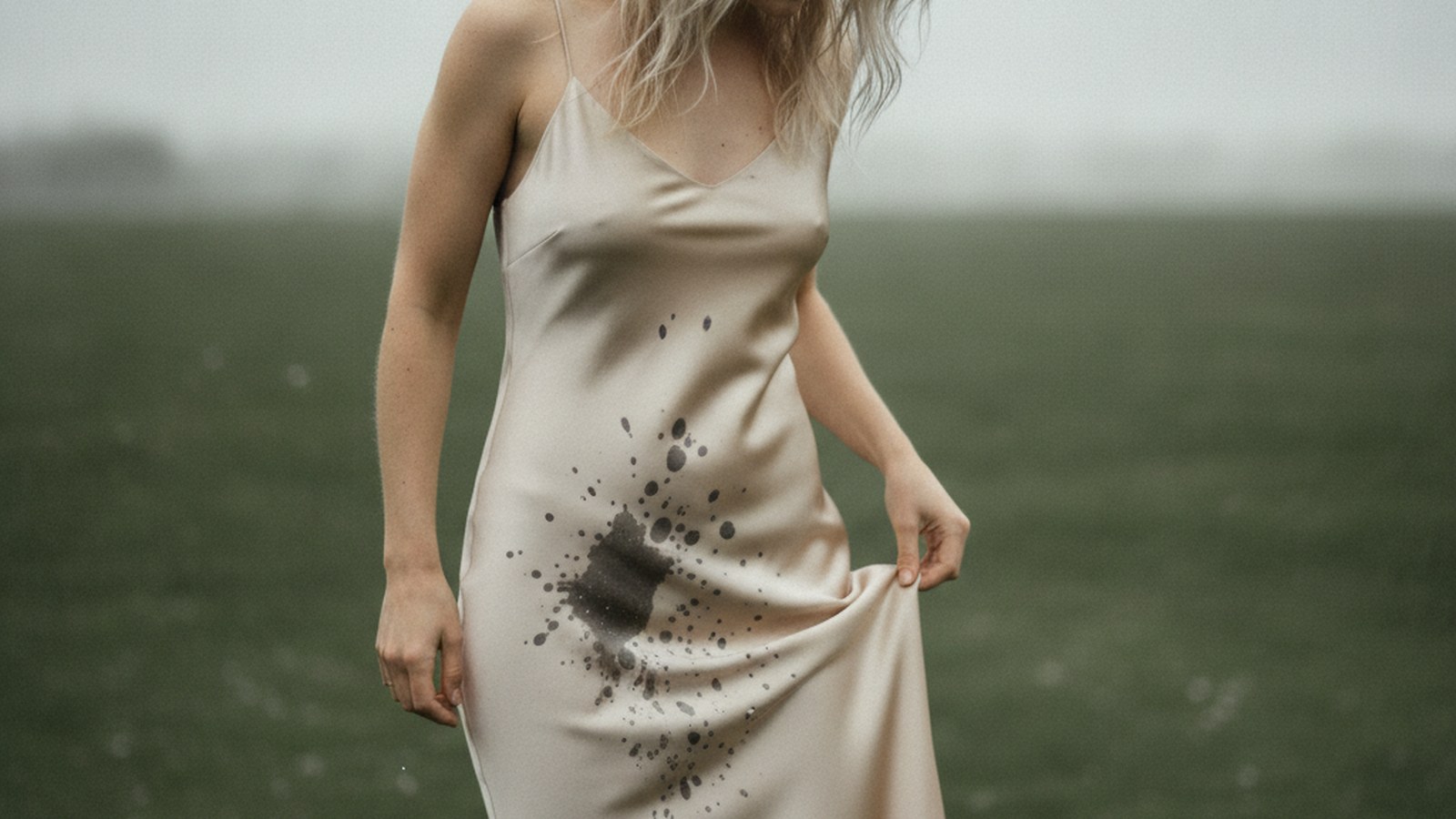
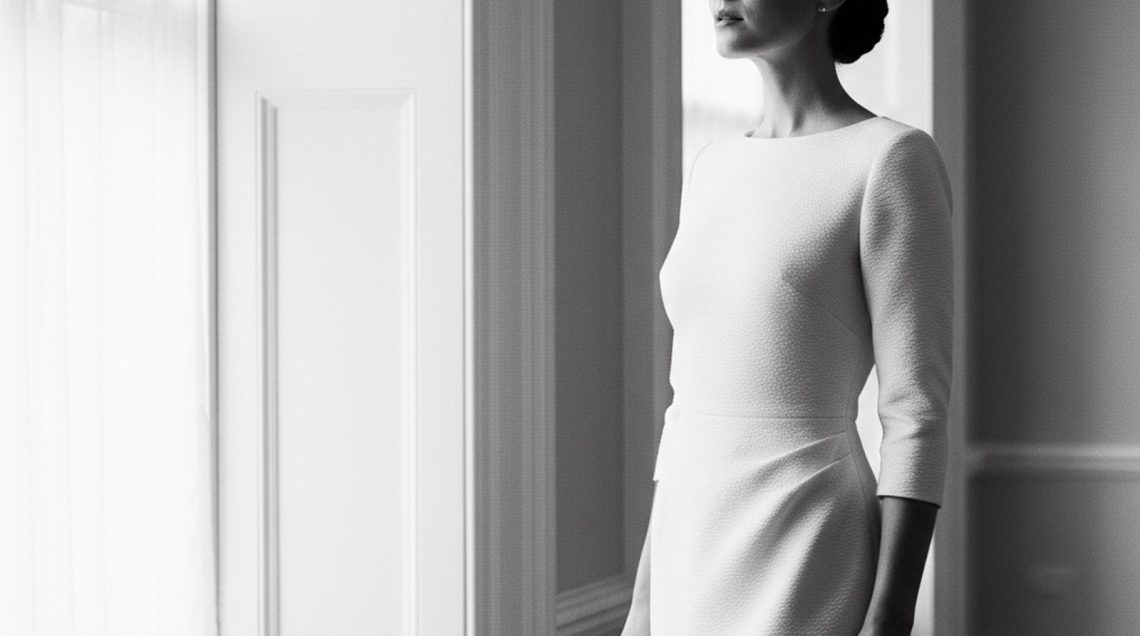

The word “crepe” on a UK high-street label tells you almost nothing about how a dress will behave at Royal Ascot in June, in a marquee at a July wedding, or sitting on Centre Court grass at Wimbledon. It is a weave technique, not a fibre, which means the same four-letter word covers everything from petroleum-based scuba to a 16 momme silk crepe de chine. Those two extremes behave so differently in heat, rain and after washing that buying “a crepe dress” without checking the composition tag is a gamble.
Below is a forensic breakdown of the five crepes you’ll actually meet on a UK shop floor, ranked for breathability, cling, rain resilience and Ascot dress-code compliance, with care notes you can use tonight.
The five crepes hiding behind one word
Walk into M&S, Hobbs, Phase Eight, Karen Millen, Reiss or Whistles and the composition tag will almost always reveal one of these five:
- 100% polyester crepe. Durable, colour-stable, holds a printed pattern well. Non-breathable (it is plastic), traps body heat, and develops a faint sheen in strong sun. The mid-market default.
- Polyester-viscose double crepe. The viscose softens the drape and improves moisture handling slightly, but the same blend is vulnerable to shrinkage if you get caught in a downpour and dry it warm. Common at Hobbs and Phase Eight.
- Polyester (or silk) georgette-crepe. Lightweight, semi-sheer, beautiful movement, but goes transparent at the back and underarms when damp, and clings to anything underneath.
- Stretch or scuba crepe (polyester plus 3-8% elastane). Structured, body-skimming, holds a sharp neckline. Thermally the worst offender outdoors in June: the elastane plus dense weave acts like a thin wetsuit.
- Silk or silk-blend crepe de chine. The most breathable, the best drape, the highest care demand. A genuine silk crepe de chine starts around £40-50 a metre at UK retail fabric level (Croft Mill, Fabrics Galore), so any “silk crepe” dress under roughly £400 from a designer is almost certainly blended or mislabelled.
Triple crepe sits as a sixth, heavier sibling of category one, usually 100% polyester at a higher GSM. UK fashion media loves to recommend it for “occasion wear” because it photographs sharply and resists creasing. In a hot marquee, it runs as warm as a light wool. Treat it as a winter and early-spring fabric, not a Royal Enclosure one.
Breathability, honestly ranked
If you are standing on grass for six hours in a fascinator, breathability is the only metric that matters. Ranked best to worst:
- Silk crepe de chine
- Viscose or rayon crepe (lightweight, single weave)
- Cotton crepe (the most underused option in UK occasion wear, and ideal for Wimbledon)
- Lightweight 100% polyester single crepe
- Polyester-viscose double crepe
- Stretch or scuba crepe
- Triple crepe (polyester)
Cotton crepe deserves a moment. It gives you cotton’s air movement with crepe’s wrinkle-resistance and a matte, slightly textured finish that reads grown-up rather than picnic. For SW19 in July, it’s the quiet answer almost no fashion guide names.
The cling problem nobody warns you about
An educational TikTok from a fashion academy explaining the unique qualities of crepe fabric and its stylish applications in gown design, directly complementing the article’s guide to crepe fabric types for UK summer wear.
@dexcellentfashionacademy Nobody asked me #fashiondesigner
Cling in heat is a function of two things: static (synthetics build it as they warm) and stretch (elastane locks the fabric to the body’s contour as you sweat). Scuba and stretch crepe fail on both counts. A 100% polyester smooth crepe is less clingy than a stretch crepe because it has no elastane to grip, but it still benefits from a slip lining once temperatures climb past 22°C.
The bigger risk is sheerness on contact with moisture. Lightweight polyester crepe and georgette-crepe go visibly transparent across the lower back and under the bust when damp, which is a real hazard in a white, ivory or pastel dress on a sunny race day. The fix is structural, not stylistic: buy lined, or wear a proper slip underneath.
Ascot, Wimbledon and the lining test
Royal Ascot’s Royal Enclosure rules require dresses to be of modest length and explicitly ban sheer fabrics unless they are fully lined. Applied to crepe, that eliminates unlined georgette-crepe entirely and disqualifies any lightweight polyester crepe de chine that goes translucent in bright light. What passes the compliance test cleanly: structured polyester crepe, polyester-viscose double crepe, and lined silk crepe de chine. Brands working in those territories include Beulah London, Safiyaa, Erdem and Emilia Wickstead at the upper end, and Karen Millen, Hobbs, Phase Eight and the Reiss occasion edit at the mid-market.
The lining is the multiplier almost no buyer checks. A polyester crepe dress with a jersey-knit or charmeuse slip lining performs substantially better in heat than the same dress unlined, because the slip wicks moisture away from skin before the outer fabric can grab it. Read both composition tags on the rail, not just the headline fabric.
If this is the level of detail you actually want before spending £200 on an occasion dress, our weekly newsletter pulls apart one fabric, one silhouette or one wardrobe problem like this every Sunday. It’s written for British women who’d rather understand why something works than be told to buy it. Free, no fluff, unsubscribe whenever. Sign up at the bottom of this page.
Rain resilience: which crepe survives a sudden shower
Because this is Britain, ranked best to worst for a 10-minute downpour at a garden party:
- 100% polyester crepe and triple crepe. Quick-dry, colour-stable, no shrinkage. The most weather-proof option, full stop.
- Stretch/scuba crepe. Sheds water well, but holds it against the body if you sit down in it.
- Silk crepe de chine. Water-spots visibly. Marks may fade once fully dry, or may not.
- Polyester-viscose double crepe. Can shrink at the seams if dried warm after a soaking.
- Viscose or rayon crepe. The most rain-vulnerable: weakens when wet, loses shape, can shrink up to 5%. Beautiful in the dry, risky in British June.
Care cheat-sheet by fibre
| Fabric | Wash | Dry | Iron |
|---|---|---|---|
| 100% polyester crepe | Machine 30°C, gentle cycle | Hang dry, no tumble | Cool iron on reverse |
| Polyester-viscose double crepe | Cold hand wash or 30°C delicate | Lay flat to dry | Cool, reverse, pressing cloth |
| Georgette-crepe | Cold hand wash only | Hang dry away from sun | Steam, do not iron flat |
| Stretch/scuba crepe | Machine cold, gentle | Drip dry, never tumble | Rarely needed; steam if so |
| Silk crepe de chine | Dry clean, or cold hand wash with silk detergent | Roll in towel, lay flat | Cool iron, reverse, pressing cloth |
| Wool crepe (for context) | Dry clean only | Hanger, shoulder out | Steam only |
The Phoebe Dynevor formula, decoded
The structured crepe look that Phoebe Dynevor and a generation of British actors in their late twenties keep wearing to UK events relies on one thing: a heavier crepe (double or triple weight) cut close to the body with a sharp shoulder or notch neckline. It reads polished because the fabric holds its line through a long afternoon. The trade-off is heat. If you are copying the silhouette for an outdoor June event, drop the weight one notch: ask for double crepe rather than triple, and prioritise a structured silk-blend if budget allows.
A buying checklist for the shop floor
- Read the composition tag first. If it says only “crepe”, ask. The assistant can usually find the full composition on the swing tag or website.
- Any elastane above 4%? It will cling once you warm up. Size up or add a slip.
- Hold a section against the shop light. If you can see your hand through it, it needs a lining for Ascot.
- Check the lining composition separately. A polyester crepe with a viscose or cupro lining is significantly more comfortable than a poly-lined poly dress.
- Crush a fold in your fist for ten seconds and release. If the crease holds, it will hold in a champagne bar at five o’clock too.
- Price-check honestly: a £150 “crepe” dress from a UK mid-market brand is synthetic. That is not a problem if you know it going in.
One concrete action for this week: pull the occasion dress already hanging in your wardrobe, find the composition tag, and decide now whether it needs a slip lining ordered before the diary fills up. A simple bias-cut viscose slip from M&S or COS is the difference between a comfortable Ascot and a long, sticky one.