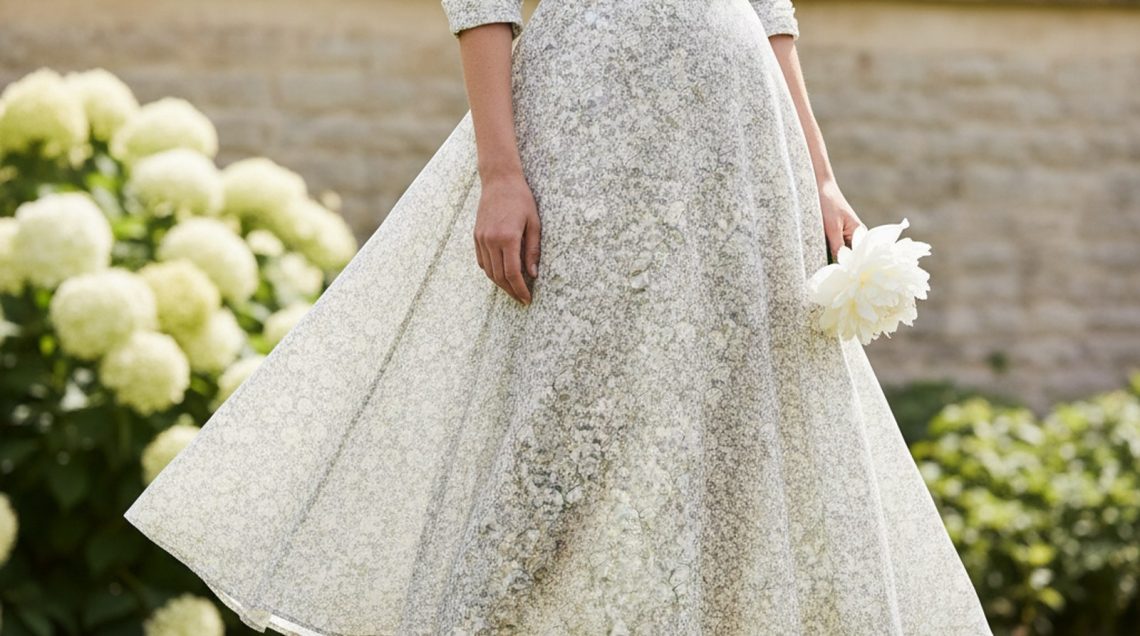
Standing in M&S holding two near-identical floaty floral dresses, one labelled cotton lawn and one cotton voile, the honest answer is this: lawn is the smarter buy for a humid wedding marquee and survives the wash better, while voile drapes more softly but clings sooner, distorts faster and almost always needs a lining you’ll regret by 3pm. They look identical on the hanger. They behave nothing alike on the body.
Here is the practical breakdown for British summer conditions, with care logic and where each one actually earns its place.
The fabric difference in plain English
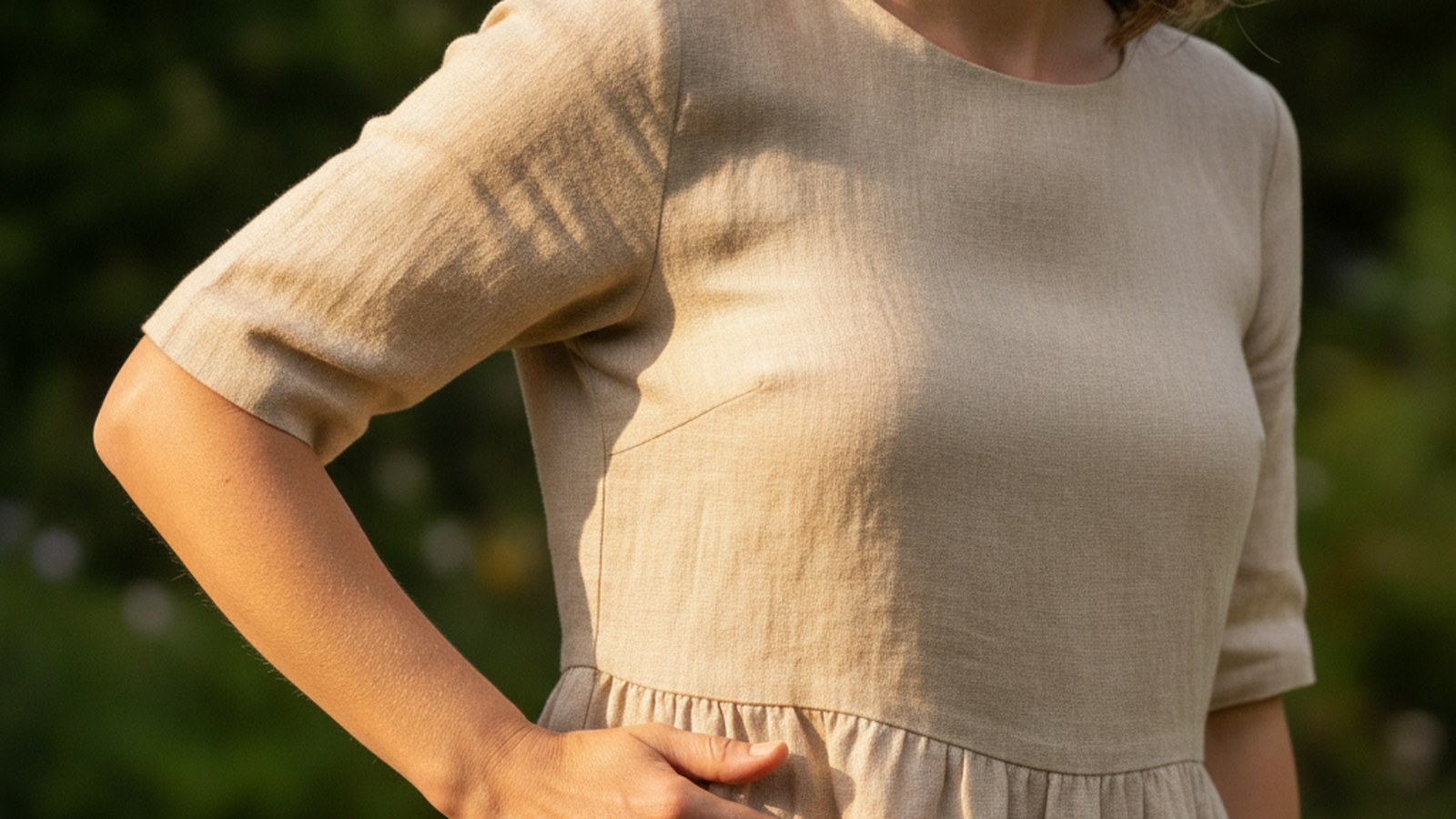
Both are 100% cotton, both plain weave, both light. The distinction is density and finish. Cotton lawn sits at roughly 60 to 80gsm, woven tightly from long-staple cotton and usually mercerised, which is the chemical finishing process that gives it a slight sheen and smoother hand. Voile is looser, typically 50 to 70gsm, with a more open weave that lets light through and gives a softer, more fluid fall.
If you can find the GSM figure on a Boden or John Lewis product page (they occasionally list it), that is your shortcut. Higher GSM in this range means more lawn-like behaviour: crisper, less sheer, more print-holding. Lower GSM means voile territory: floatier, more transparent, more delicate.
The benchmark for lawn is Liberty Tana Lawn, made in Italy from extra-long-staple cotton at around 60gsm, mercerised to that distinctive smooth, almost silk-adjacent finish. When a British brand talks about “Liberty print”, they usually mean Tana Lawn base cloth, and that is the reference quality you are mentally comparing high street lawn against.
The humidity question: which one actually keeps you cool
Dry Mediterranean heat is one problem. The damp, close 22°C of a July garden party in Surrey is another entirely. Voile’s open weave allows more airflow, which sounds like the obvious win, and in dry warmth it is. The trouble is cotton’s fibre structure absorbs moisture readily, so in sustained humidity both fabrics can feel damp against skin.
Where lawn pulls ahead: its mercerised surface releases surface moisture marginally faster, so it doesn’t sit clammy against the small of your back the way an absorbent voile can. In a humid marquee or an indoor-outdoor reception, lawn’s slight body keeps it lifted off the body. Voile, lovely and weightless in a breeze, has a tendency to drape into damp skin and stay there.
The contrarian truth for British summer specifically: most of our season is overcast, breezy and 17 to 20°C, not blazing. Lawn’s slight structure flatters in that light. Voile, without sunlight or body heat to lift it, can read deflated rather than ethereal.
The lining paradox for wedding guests
Voile is sheer, so almost every ready-to-wear voile dress is lined. That lining, usually polyester or viscose, traps heat against the body and acts as a vapour barrier. A lined voile dress in a hot marquee can genuinely run warmer than an unlined lawn dress in a darker print, because lawn’s tighter weave provides enough opacity on its own.
For formal summer events: a printed cotton lawn dress, unlined or lined only to the slip, is the cooler-wearing choice. Save voile for resort settings where you can layer it over swimwear or a slip you’d happily show.
Want this kind of pre-purchase fabric logic in your inbox each week, before you stand in the shop second-guessing yourself? The Mūsmūs newsletter sends one short, honest styling note every Friday: what’s worth buying, what isn’t, and the small details that decide whether a piece earns its hanger space. Sign up and we’ll meet you there.
The wash test: what survives a 30° cycle
Cotton lawn handles a 30°C gentle machine cycle reliably, especially if it’s been pre-shrunk by the maker (most reputable UK brands do this; Boden’s cotton lawn dresses generally hold up). Line dry, cool iron while slightly damp, and it recovers crispness without losing softness.
Voile is technically machine washable on a delicate cycle, but the open weave is more vulnerable. It can distort at the shoulders and side seams, fray at unfinished or low-quality edges, and shrink unevenly. Two practical rules: wash voile inside a mesh laundry bag every single time, and assume it may need a cool iron after every wash to coax back its shape. Pre-shrinking matters too. Cotton voile is prone to shrinkage and ready-to-wear brands often skip pre-shrinking on cheaper lines, so if a voile dress fits well in the changing room, factor in a possible 3 to 5% shrink on first wash.
The half-term holdall test
Packing for a Cornwall cottage weekend or a midweek trip to the Norfolk coast? Lawn wins. Its tighter weave shrugs off rolling in a duffel and shakes out with a quick steam in the bathroom. The crispness recovers with a cool iron in a way voile doesn’t, because lawn’s higher thread count and mercerised finish hold creases as memory rather than damage.
Voile creases dramatically, hangs out reluctantly, and snags on zips, Velcro, watch clasps and small children. For an active half-term week involving rock pools, picnic blankets and ice cream, lawn is the more durable choice.
Print quality: why lawn wins florals
This is the unsung argument for lawn. A tight, smooth, mercerised surface holds detailed prints with much greater clarity. Fine florals, geometric repeats, the kind of intricate Liberty-style pattern you want at a wedding: lawn shows them sharply. Voile’s looser, more textured weave softens print edges and mutes colour. If you’re choosing between two near-identical floral dresses and one has noticeably crisper print definition in product photography, that’s almost certainly the lawn.
Daisy Edgar-Jones is a useful style anchor here: her warm-weather press-tour and off-duty looks consistently favour fine-weave cotton in loose, easy silhouettes that read sharp on camera. That clarity of line and print is exactly what lawn delivers and voile blurs.
How to spot which is which on M&S, Boden and John Lewis
Retailer descriptors are inconsistent. Some quick decoders:
- “Cotton lawn” or “fine cotton poplin” on Boden and John Lewis usually means the tighter, crisper option. Look for words like “smooth”, “structured”, “holds shape”.
- “Cotton voile”, “semi-sheer cotton” or “floaty cotton” indicate voile. If the product page mentions a lining or slip, it’s almost certainly voile or similarly sheer.
- On M&S, descriptors lean generic (“pure cotton”). Zoom in on product photography: visible weave texture and any hint of transparency through the fabric points to voile. A smooth, opaque surface with sharp print points to lawn.
- GSM is the unambiguous tell when listed. Under 70gsm with sheer language: voile. Around 70 to 80gsm with body: lawn.
The see-through ambush (both fabrics)
One last warning that applies to both. In bright coastal or garden light, even mid-toned cotton lawn in pale colourways can turn translucent. Carry flesh-toned undershorts or a short slip as standard with any white, cream, butter yellow or pale blue summer cotton, whichever weave it is. The British sun is rarely strong, but when it appears at a June wedding or on a Devon beach, it appears decisively.
The decision, simply
Wedding guest, formal garden party, anywhere with humidity and photography: printed cotton lawn, ideally unlined or lined to the slip only, in a darker or busier print for opacity. Half-term weekend, coastal cottage, anything involving a holdall and a hot car: cotton lawn again, for the durability and crease recovery. Voile earns its place for resort holidays, layered looks over swimwear, and breezy dry-heat days where its drape can actually breathe. Before you click buy, scroll for the GSM, zoom in on the weave, and check whether the dress is lined. Those three checks will save you a hot, clingy afternoon.