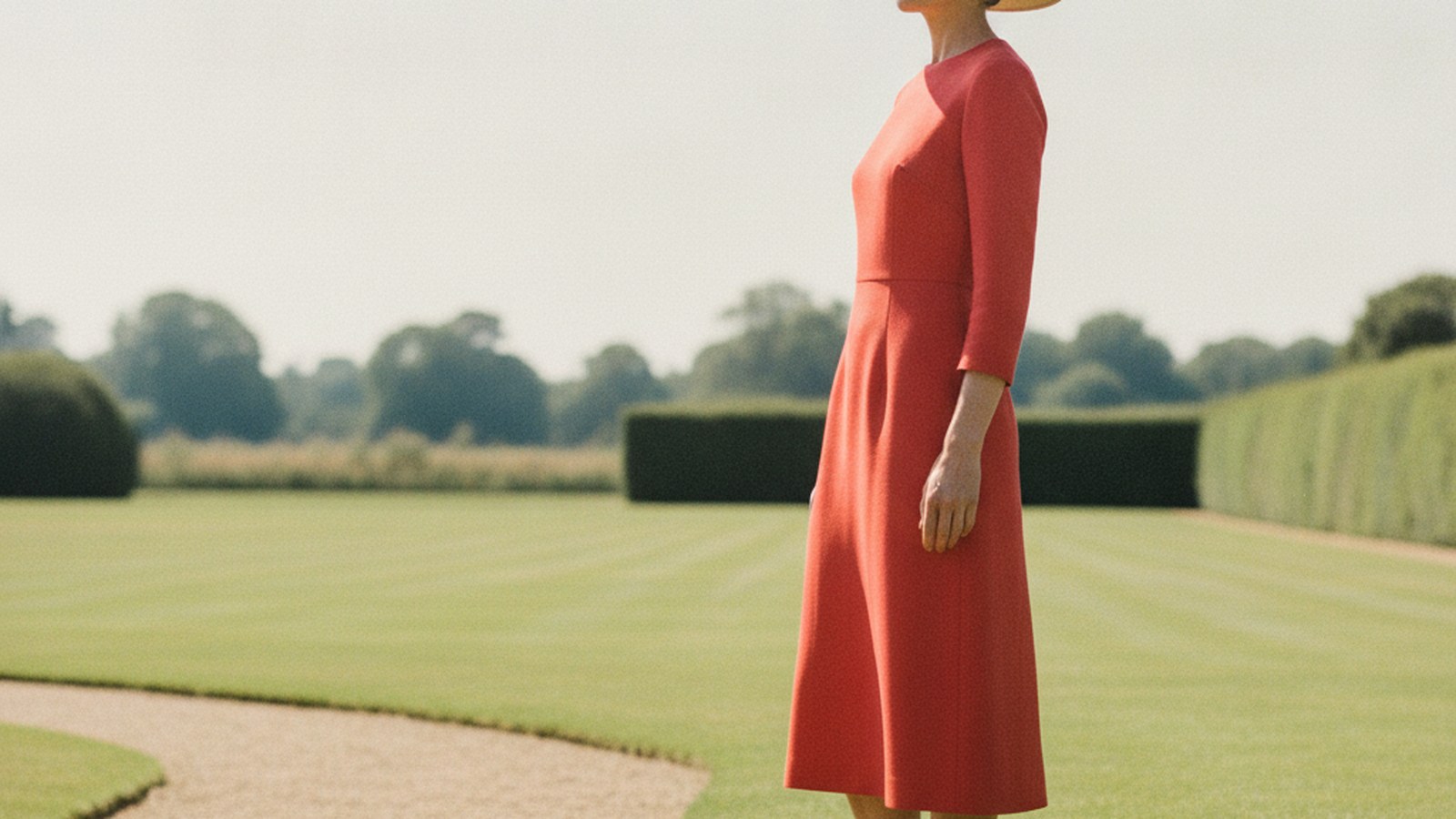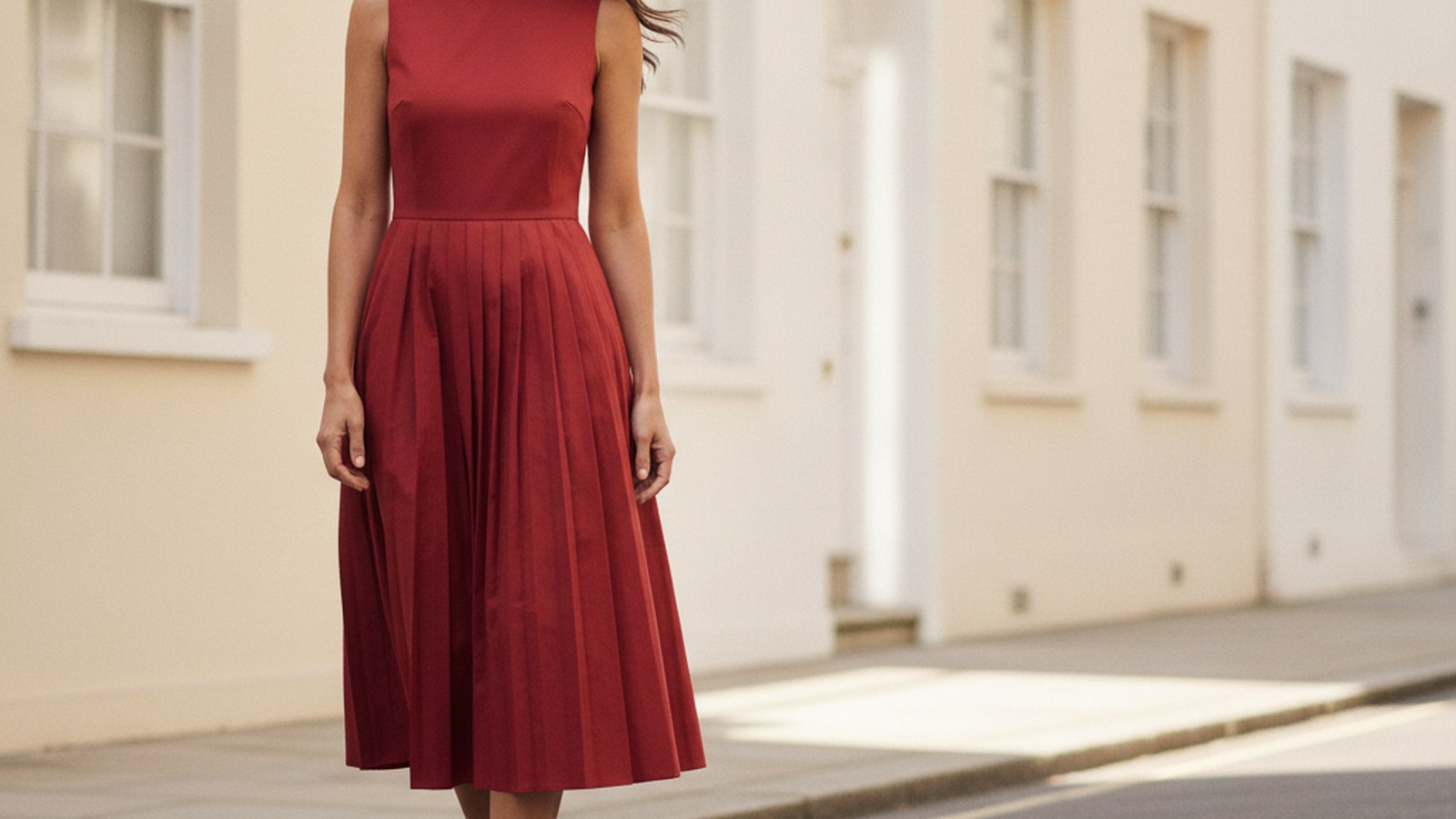


The fastest way to make a polka-dot dress look dated is to wear the wrong size of dot for your frame and your occasion. Pin dots refine and elongate; coin-sized spots are the most versatile mid-formality option; XL scattered spots are a volume statement that needs anchoring with a clean shoe and a single solid accessory. Get the scale right and the print reads modern, particularly in this season’s chocolate-brown-and-blue colour story.
Polka dots are not nostalgic by default. The brown-and-blue pairing has converged via polka dots this spring, with plenty of dresses cropping up with scattered blue and brown spots, and the result is far chicer than you might expect. The print only reads vintage when the dot scale fights the body or the fabric undermines the occasion. Here is the working framework.
The dot-scale rule, measured in coins
Hold a coin against the print before you commit. A pin dot is smaller than a 5p: it tightens and refines, behaves almost like a texture from two metres away, and suits petite frames or any formal moment where you want the dress to read as graphic rather than playful. A coin dot sits between a 5p and a 50p, which is the most flexible range for mid-height women and mid-formality events. Anything larger than a 50p is an XL spot, and it belongs on tall frames or on deliberately casual outings, unless the ground colour is rich enough to absorb the drama.
Scale is only half the story. Spacing is the variable nobody mentions. Widely spaced large dots on a dark ground read as calm and considered, which is precisely why they translate so well to weddings; densely packed small dots on a light ground read as busy and casual, closer to a holiday print than an occasion piece. That directly contradicts the lazy assumption that smaller dots are automatically more formal.
Where the dots land: placement for body shape
Polka-dot prints are rarely uniform across a garment, and that is useful. If your widest point is the hip, look for a dress where the dot density concentrates around the bust and shoulder and scatters out below the waist. The eye reads density as weight, so loading the print up top balances the lower half. If your widest point is the bust, reverse it: a sparser dot at the bodice fading into a denser skirt does the same trick in the opposite direction. Because the scale and spacing of polka dots can change the mood of a piece, you can build simple, minimalist looks or outright expressive styles with ease.
This is where the Princess of Wales’s polka-dot moments are quietly instructive. Her navy Hobbs spot dress and her Susan Small archive references all share a refined coin-dot scale on matte ground, with the print working with the silhouette rather than fighting it. The takeaway is not the dress, it is the proportion logic underneath it.
The brown-and-blue colour story, decoded
This season’s sharpest entry point is not black-and-white. Spring 2026 is making chocolate brown go so much further by mixing it with blue, with designers playing with the unlikely combination, including Chloé styling blue denim alongside an oversized brown coat and Prada setting a crisp blue button-down against plush faux fur. On a polka-dot dress, you have two possible temperatures to read for.
Chocolate brown dots on a cream or white base is a warm-ground palette. It unlocks tan suede sandals, amber tortoiseshell sunglasses, raffia bags and gold jewellery. Cobalt or cornflower blue dots on a brown base is cool-ground: it pulls toward navy accessories, blush nude shoes, brushed silver and softer leathers. Mixing the two temperatures is what makes the print look muddled, even when the dress itself is beautiful.
The Nobody’s Child Renley midi has become the high-street shorthand for this story. Beyond its cool blue and brown polka-dot print, the dress is designed with defining underbust seams and a curved dropped waist for shaping, plus a comfortable shirred back and pockets. For a more occasion-leaning option, the Cali Halter Neck Maxi has a V-neckline, tie-fastening adjustable halterneck and underbust seams, and the styling works hardest with a pair of kitten heels and a trench thrown over the shoulders. The warm chocolate brown paired with icy pale blue means both gold and silver jewellery work here, while accessories can either be kept to a minimum to let the dress do the talking or dialled up to lean into the drama.
If you want this kind of logic in your inbox before the next wedding invite arrives, the Mūsmūs newsletter sends one short edit a week: a single trend broken down by occasion, body proportion and what’s actually worth buying on the UK high street. No grids, no affiliate spam. Sign up below and the next polka-dot decision you make will be a confident one.
Fabric truth: matte holds the circle, satin distorts it
An identical polka-dot print behaves like two different garments depending on the cloth. Printed on matte crepe, cotton poplin or a cotton-linen blend, the dots hold their circle shape and read as graphic and precise. Printed on satin or a silky viscose, the same dot stretches and shifts with movement, which softens the print into something more playful and casual.
This is the single best reason to buy two polka-dot pieces rather than one. A matte crepe coin-dot midi from M&S or Boden carries Chelsea Flower Show, a smart lunch and a christening without breaking a sweat. A satin XL-spot piece, like the Topshop brown-and-blue satin trousers or a bias-cut Rixo with georgette and blouson sleeves, lives in the evening-garden-party, summer-holiday-supper part of your wardrobe. The print is the same idea; the fabric does the heavy lifting on formality.
The UK summer occasion ladder
Map the dot to the event, not the other way round.
- Chelsea Flower Show (smart-casual, no hats): coin dot on a midi, flat sandal or ballet flat, raffia tote. A shirt-dress silhouette like the Holland Cooper Sorrento, recently worn at Chelsea and at Buckingham Palace, sets the tone: refined, no fuss, weather-ready.
- Outdoor country-house wedding: XL or widely scattered spot on a rich ground (chocolate, navy, deep blue) in a satin or heavier crepe. Kitten heel, structured clutch, minimal jewellery. The Nobody’s Child Cali halter is exactly this brief; an Alessandra Rich-style spot dress is the designer reference, but the proportion logic is the same.
- Henley and races: pin or coin dot on a silk-feel fabric so the print stays crisp under a fascinator. Keep accessories to one strong solid colour to give the headpiece room to breathe.
- Hen afternoon or village fête: coin dot mini or midi in cotton, trainers or flat slides, denim or canvas crossbody. Linen-blend options from Boden or Reformation are the right weight for unpredictable June heat.
- Evening garden party: switch up in scale after dark. An XL or scattered spot in satin, slides or a block heel, gold hoops. This is where the brown-and-blue palette reads as the most modern, particularly against candlelight.
- Half-term days out: a Damson Madder reversible polka-dot trench over jeans and a white tee covers the spring drizzle without committing to a full print outfit.
Restyling the polka-dot dress you already own
If you bought into the trend last summer, you do not need to repurchase. Two adjustments update an older piece: change the shoe colour to match this year’s palette (swap black courts for tan suede or chocolate mule), and change the bag texture from leather to raffia or suede. A satin polka-dot track top, like the Adidas iteration with a funnel neck and ribbed hems, pairs with jeans and ballet flats and finishes with gold jewellery if you want to bring an old dress into a separates look instead.
One last thing. Polka-dot pieces in this cut are unlikely to fall out of fashion by this time next year, because the silhouette is a true classic that suits a multitude of body shapes, and chocolate brown and polka dots are design elements that never truly go out of style. Buy for the dot scale that flatters your frame, choose the fabric that matches the occasions actually in your diary, and the dress will work harder than the trend cycle that sold it to you.