Jonathan Anderson has just delivered his second womenswear outing for Christian Dior, and the internet has not stopped talking about it since. The spring/summer 2027 show, staged in the Tuileries Garden around the octagonal basin, traded the house’s familiar structured glamour for something far more fragile: silk mousseline, organza and lace that seemed to float rather than sit on the body.
It’s exactly the kind of collection that splits opinion, which is precisely why it’s dominating UK fashion conversation this week. Searches for the show have spiked, front-row photos of Rosalía, Anya Taylor-Joy and Jennifer Lawrence are everywhere, and yet the loudest debate isn’t about celebrity spotting at all. It’s about whether a runway can genuinely be built on a 1980s literary novel, and whether ‘undone’ dressing is a look anyone can actually wear off the catwalk.
What exactly did Jonathan Anderson show at Dior spring/summer 2027?
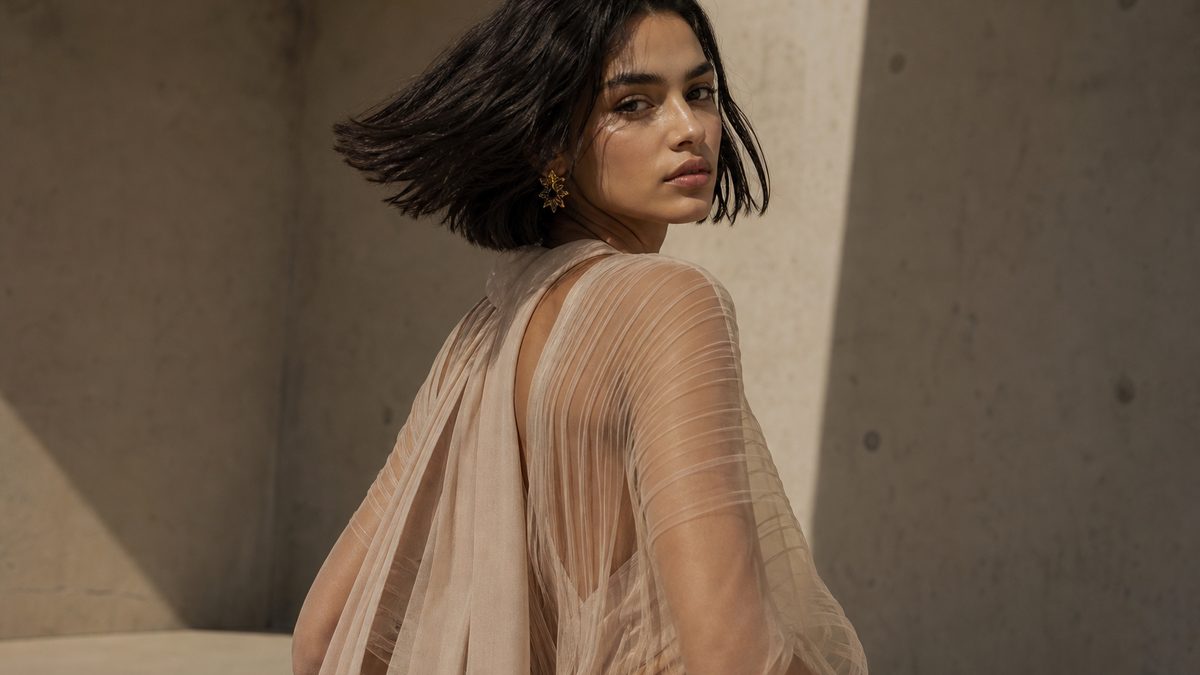
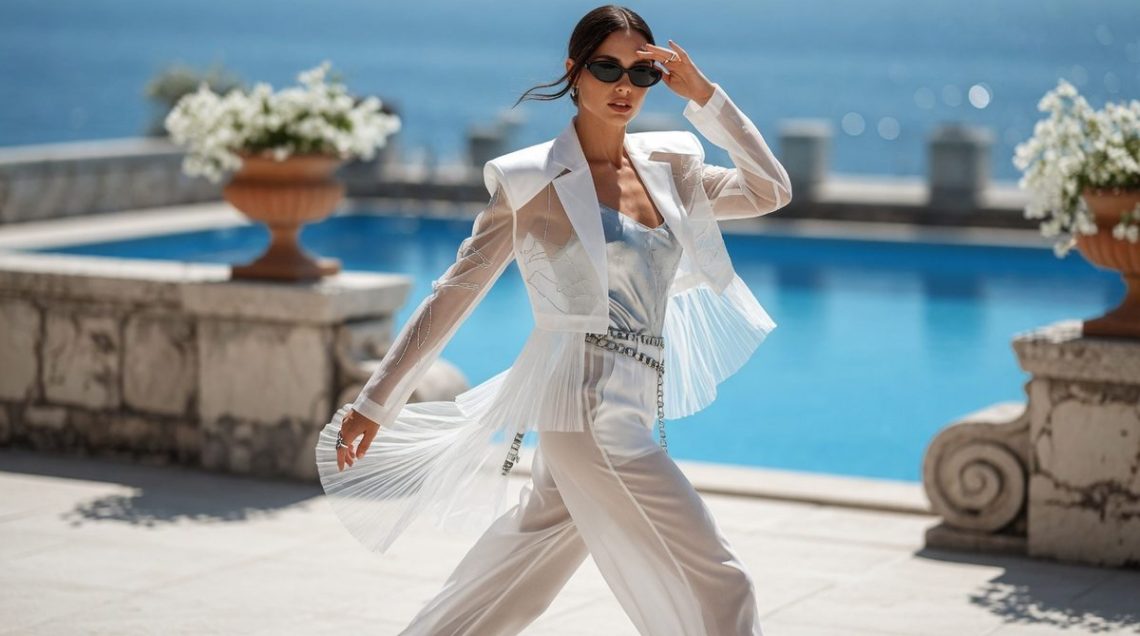
The setting alone signalled intent. Rather than a conventional tent, Anderson staged the show around the Tuileries Garden’s octagonal basin, letting daylight and the surrounding greenery do work that studio lighting usually has to fake. The clothes followed that cue: sheer mousseline and organza layered over lace, fluid tailoring that looked almost unfinished, and pieces cut to move rather than hold their shape.
Look closer and there were quieter references too, including Wénwán walnuts, the polished pair traditionally cradled by hand in Chinese literati culture, reworked here as an accessory detail. It’s a small object that rewards patience and touch rather than spectacle, which turns out to be the whole point of the collection. Alongside the fabric work, the silhouettes leaned into Romanticism, the art movement built on emotion and nature over rigid order, giving the sheerness a historical backbone rather than leaving it as a purely modern trend statement.
Context matters here: this is only Anderson’s second Dior show since his SS26 menswear debut introduced him to the house, so spring/summer 2027 is really the moment his womenswear voice starts to take shape. At the close, he dedicated the collection to Mathilde Favier, Dior’s PR director, a gesture that turned a fashion show into something more personal.
Dior’s own tribute post to Favier, shared weeks before the show, makes the dedication land harder in hindsight. Favier has spent years working behind the scenes shaping how the house presents itself to the world, and creative directors rarely use their biggest stage of the season to name-check the people who make that machinery run. It’s a small ritual in fashion, and an easy one for outsiders to miss entirely.
Why base a collection on a Milan Kundera novel at all?
Because ‘The Unbearable Lightness of Being’ isn’t really about being light-hearted, and that tension is exactly what makes it useful here. Milan Kundera’s novel wrestles with whether a weightless, unburdened existence is a kind of freedom or a kind of unbearable insignificance, a life with nothing solid enough to hold onto. It’s a heavier idea than the title suggests, and that’s the point Anderson seems to be borrowing.
Read the collection through that lens and the sheer fabric choices stop being just a pretty seasonal mood. Mousseline and organza that barely seem to exist on the body become a literal translation of Kundera’s central question, made wearable instead of philosophical. Fluid tailoring paired with something as delicate as lace isn’t indecision, it’s the show arguing that lightness and structure can occupy the same garment without cancelling each other out.
It also helps to place this against what Anderson built his name on. At Loewe and under his own JW Anderson label, his signature was playful proportion and craft-led surrealism, clothes that made you smile before you understood them. Dior’s ‘lightness’ is a quieter, more introspective register by comparison, and that shift says as much about how differently the two houses want to be read as it does about any single season’s mood board. The loosened tailoring and visible underpinnings here also sit inside a wider undone feeling that’s been surfacing across this season’s Paris shows, with critics elsewhere already framing it as one of the defining moods of the calendar.
How do you wear ‘deliberately undone’ without looking messy?
The runway’s own logic gives away the rules, even if nobody on the catwalk is going to hand them to you directly. Reading the styling closely, a few principles repeat enough to count as intentional.
Start with proportion: unbutton one button lower than instinct usually allows, so the gap reads as a choice rather than an accident. Let one visible detail, a bra strap, a piping seam, a slip hem, show on purpose instead of hiding it, since it’s the deliberate placement that separates ‘undone’ from simply undressed. Mixing the mismatched formality of pyjama-style piping against something structured, like sharp tailoring, is what stops the whole look sliding into loungewear. And keep fabrics honest: one sheer layer against one solid, tactile piece, echoing the mousseline-and-lace pairing that ran through the whole show.
None of this needs literal Dior pieces to work. The trick is treating ‘undone’ as a considered edit rather than a shortcut for not trying, which is exactly what separates the looks currently being dissected online from anything that just looks unfinished by accident. Retailers are already reporting rising interest in sheer layering and softened tailoring for the season ahead, so expect this particular version of ‘undone’ to keep resurfacing in ways that go well beyond the runway.