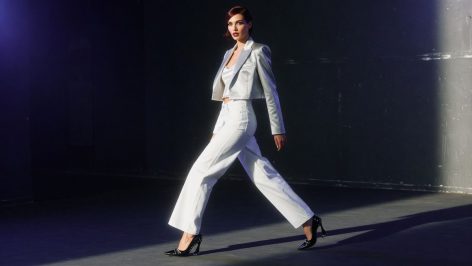
Black, low-cut heels with an unmistakably 1980s silhouette are turning up everywhere this autumn, styled with straight-leg jeans, tailored trousers, even bias-cut skirts, and the trend has genuinely earned its place at the top of UK search right now. It isn’t one celebrity photo driving it either: the shoe itself has quietly become the story, popping up across recent collections and high street rails within weeks of each other.
That convergence is exactly why it’s flooding feeds. When a silhouette echoes through runway, red carpet and the high street at the same time, it stops reading as one brand’s moment and starts reading as a genuine shift, which is precisely what’s happening with this one.
What actually makes a black high heel read as 80s?
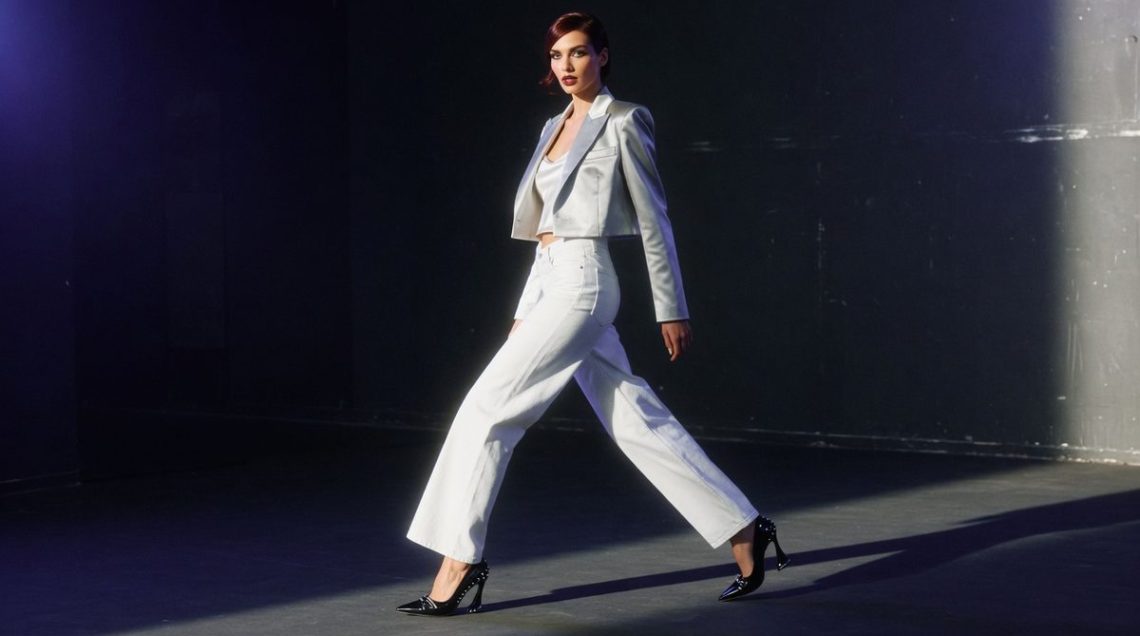
It comes down to three things: the vamp, the throatline and the heel itself. A proper 80s pump has a low-cut vamp that shows more of the foot than a modern court shoe, a sharply defined throatline, the curved edge where the upper meets the topline, and a heel that’s either a slim stiletto or a distinct kitten heel rather than today’s chunkier block. Square-toe heels and slingback pumps are the two shapes doing most of the work this season.
This isn’t a new invention, it’s a direct callback to the shoe houses that defined the decade in the first place. Charles Jourdan and Robert Clergerie built their reputations on exactly this kind of sharp, low-vamp construction, and it’s their DNA you’re seeing echoed in pieces from Miu Miu, Alaïa, Khaite and The Row.
Finish matters too: patent leather, with its hard, glossy edge, is the authentic 80s surface. Suede and nappa versions sold under the same trend headline are borrowing the shape without the shine, worth knowing if you’re deciding which pair is actually worth the money.
Why is everyone reselling the same story about this trend?
If several of the roundups you’ve scrolled past this week feel identical, that’s because a number of them are the same syndicated copy, reworded and republished across multiple sites. Few of them actually explain what construction makes a heel “read” as 80s in the first place, they name the decade and jump straight to a shopping list.
Coverage worth paying attention to has looked at how the style is actually being worn. Whowhatwear.com featured this post in its own recent coverage of the trend, showing the pump styled the way it’s meant to be, vamp visible, ankle bare.
It’s also worth noting that Victoria Beckham’s AW26 show and pieces from The Row and Khaite have reinforced the same silhouette from very different price points, while Marks & Spencer and ASOS have made near-identical shapes available on the high street. That spread, not any single retailer’s marketing push, is the real reason this counts as a genuine trend.
Which jeans should I wear with them, and do I need tights?
Proportion is everything with a low-vamp pump. The jean hem should sit at or just above the ankle bone, not break fully over the shoe, a full break hides the exposed vamp that makes the heel look 80s in the first place, and you end up with a shoe you can barely see.
On the cut itself, go against instinct: slim-straight or cropped straight denim is the era-accurate match, not flares or wide-leg. Flared and wide-leg jeans were the competing silhouette of the actual 1980s, and a wide hem simply swallows a low-cut pump rather than showing it off. Straight-leg or slim denim keeps the ankle and the shoe visible, whatever price point you’re shopping at.
As for hosiery: bare ankle is the correct call with jeans, since it matches the era and shows off the foot-exposing cut that defines the shoe. Save sheer black tights for when you’re wearing the same pump with trousers or a dress instead. Whether this becomes the defining shoe of the season or fades by November is, as ever, down to what happens on the high street next.