By Alina, Fashion & Style Writer. Alina is a fashion and style writer at Mūsmūs, where she covers everyday styling, trends and wardrobe-building. She writes for women who want clarity over hype, practical outfit logic they can actually use.
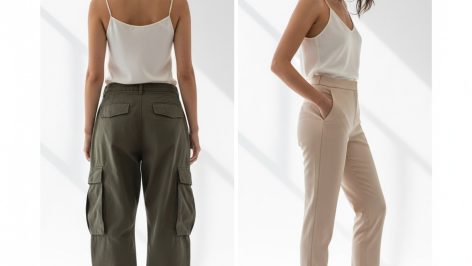
The trouser silhouette of summer 2026 is not the wide leg you’ve been wearing for three seasons. It’s the functional pocket trouser: a tapered, mid-rise cut with edited pocket placement that sits close to the hip rather than ballooning around it. Look at the SS26 shows at Nina Ricci, Balmain and Dries Van Noten, then at what Toteme, Lemaire and The Row are quietly selling out of, and the succession is unmistakable.
What’s interesting is that nobody is calling it. Most fashion coverage still files cargo and wide leg side by side as concurrent trends. They aren’t. The wide leg has done its work, and the functional pocket trouser, slimmer, more architectural, more useful, has stepped into the dominant slot. Here’s what’s actually changed, who it flatters, and the rules that keep it on the right side of building site.
The fit shift nobody is naming
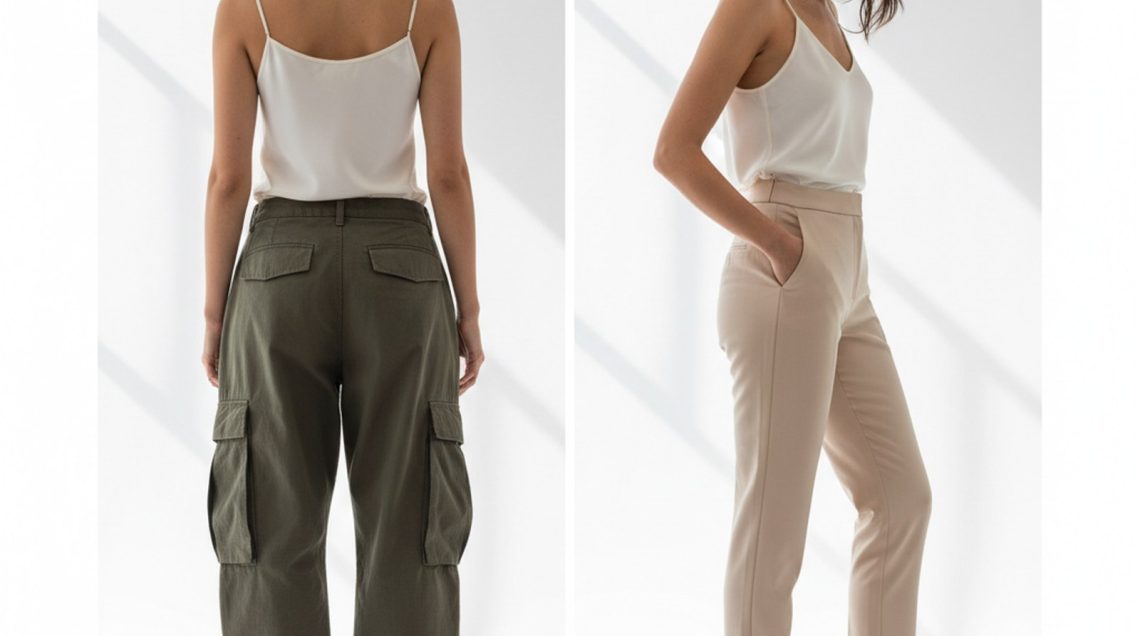
The old cargo was low-slung, hip-widening and aggressively patch-pocketed. The 2026 version does the opposite. The rise has moved up to the natural waist or just below, the leg tapers gently from mid-thigh to ankle, and pockets are positioned high on the thigh, often flat, sometimes bellowed but never bulky. The effect is a vertical line through the leg with one or two functional details, rather than a horizontal fight at the hip.
This is why it flatters more bodies than the cargo ever did. A pocket placed at the upper thigh draws the eye up; a pocket placed at the widest point of the hip draws the eye out. Lemaire’s edited cargo and Toteme’s minimalist chino both follow this logic. So does the Loewe SS26 styling: collarless blazer skimming the waist, trouser tapering clean to a mule.
The three pocket rule
Here is the simplest stylist test: count the visible pockets. Three or fewer reads fashion. Four or more reads workwear. Two front, one thigh, no back patch, that is the edited execution you see at Lemaire, Toteme and Isabel Marant. The moment a second cargo pocket appears on the opposite thigh, plus a back flap, plus a coin pocket, you’ve crossed into the maximalist version that defined the noughties and now reads costume.
If you’re shopping the high street, this is the single most useful filter. Arket and COS have both released trousers this season that pass the test; Arket’s organic cotton utility in stone, COS’s architectural taper in ecru. Anything with patch pockets stacked down the leg, leave it.
The fabric hierarchy that decides everything
Fabric is where the trend lives or dies. Ranked from highest to lowest risk of reading workwear:
- Heavy cotton twill. The original cargo cloth. Stiff, matte, unforgiving. Unless cut very precisely, it reads workwear by default.
- Italian cotton. Lighter weight, slight sheen, better drape. The Arket and COS end of the market lives here.
- Technical taffeta or parachute fabric. Modern, slightly glossy, instantly fashion. Isabel Marant has used this well.
- Fluid wool blend. The Toteme and Lemaire move. Reads tailored even with a thigh pocket.
- Technical silk. The lowest risk of all and the highest tier. The Row’s territory.
The same trouser pattern in heavy twill versus fluid wool is the difference between a builder’s merchant and a Paris atelier. If you’re investing in one pair this summer, prioritise fabric over brand.
The colour move that separates quiet utility from real workwear
Olive and khaki are the workwear defaults. The whole point of quiet utility is to leave them behind. The 2026 palette is sand, ecru, stone, powder blue and tonal neutrals, with the occasional clean black or chocolate. Eileen Fisher’s organic cotton utility in undyed ecru is the clearest example of how a single colour swap removes the army association entirely.
If you already own olive cargoes you like, the fix is not retiring them but rebalancing: lift them with cream, ivory or pale blue on top, never another military shade.
If you want this kind of analysis weekly, straight to your inbox, before the high street catches up, sign up to the Mūsmūs newsletter. One short note each Sunday on the silhouettes, fabrics and styling shifts actually worth your money, written for women who’d rather buy three right things than thirty wrong ones. No trend recycling, no affiliate noise.
The unexpected elegance pairing
The styling rule that does the heaviest lifting is contrast. A utility trouser wants a top that has nothing to do with utility. Broderie anglaise blouse. Sheer organza shirt. Silk camisole. A fine-gauge knit in cream. The tension is the point: the trouser brings the structure, the top brings the softness, and the outfit reads considered rather than themed.
The mistake is matching energy. Utility trouser plus utility shirt plus utility jacket is a uniform, and not a flattering one. Same applies to chunky knits with bulky pocket detail; the volumes fight. Keep one element soft, fluid or delicate, and the trouser does its job.
The shoe does the tonal work
The single biggest signal in the whole outfit is the shoe. A chunky trainer amplifies the workwear read; a kitten heel, leather mule or slingback mutes it completely. This matters more with the functional pocket trouser than with any other silhouette, because the trouser itself sits in an ambiguous register and the shoe decides which way it tips.
For a UK summer specifically: a flat leather mule in tan or bone is the most versatile option. A pointed kitten heel in black sharpens the look for evening. Trainers only work if they are low-profile, leather and unbranded, think the quiet Margiela end rather than the chunky dad-trainer end.
Wide leg versus utility, scenario by scenario
To be concrete about the succession, here’s where each silhouette now sits:
| Scenario | More current in 2026 |
|---|---|
| Brunch | Utility in sand with a silk cami |
| Office | Utility in fluid wool with a fine knit |
| Evening | Utility in technical silk with a camisole and kitten heel |
| Weekend travel | Utility in Italian cotton, hands-free pockets earn their keep |
| Holiday | Linen-blend utility in ecru, the new default over wide-leg linen |
The wide leg still has a place; it just isn’t the default anymore. For British summer specifically, a linen-blend utility in ecru with a lightweight knit tied at the waist solves the morning-chill-to-afternoon-warmth problem better than a wide leg ever did, because the taper reads polished even when the knit comes off.
The barrel hybrid worth knowing about
One silhouette sits at the intersection: the barrel-leg trouser with a single thigh pocket. It borrows the rounded volume from the noughties but applies the edited pocket rule. If you’re not ready to commit to a full taper, this is the transitional shape. COS and Arket both have versions on shelves now.
If you buy one pair of trousers this summer, make it a mid-rise tapered utility in a fluid fabric, three pockets maximum, in sand, ecru or stone. Wear it with a silk or broderie top and a leather mule. That single outfit will carry from May through September, and it will read more current than any wide leg in your wardrobe.