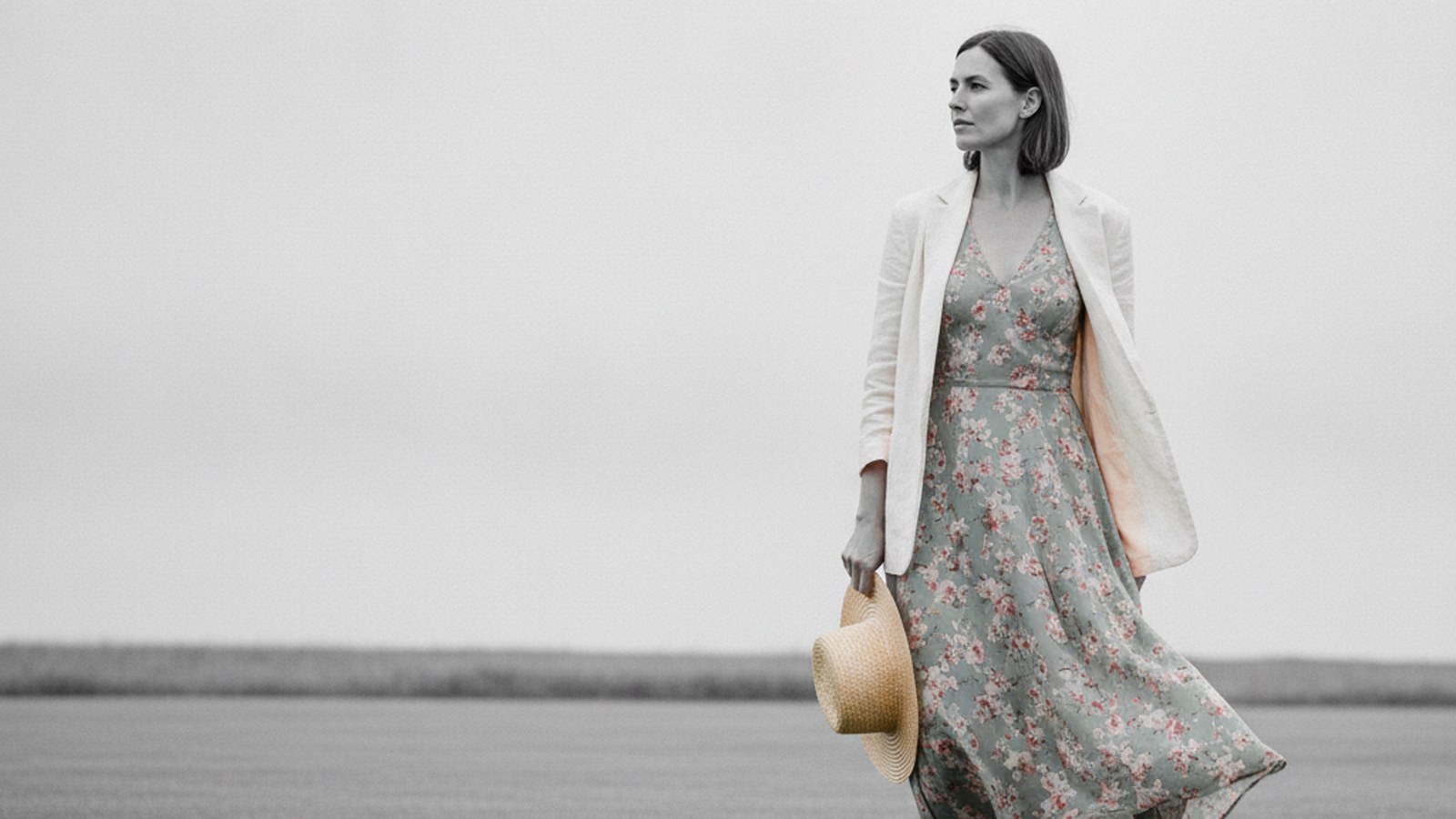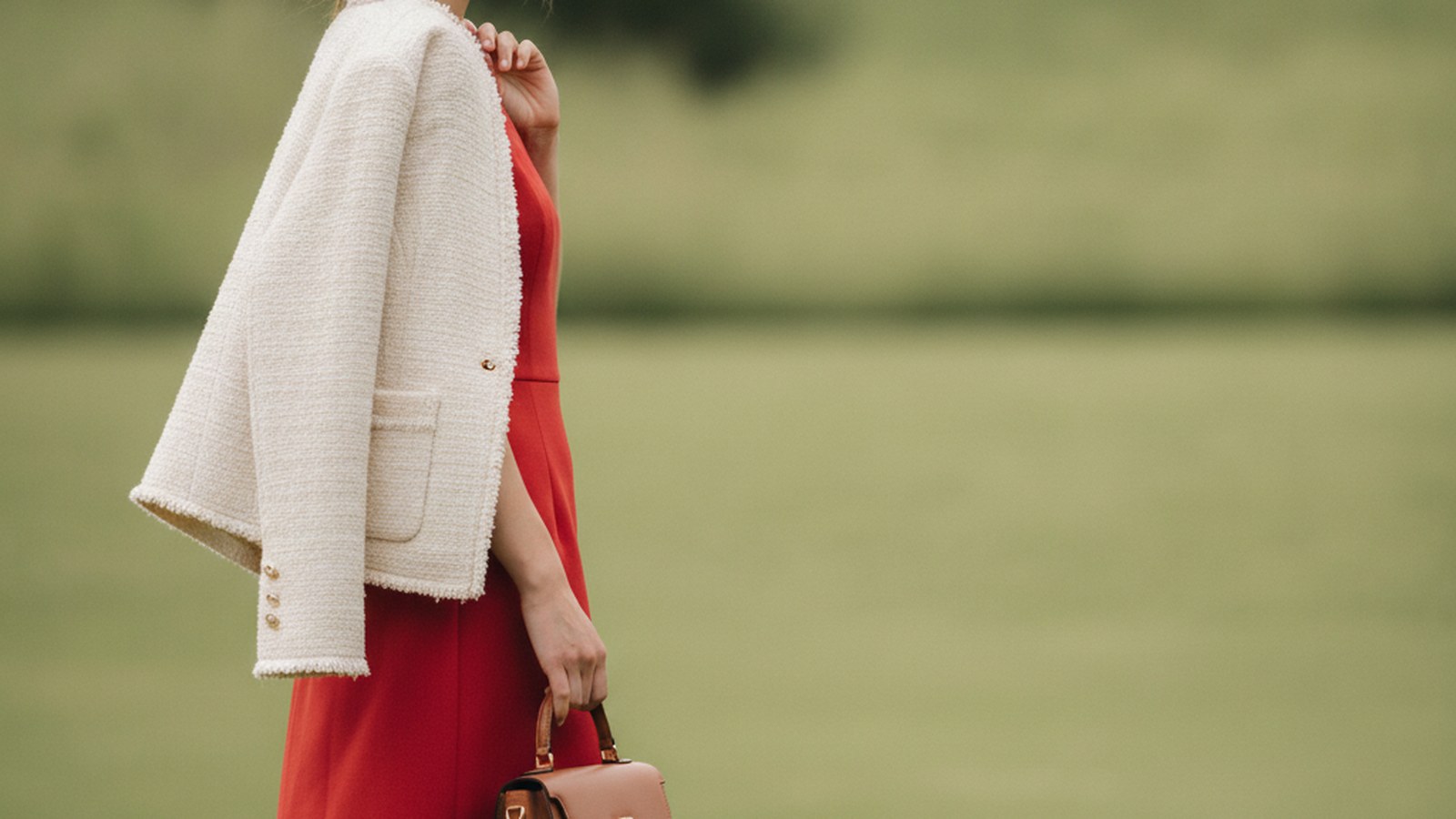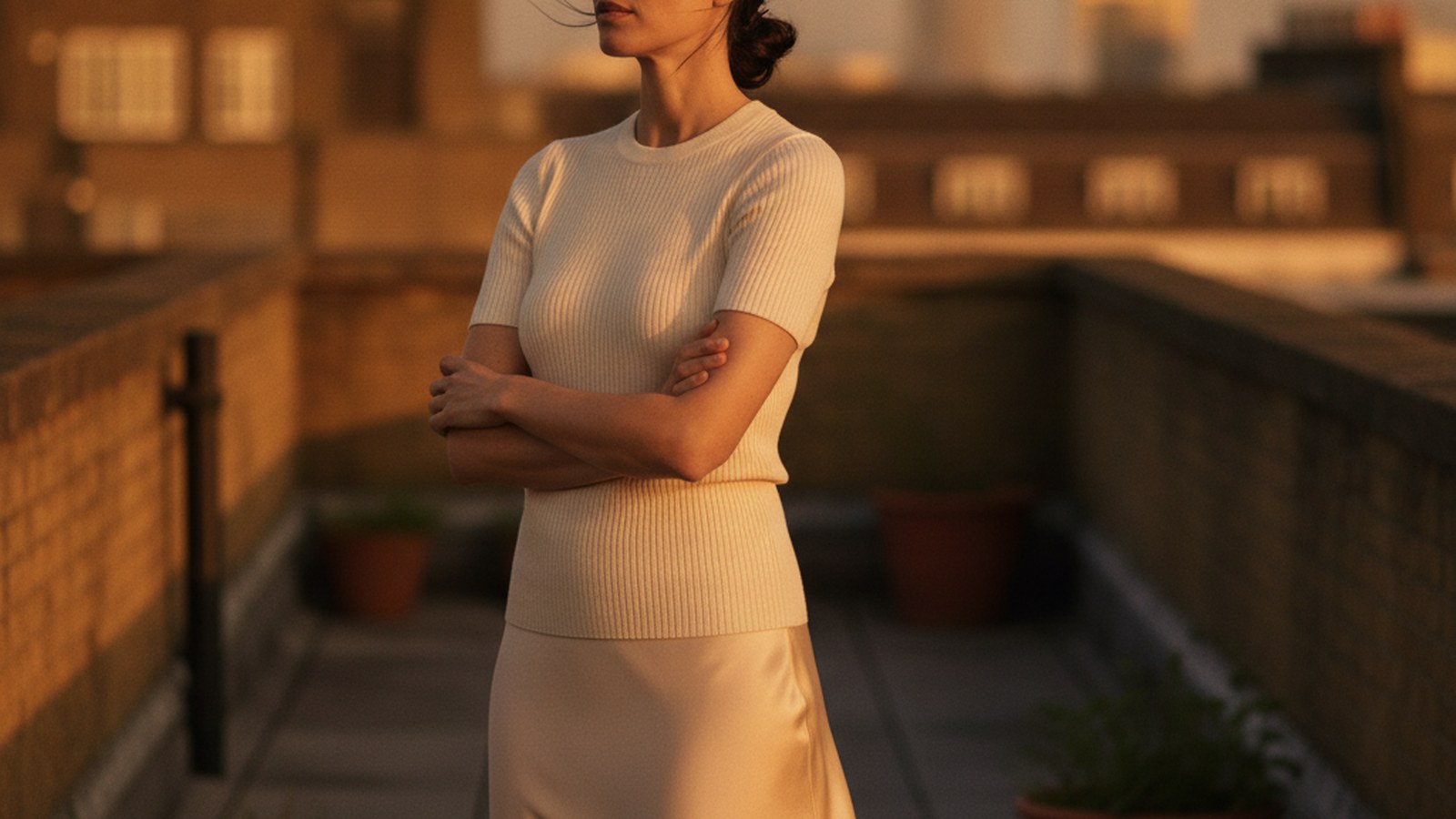
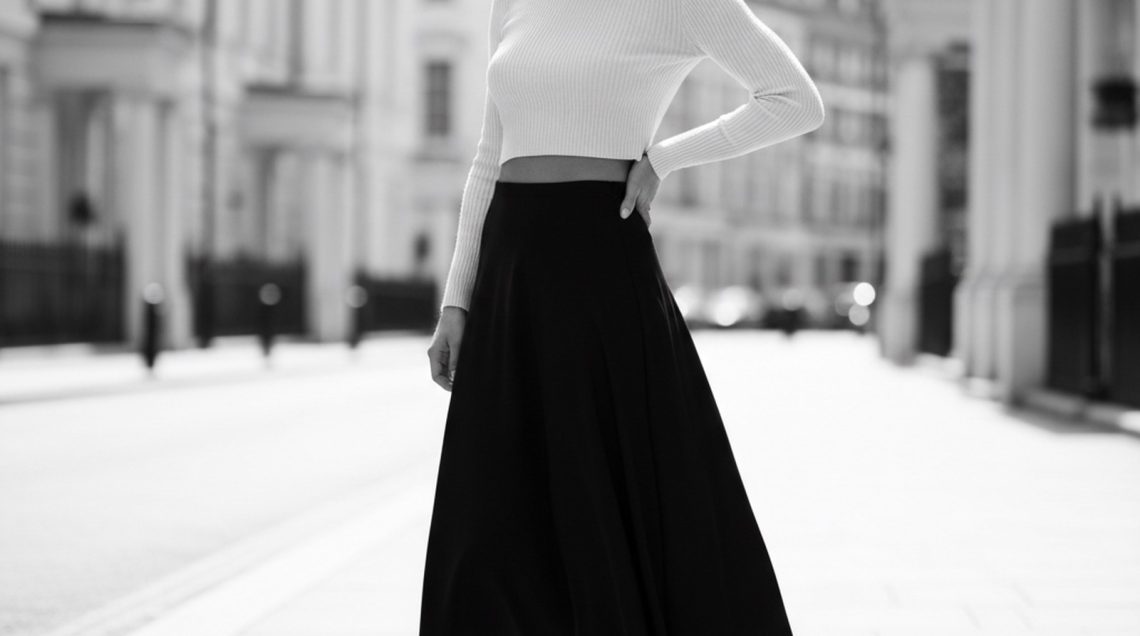
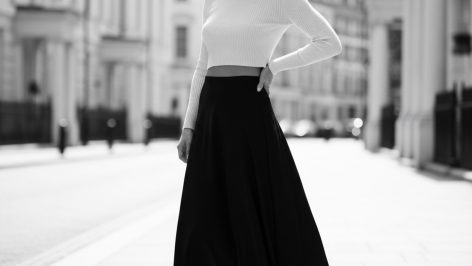
One fine-gauge cardigan in a neutral, cut to the high hip, will out-perform a basket of trend buys because it works as an anchor: it changes the register of everything else you own without changing itself. The formula across three dress codes is simple. Fully buttoned over a silk shell and tailored trouser reads office. Open over a slip dress with the shoulder line softened reads evening. One button fastened at the waist over straight-leg denim and a loafer reads polished weekend.
That is the whole system. What follows is why it works, the exact fabric and fit to shop for, and the proportion rule that stops a cardigan from collapsing into something shapeless.
Why one cardigan beats five trend pieces
Run the maths honestly. A trend item, say a butter-yellow cropped waistcoat or a barrel-leg jean in a printed denim, tends to pair with two or three things you already own. Multiply across five such buys and you generate perhaps ten to fifteen outfits, most of which compete for the same context.
A hip-length cardigan in ivory, stone, oatmeal or ecru, the organic earth-tone palette that signals quiet luxury without shouting it, pairs cleanly with almost every bottom, dress and shoe in a working capsule. Conservatively, that is one piece generating twenty-plus distinct outfits across three dress codes. The cost-per-wear collapses inside a season. The cost-per-outfit, which is the metric that actually matters, makes the case on its own.
The fabric spec to shop for (not just ‘natural fibres’)
Most coverage stops at “choose cashmere or merino”, which is not useful information. The variable that decides whether your cardigan reads polished or slouchy is the yarn spin and the gauge.
Look for worsted-spun extrafine merino at around 17.5 micron, knitted at a 12-gauge or finer. Worsted yarn is combed so the fibres lie parallel; the resulting knit drapes flat, holds a buttoned line and does not pill into fuzz after a fortnight. Woollen-spun yarn, by contrast, traps air and produces the soft, hairy surface you want in a chunky 5-gauge weekend jumper, not in a piece you intend to wear under a coat to a client meeting.
For genuine summer wear, the answer is a cashmere-cotton or cashmere-silk blend, roughly 10% cashmere to 90% cotton, which keeps the drape without the heat. John Smedley is the reference point for worsted fine-gauge knits if you want to feel the standard in your hand; COS, Quince and State Cashmere sit at accessible price points; Eileen Fisher does the longer, looser version if you genuinely prefer it (more on why I would not).
The hemline rule no one states plainly
A cardigan that ends below the seat reads sloppy in nine out of ten contexts. The fit variable that does the heavy lifting is the high-hip hemline: the knit should finish at the top of the hip bone, or just above, never below. This is what allows the piece to function as an evening or office anchor rather than a house cardigan.
The reasoning is structural. A high-hip hem keeps the visual weight on your torso, which is where tailoring is read. Drop the hem to mid-thigh and the eye reads loungewear regardless of the fabric. If you already own a longer cardigan, belt it at the natural waist for now and replace it when you can.
The 2:1 proportion rule, applied
Borrow the stylist’s 2:1 rule: two thirds of the outfit in one length, one third in the other. With a cardigan, that translates into two working directions.
- Upward length: high-hip cardigan plus slim or cropped bottom. The eye travels up. This is the office and evening configuration.
- Downward length: high-hip cardigan plus wide-leg trouser or midi skirt. The eye travels down. This is the weekend configuration and the most flattering option with flat shoes.
The cardigan does not change. The bottom decides the line.
The Register-Shift Rule: three formulas, one piece
1. Office: fully buttoned, structured base
Button the cardigan to the top, treat it as the top layer in its own right, and pair with a tailored straight-leg trouser or a midi pencil skirt. A V-neck silhouette works particularly hard here because it elongates under a blazer if the office runs formal, and stands alone if it does not. Add a pointed flat or a low block heel. Jewellery stays small: a single gold hoop, a watch.
The trick is the base layer. A silk shell or a fine cotton camisole underneath stops the knit reading as a jumper. If you can see a T-shirt collar, the register drops.
If you want the rest of the capsule built this way, with one anchor piece and the formulas that multiply it, the Mūsmūs newsletter sends a short, considered edit each week: the specific garments worth the money, the fit rules that make them work and the pairings I am actually wearing. No haul logic, no trend churn. Sign up and the next edition lands in your inbox on Sunday morning.
2. Evening: open, shoulder-softened, slip dress beneath
The same cardigan, unbuttoned, worn over a bias-cut slip dress in black, ivory or charcoal. Push the shoulder line slightly off the point of the shoulder so the knit drapes rather than sits squarely; this is the single move that pivots the piece from daytime to evening. Heeled mule, small bag, a stronger lip if you wear one.
This works because the slip dress carries the formality and the cardigan carries the warmth. You are not asking the knit to be the event; you are asking it to make the event wearable in a cold restaurant.
3. Weekend: one button at the waist, denim, loafer
Fasten a single button at the natural waist, leave the rest open, and wear over a straight-leg or wide-leg jean in a mid to dark indigo. A loafer, a clean white trainer or a flat ankle boot finishes it. A plain white T-shirt or a fine cotton tank sits underneath.
The single-button move is what separates this from looking like you forgot to do the cardigan up. It creates a defined waist, holds the drape and reads considered.
What to wear it with in summer specifically
Late May into June is exactly when this piece earns its keep. Offices run cold, evenings turn, and a blazer is too much. The cashmere-cotton version handles a linen trouser, a cotton midi skirt or a poplin shirt-dress without adding visible weight. Keep the palette in the same family, ivory cardigan over stone trouser, oatmeal over ecru, so the outfit reads as one considered tonal block rather than a layered effort.
If you buy one piece in the next month, make it a 12-gauge worsted extrafine merino cardigan in oatmeal or ivory, cut to the high hip, with a V-neck or a clean crew. Wear it three ways this week and count the outfits. The argument makes itself.