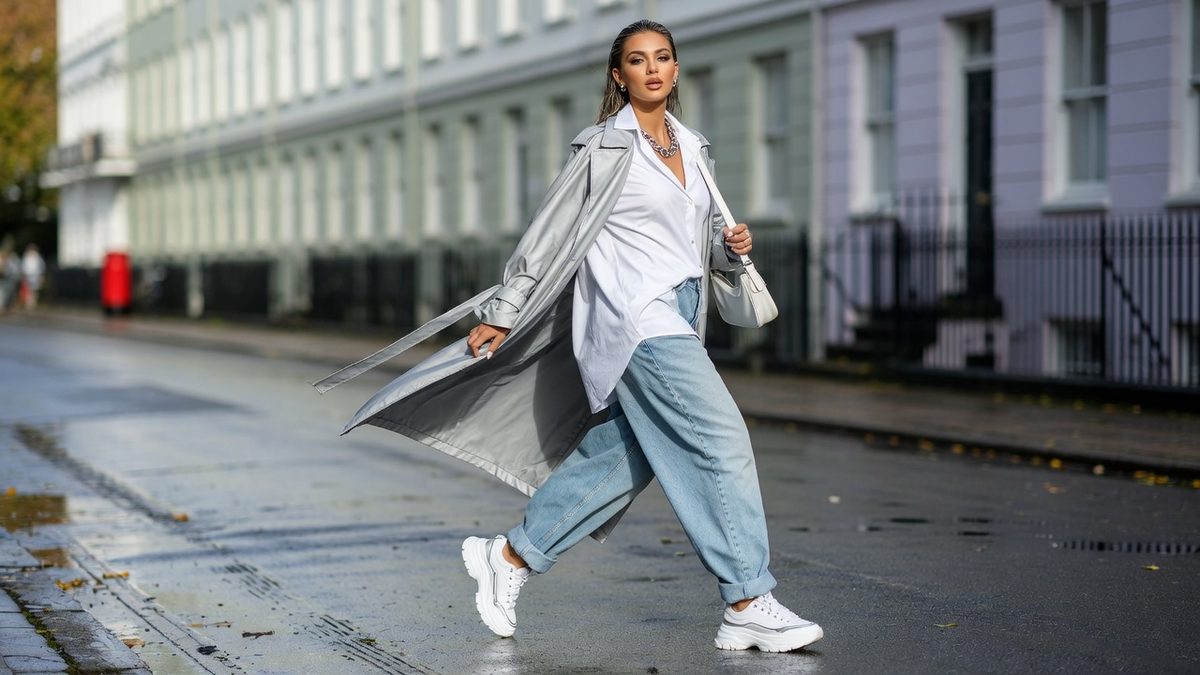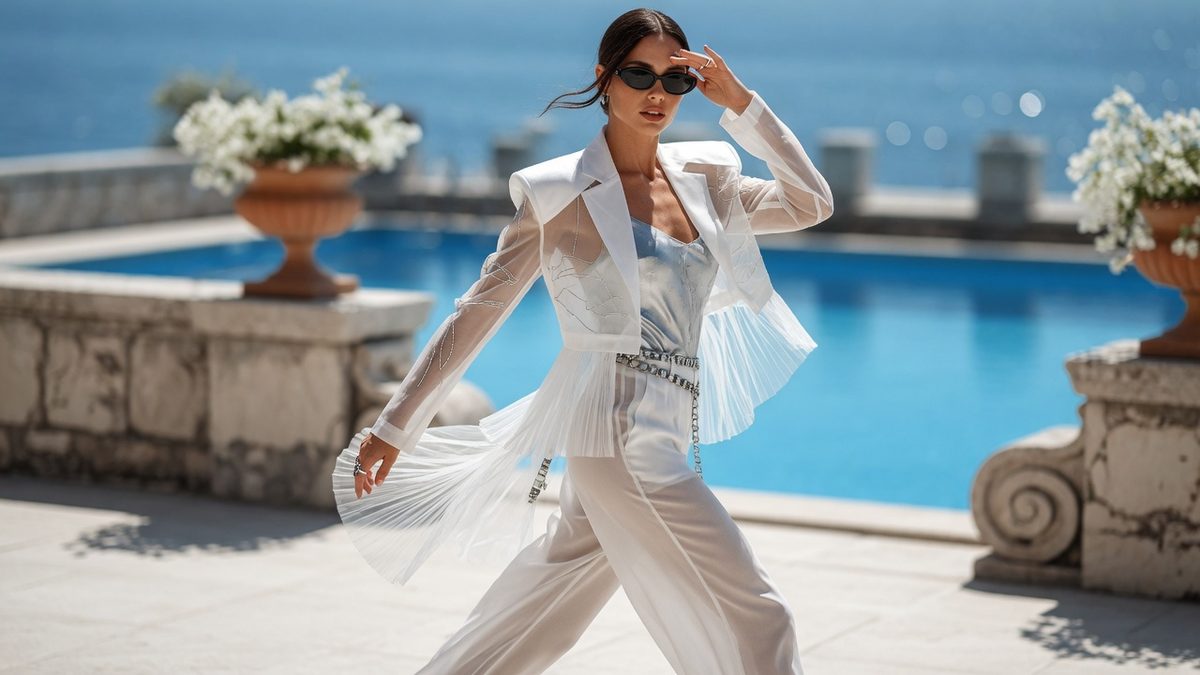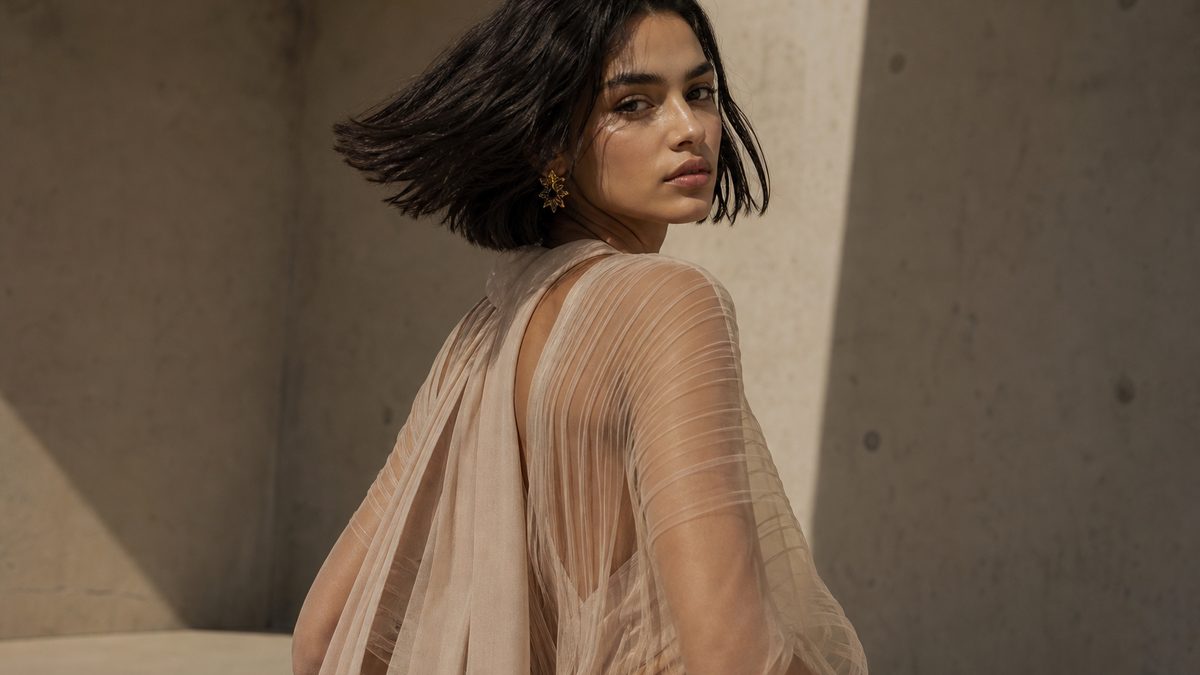
Across TikTok and Instagram Reels, a peculiar form of public declaration has emerged: British women announcing, with the finality of a relationship status update, that they’ve ‘done the quiet luxury girl’ or ‘completed the tomato girl era’. The phrase structure is rigid, ‘I’ve done the [aesthetic]’, and the delivery invariably confessional, filmed in soft focus with a wardrobe pan or a knowing glance at the camera. What began as casual content has calcified into a viral format, and Mūsmūs is the first UK outlet to name it: the ‘I’ve done the’ era is not just commentary on trend fatigue, it’s a meta-trend in itself, a performative rejection of performance that still performs consumption.
The search term ‘i ve done the’ is spiking in UK Google data, driven by fashion-conscious women seeking templates for their own aesthetic exit announcements. But beneath the self-awareness lies a tension: these videos function as dating profiles for the algorithm, signalling cultural fluency whilst reinforcing the cycle they claim to reject. The format is distinctly British in tone, wry, self-deprecating, class-conscious, and it’s reshaping how UK women relate to the micro-trends that have dominated the past three years, from Coastal Grandmother to Mob Wife to the homegrown Frazzled English Woman.
The signal: why ‘I’ve done the’ is fashion’s new confessional format
The anatomy of an ‘I’ve done the’ video is formulaic: a woman in her twenties or thirties, usually seated in natural light, lists the aesthetics she’s cycled through, Quiet Luxury, Blokette, Tomato Girl, with the weary authority of someone cataloguing ex-partners. The subtext is always the same: I was there, I understood it, I’ve moved on. Platforms reward this format because it reads as authentic whilst remaining entirely algorithmic; it namedrops trend vocabulary (WGSN-approved terms like Stealth Wealth or Indie Sleaze) whilst performing the kind of self-awareness that stops just short of actual critique.
Who What Wear UK has leaned heavily into the ‘I’ve done the research’ phrasing in headlines, but the confessional ‘I’ve done the [era]’ lives natively on short-form video, where British women are using it to signal both taste and fatigue. The most-declared ‘completed’ aesthetic is Quiet Luxury: the Toteme trousers, The Row knitwear, and Sézane loafers that saturated Instagram feeds in 2023 now function as visual shorthand for a moment already perceived as over. River Island and Mango democratised the silhouettes so efficiently that the aesthetic aged in fast-forward, a cycle the UK high street accelerates more brutally than any other market.
What’s significant is the public nature of the exit. Previous generations of style evolution happened privately, you simply stopped wearing something, but the ‘I’ve done the’ format requires an audience, a timestamp, a record. It’s fashion’s version of the ‘we need to talk’ text: performative closure that paradoxically keeps the relationship alive by announcing its end. The format also functions as a form of class signalling, particularly in the UK, where aesthetic fluency has replaced postcode as a marker of cultural capital.
The cultural roots: from quiet luxury fatigue to the frazzled English woman
The ‘I’ve done the’ phenomenon is rooted in a specific kind of exhaustion: not with fashion itself, but with the pace at which aesthetics are named, monetised, and discarded. Quiet Luxury emerged as a reaction to logomania and the maximalism of the late 2010s, but its visual language, fluid trousers, single-seam knitwear, Carolyn Bessette-Kennedy references, was so quickly codified by WGSN and then replicated by Zara and M&S that it became a uniform rather than a sensibility. By early 2024, the backlash had arrived in the form of Mob Wife, a deliberate aesthetic overcorrection that leaned into fur, gold hardware, and the kind of visible wealth Quiet Luxury had rejected.
British women’s relationship with these cycles differs from the American market. The UK high street, anchored by River Island, Mango, and M&S, operates on shorter lead times and tighter price points, meaning trends are democratised and then exhausted faster. There’s also a class dimension: wearing an aesthetic ‘correctly’ in the UK requires navigating unspoken rules about where you bought it, how you style it, and whether you’re performing aspiration or lampooning it. The Frazzled English Woman micro-aesthetic, cited by Who What Wear UK and British Vogue, emerged as a counter-movement: intentionally undone, mixing Alexa Chung-style insouciance with charity shop finds, rejecting the polished completion that Quiet Luxury demanded.
The ‘I’ve done the’ format also borrows from a deeper cultural script: the British tendency to perform modesty through self-deprecation. Announcing you’ve ‘completed’ an era isn’t boastful, it’s framed as confession, even apology. It’s the sartorial equivalent of saying ‘I’ve been thinking too much about this, haven’t I?’ whilst continuing to think about it. The format thrives because it lets women signal both participation and detachment, a duality that’s particularly legible in UK culture, where enthusiasm is always tempered by irony.
How to wear it: the stylist’s three-wear test for genuine era completion
The question the ‘I’ve done the’ format rarely answers is this: have you actually absorbed the aesthetic into your wardrobe DNA, or have you just bought into it? Stylists working with British Vogue and Net-a-Porter cite a simple metric, the three-wear test. If a piece survives three distinct styling contexts (work, weekend, evening) without feeling costume-like, it’s transcended trend. If it only works within the original aesthetic’s narrow parameters, if your Toteme trousers only make sense with a Row knit and Sézane loafers, you haven’t completed the era, you’ve just performed it.
What genuinely lasts from Quiet Luxury: fluid trousers in wool or silk, single-seam knitwear that doesn’t announce its construction, ankle boots with minimal hardware. What dates instantly: logo-free but highly recognisable silhouettes (the specific Toteme trouser cut, the Bottega Veneta pouch) that become visual clichés the moment the high street replicates them. From Mob Wife, the pieces with staying power are oversized outerwear and gold jewellery worn without irony; what won’t age well is anything that requires the aesthetic’s full styling apparatus to read correctly.
The Frazzled English Woman aesthetic, meanwhile, resists completion by design, it’s built on mix, not match, and its visual language (charity shop blazers, Acne Studios jeans, battered Converse) actively rejects the kind of coherence that other eras demand. British women are increasingly gravitating toward this approach not as a named trend but as a structural philosophy: buy less, style harder, resist the pressure to announce your aesthetic allegiances in public. The irony, of course, is that even this resistance is being packaged as content, hashtagged and timestamped.
Looking ahead to AW25, the runway codes from Miu Miu, Bottega Veneta, and Acne Studios suggest a return to proportion play and tactile fabrics, volume in unexpected places, knits that demand touch, shoes (Nike Shox, the Balenciaga City Bag) that signal insider knowledge rather than mass adoption. But whether British women will ‘complete’ these eras in eighteen months or continue to resist the format itself remains the more interesting question, one that will likely be answered not in purchases but in how many more confessional videos announce, with performative finality, ‘I’ve done the trying’.