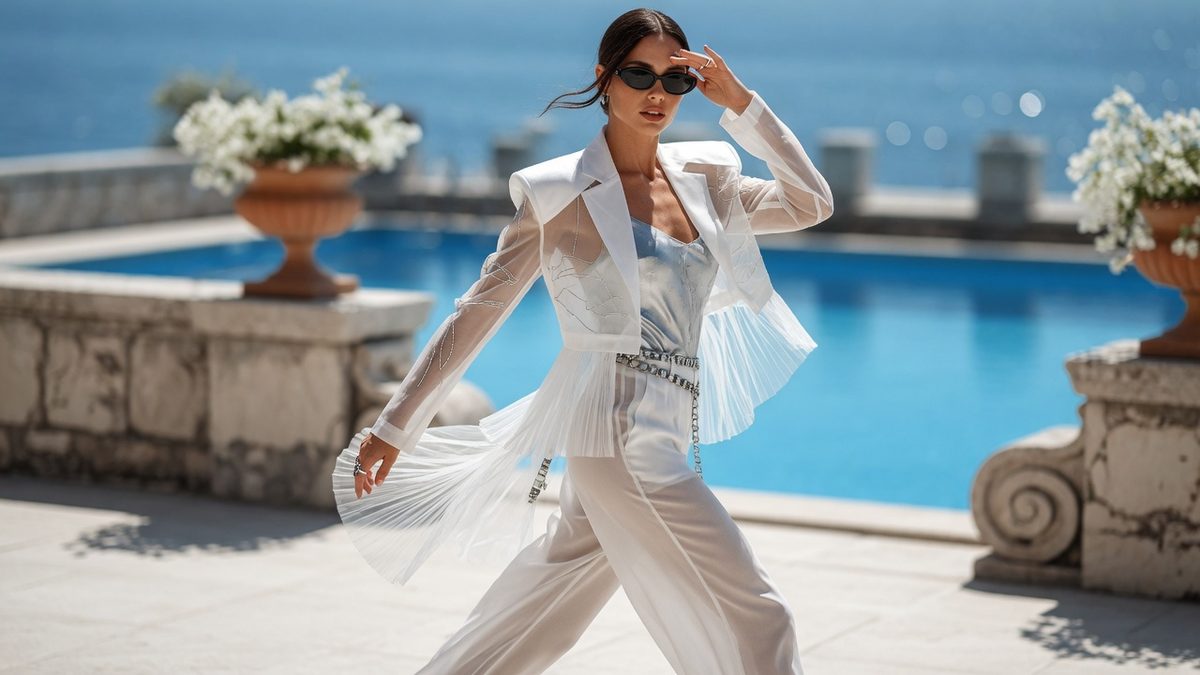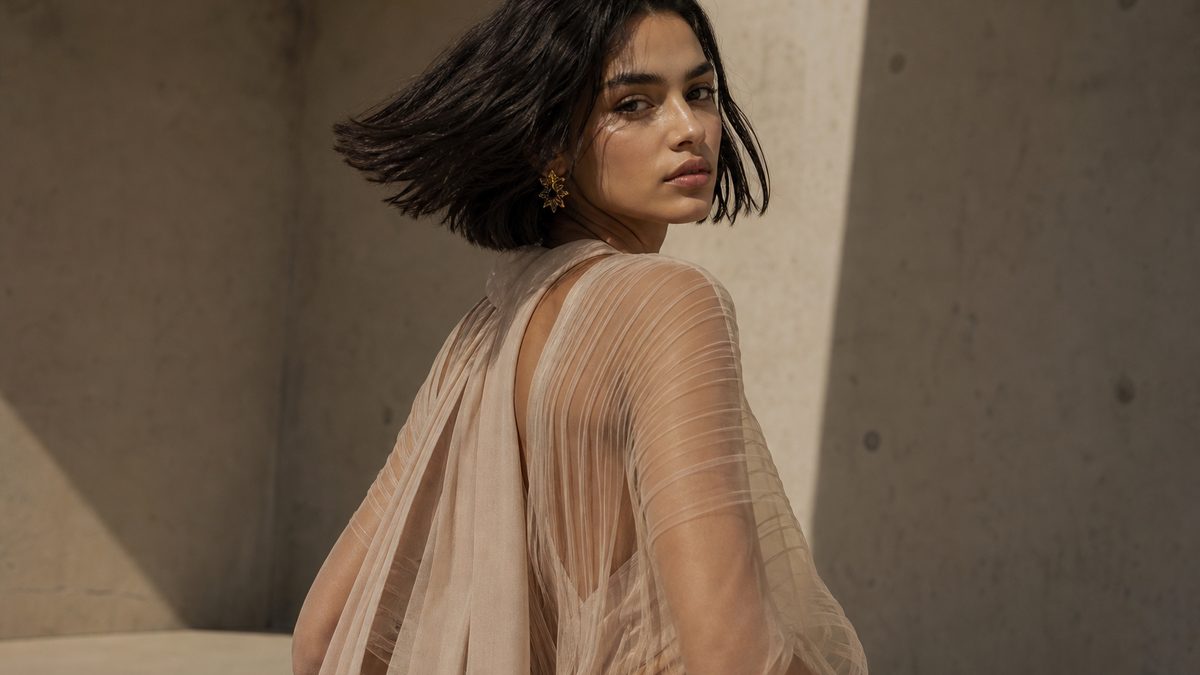
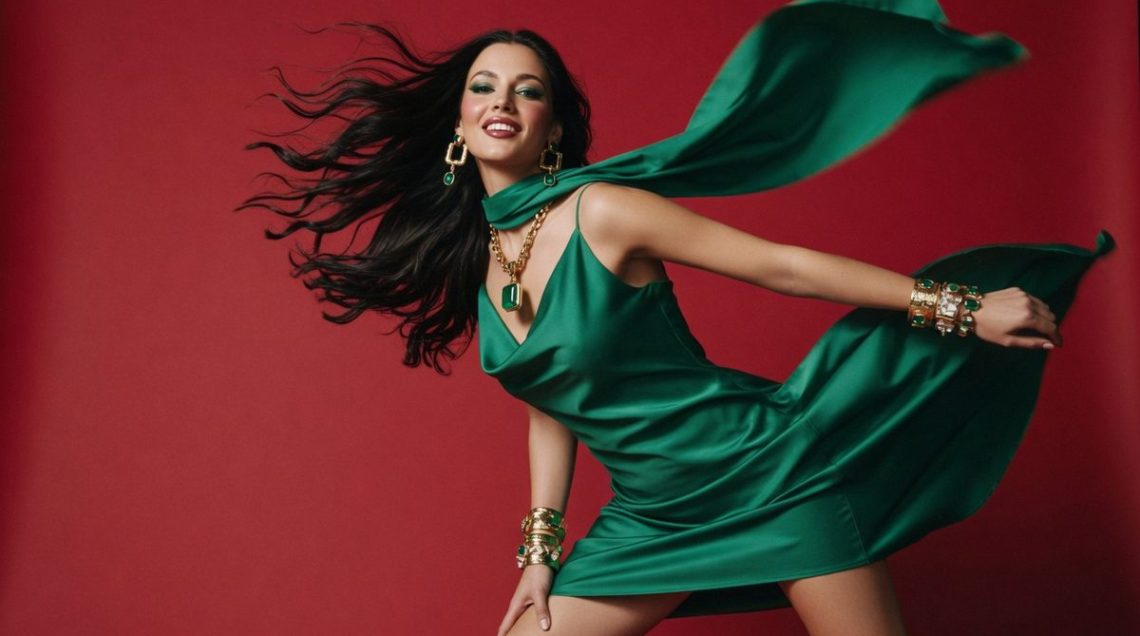
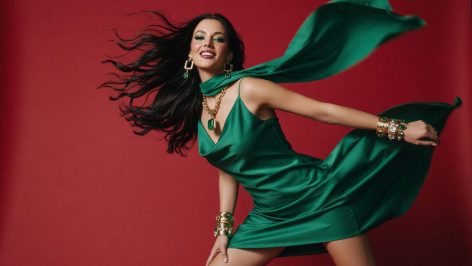
The bracelet trend is back, but not in the way UK fashion memory might expect. This isn’t the charm-bracelet frenzy of 2013-15, when Pandora dominated Oxford Street and personalisation meant collecting every birthday milestone on a single chain. What’s surging across Google Trends UK right now is something sharper, more considered, and infinitely more difficult to master: the curated wrist stack. Michael Rider’s debut SS26 collection for Celine made that distinction unignorable.
Where the old guard of minimalism, Phoebe Philo’s Old Celine, Bottega Veneta’s monastic restraint, taught us to edit down to a single cuff or nothing at all, the new maximalism demands density without chaos. It’s a tightrope walk. And judging by the search volume alone, British dressers are either thrilled or terrified by the prospect of getting it wrong.
Why the bracelet trend is Celine SS26’s loudest statement
Michael Rider’s Celine SS26 charm bracelet, strung with Triomphe monogram discs, padlocks, lockets, and a helping-hand prosperity symbol, was the collection’s semiotic centrepiece. These weren’t arbitrary trinkets; they were a deliberate pivot away from Philo-era austerity and toward a new house language of abundance and symbolic gesture. The padlock, a Celine archive code, now sits alongside a prosperity talisman borrowed from global craft vernaculars. It’s maximalism with a footnote, luxury with a backstory.
Burberry SS26 and Zimmermann SS26 followed suit with layered wrist hardware, but neither committed to the narrative weight Rider embedded in his charms. Wallpaper* documented the specific iconography; we’re decoding what it signals. This is house-building through jewellery, not just accessorising. Gucci’s bamboo bracelets under Sabato de Sarno gestured toward material storytelling, but Celine’s charm vocabulary is more lexicon than flourish, a deliberate counter-manifesto to the quiet-luxury aesthetic that dominated 2024-25.
Curated, not collected: the cultural pivot competitors keep missing
Here’s the distinction every UK outlet has danced around but none has named outright: the 2026 bracelet moment is curated, not collected. The Pandora model, buy a base chain, add charms incrementally over years, wear the entirety of your personal history on one wrist, was about accumulation. The current trend, as documented by Marie Claire UK and AJLuxe, is about editing. You don’t wear everything you own. You compose.
A 2025 study published in Psychology of Aesthetics, Creativity and the Arts found that moderate visual complexity, achieved through contrast in texture, scale, and form, enhances perceived sophistication. In plain terms: a mixed bracelet stack reads as more intentional than a uniform one, but only if the contrast is controlled. Too much similarity and it’s bland; too much chaos and it’s costume. This isn’t magpie maximalism. It’s architectural layering.
McKinsey & Company’s Global Jewellery Market Outlook 2026 noted that personalisation remains a key driver of premium jewellery purchases, while Statista’s parallel report flagged trend-driven buying as a growth segment. What neither captured is the tension between those forces: buyers want pieces that feel personal and on-trend. The solution? Stacking as storytelling. Otiumberg founders Rosanna and Christie Wollenberg told Marie Claire UK that clients are now requesting ‘signature wrist moments’, not heirlooms, not status symbols, but visual syntax. Rabanne’s silver jewellery direction SS26 leaned into this too, offering modular pieces designed to be mixed rather than matched.
The anchor-filler-accent rule: how to stack for AW without looking cluttered
So how does one actually dress a wrist for AW26 without looking like a wind chime in a wool coat? The answer lies in a three-part framework synthesised from jewellery styling guides but rarely named in UK editorial: anchor, filler, accent. Start with one anchor piece, a chunky cuff, a chain bracelet with weight, something that holds visual ground. Add filler, thinner bangles, cord bracelets, delicate chains, to create rhythm without competition. Finish with one accent: the charm, the clasp detail, the material surprise.
The British dressing challenge is layering. AW wardrobes mean knitwear cuffs, tailored sleeves, trench coats, all of which obscure or clash with wrist jewellery. The anchor-filler-accent rule solves this by ensuring your stack reads as a single gesture, not a jangle of competing elements. Wear it over the cuff of a fine-knit jumper, or let it disappear beneath a blazer sleeve and reappear only when you gesture, the intentionality is the point.
Otiumberg, Gucci’s bamboo line, and Celine’s charm vocabulary all support this structure. You don’t need six bracelets; you need three well-chosen ones. And if you’re still tempted to pull out that Pandora chain from 2014? Leave it in the drawer. This is a different language entirely, and the UK is finally learning to speak it fluently.