The SS26 runways delivered a rare consensus: five trends emerged across Calvin Klein, Dior, Loewe, and Giambattista Valli so insistently that even the most risk-averse wardrobes will absorb them by June. But London demands a different calculus than Milan or Paris. These are the trends that survived our internal edit, assessed not by runway fervour but by pub-to-dinner transitions, unexpected downpours, and the brutal honesty of a British summer that oscillates between 14°C drizzle and 28°C Tube carriages. One trend, however seductive on Instagram, won’t make it past August.
Celebrity stylist Ellis Ranson, who decodes Pinterest Predicts annually, confirms the shift: ‘The 2026 woman wants volume, colour saturation, and silhouettes that photograph well but don’t punish you for living in them.’ That last clause matters here. The five trends below passed our London wearability filter, the cobalt surge, the retro Jacquemus florals, the 80s power shoulder, the godet hem, and barrel-leg raw denim, but only four deserve your investment.
The 5 SS26 trends we’re actually buying (and how each survives a London summer)
Retro florals in cotton or broderie anglaise appeared at Jacquemus, Celine’s tropical iterations, and Giambattista Valli’s headscarf-referencing prints. The fabric distinction is critical: viscose florals read 2019, but cotton broderie or structured poplin anchors the print in 2026. In London, this trend survives layering, a denim jacket transforms it from pastoral to pub-ready, and the breathability matters when you’re navigating the Central line at rush hour. Emilia Wickstead and Ulla Johnson both champion the silhouette, which works equally at a gallery opening or a Saturday farmers’ market.
The godet skirt and handkerchief hem solve the proportion crisis that midi lengths often create. The uneven hemline, longer at back, shorter at front, grazes the widest point of the calf rather than sitting mid-knee, which avoids the costume effect that plagues trend-led skirts. This is the longevity winner: it works across body types, doesn’t demand specific shoe heights, and translates from Roksanda’s tailored versions to high-street cotton iterations. In unpredictable weather, it pairs with trainers and ankle boots interchangeably, a flexibility no other SS26 silhouette offers.
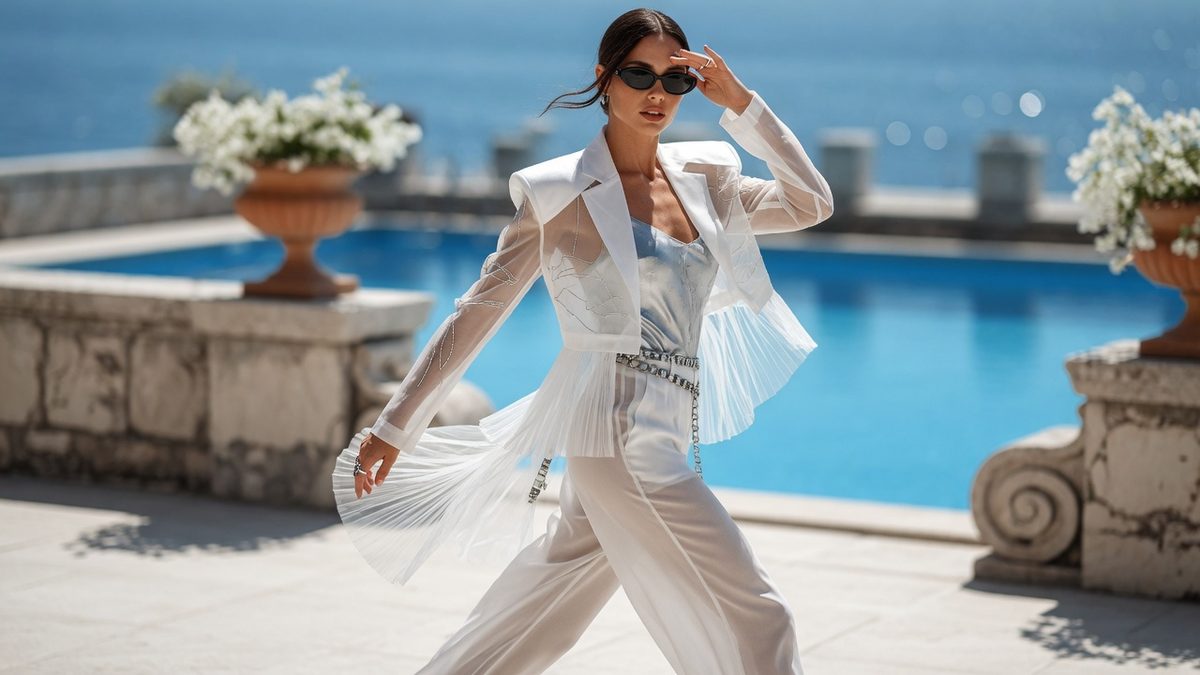
80s power shoulders returned at Miu Miu (leather apron-shaped jackets), Fendi’s rainbow brights, and Rabanne’s surf-suit tailoring. The stylist’s rule we’re enforcing: one power-shoulder element maximum per outfit. Pair the blazer with tapered trousers and a plain white tee, never with wide-leg denim and a statement bag simultaneously. The Charlotte Edit surfaces this principle but buries it; we’re foregrounding it because London’s visual language skews minimal, and stacking structure reads try-hard rather than assured. In practice, this means the shoulder does the talking, everything else recedes.
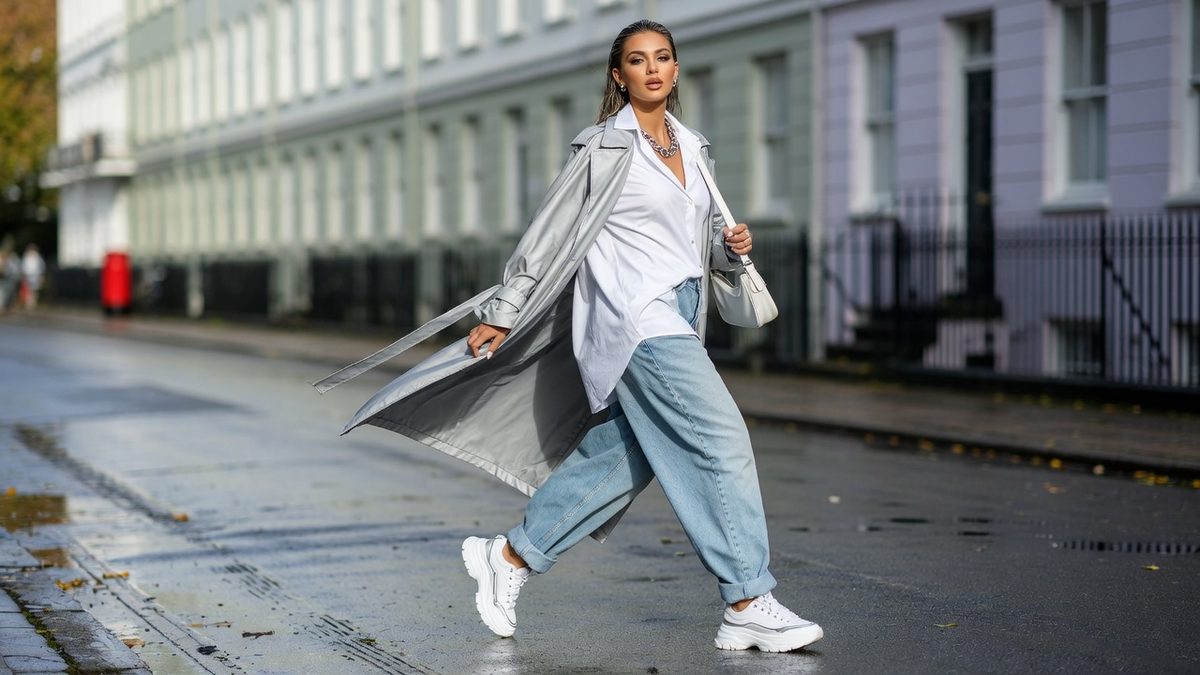
Barrel-leg raw denim in mid-wash or ecru dominated Loewe’s technical textures and Meryll Rogge’s electric blue iterations. The wide-leg, high-waist cut survives London’s layering demands better than any trouser since the straight-leg revival of 2022. It works with chunky knits, cropped shirts, and, crucially, flat sandals or chunky loafers, which matters when you’re walking more than posing. The denim weight (14oz minimum) provides structure that cheaper versions lack, so this is the one trend where fabric quality directly determines wearability.
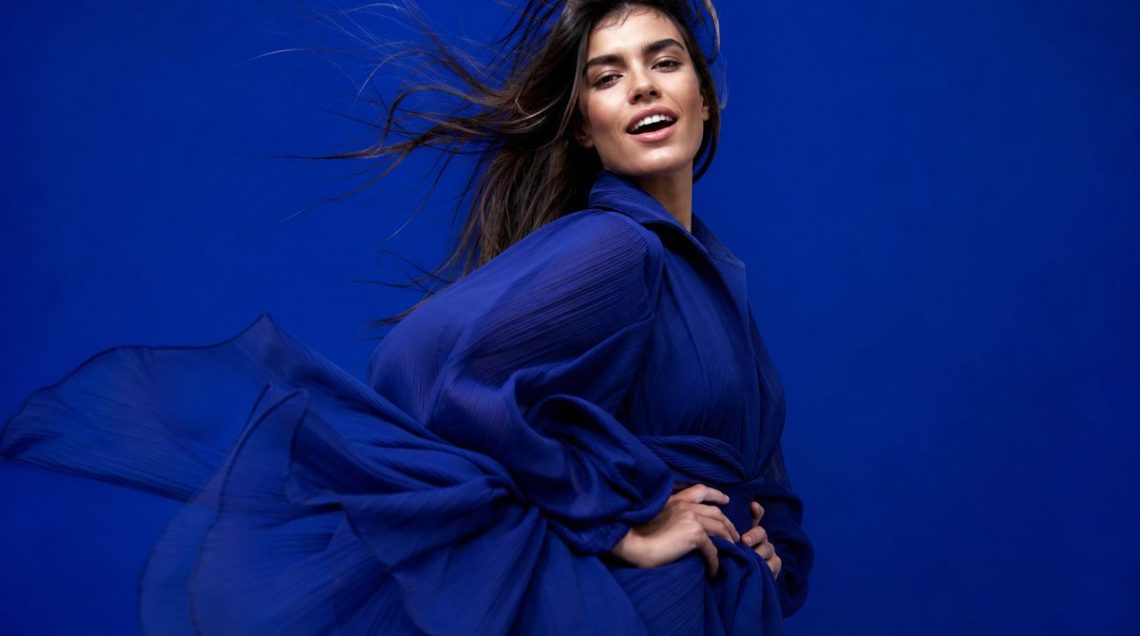
Cobalt blue and dopamine orange saturated Roksanda, Tove, and Loewe’s bold colour blocking, with Yves Klein Blue appearing at Celine and navy repositioned as neutral across the board. Pantone’s Cloud Dancer (2026’s official shade) offered a chalky contrast, but the high-chroma brights are what retailers report rising demand for. In London, cobalt photographs exceptionally well, outdoor summer light makes it glow, but the rewear reality is harsher. More on that below.
Why cobalt blue is the Instagram trend nobody will rewear
Cobalt is the trend everyone will photograph and almost no one will wear past September. The issue isn’t the colour itself, Roksanda and Tove proved it works in tailoring and slip dresses, but its emotional footprint. High-saturation blue demands a specific confidence; it doesn’t fade into a capsule wardrobe the way navy or even dopamine orange (surprisingly) can. In practice, cobalt pieces sit in wardrobes post-purchase, reserved for ‘special occasions’ that never arrive. The Instagram appeal is undeniable: the colour pops against neutral urban backdrops, and it signals you’ve absorbed the trend cycle. But the rewear test, the metric that separates fashion from wardrobe, exposes its fragility.
The fabric compounds the problem. Cobalt in duchess satin (see Giambattista Valli) or heavy crepe holds its intensity and justifies the commitment. But high-street jersey or polyester versions wash out under British daylight, rendering the colour flat rather than saturated. If you’re investing in cobalt, the material quality matters more than for any other SS26 trend. The editors who wore it most successfully at LFW did so in small doses, a cobalt clutch against Cloud Dancer tailoring, or cobalt mules with raw denim, rather than committing to a full cobalt dress or suit. The lesson: treat it as an accent, not a foundation.
Contrast this with the godet hem or power shoulder, both of which integrate into existing rotations without demanding a supporting cast. Cobalt isolates itself; it’s the trend equivalent of a statement guest who requires the entire dinner party to revolve around them. For a London wardrobe that prioritises versatility, because our weather and social calendar demand it, cobalt is the photogenic risk that delivers diminishing returns.
How to wear each trend without looking like you’re in costume
Retro florals: Ground them with masculine tailoring or raw textures. A Jacquemus-style floral blouse works with barrel-leg denim and leather loafers, but pair it with a matching skirt and you’ve crossed into fancy dress. The proportion fix: one floral piece, surrounded by neutrals in contrasting textures (denim, leather, linen). Ellis Ranson’s Pinterest decoder approach applies here, the trend succeeds when it feels discovered, not assembled from a mood board.
Godet hems: The hemline should sit where your calf begins to taper, not at the knee’s widest point. This single adjustment prevents the ‘period drama’ effect that midi skirts often trigger. Pair with flat sandals or minimal trainers; heeled boots pull the silhouette backward into 2018 boho. The fabric should have enough weight to hold the uneven hem’s structure, avoid anything that clings or rides up when you walk.
80s shoulders: As stated, limit yourself to one power-shoulder element per outfit. If the blazer has structured shoulders, the bag should be soft and minimal. If you’re wearing a shoulder-pad tee (see Miu Miu’s leather apron aesthetic), the trousers should taper, not billow. The mistake we saw repeatedly at LFW: stacking volume on volume, which reads costumey rather than directional. London’s visual grammar rewards restraint, so let the shoulder be the sole statement.
Barrel-leg denim: The rise should sit at your natural waist, and the hem should break once at the ankle. Cropped versions lose the silhouette’s elegance; stacked hems look unfinished. Pair with a tucked-in tee or a cropped knit that hits at the waistband, anything longer disrupts the high-waist proportion that makes the cut work. Avoid heels; the silhouette was designed for flat or chunky soles, and forcing it into stilettos undermines its relaxed authority.
The through-line across all five trends: proportion and restraint outweigh enthusiasm. The SS26 woman isn’t performing the trends; she’s absorbed the ones that serve her existing rhythm, edited out the rest, and moved forward. The maximalist jewellery revival (Matthieu Blazy at Chanel, Fendi’s rainbow brights) offers a parallel lesson, more is only more when each element has been chosen with surgical precision. One bold trend per outfit, styled with the same rigour you’d apply to a uniform, and London will let you wear it without question. The city has little patience for costumes, but it rewards those who treat trends as tools rather than performance…