Search interest around the phrase “postpartum left me with” has been climbing steadily across UK Google Trends, and the autocomplete trail it leaves behind tells its own story: wider hips, bigger feet, a body that no longer fits the jeans in the wardrobe. It’s not a vanity complaint. It’s a fit problem, and fashion media has been slow to treat it as one.
What’s changed is who’s doing the talking. Where celebrity coverage still defaults to “bounce-back” language, a newer strand of independent writing is naming postpartum as what stylists increasingly treat it as: a permanent body event, not a temporary detour. UK brands are only now catching up.
What postpartum actually does to fit, rise and silhouette
The physiology is well documented, even if fashion coverage rarely translates it into styling terms. Relaxin, the hormone that loosens ligaments ahead of birth, is also responsible for a hip-to-waist ratio that doesn’t reliably return to its pre-pregnancy proportions, alongside feet that can permanently increase in size. Add a shifted centre of gravity and a rib cage that has expanded to accommodate late pregnancy, and the result isn’t “a few pounds”, it’s a different set of measurements at the waistband, hip and inseam simultaneously.
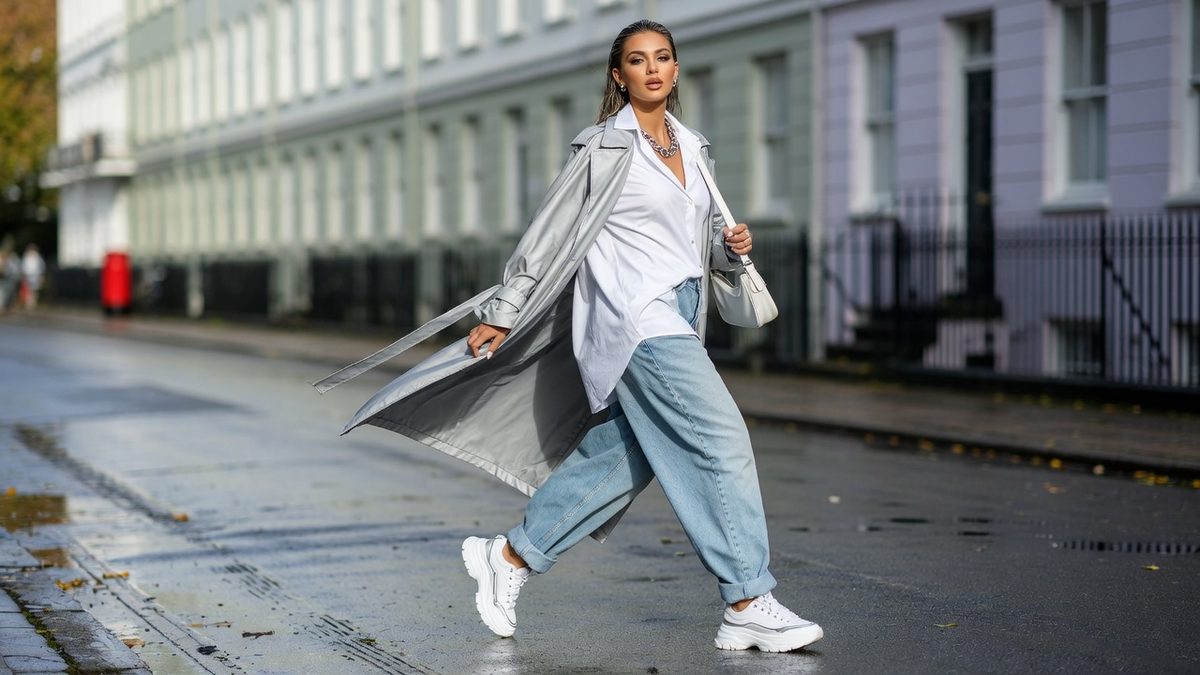
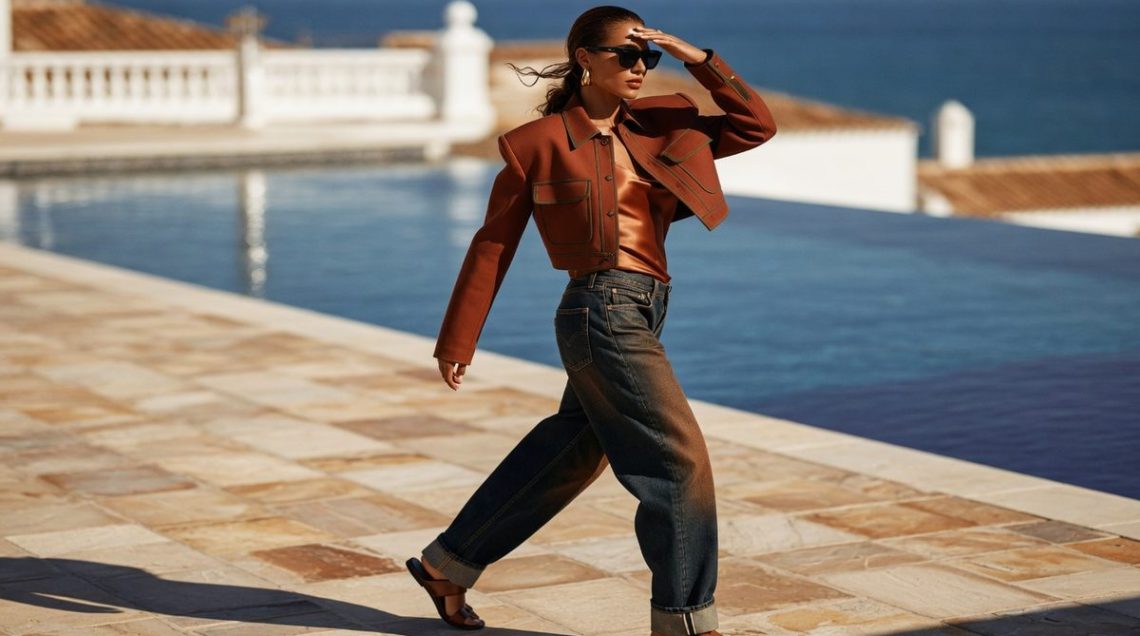
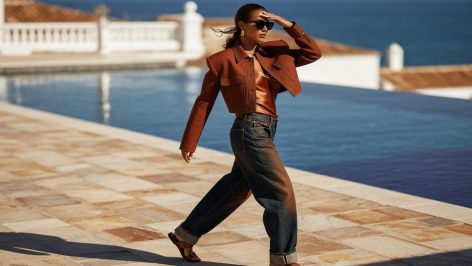
That’s precisely why Levi’s 501s function as such a loaded symbol in postpartum style writing: a straight-cut, low-relaxin-era jean assumes a hip-to-waist relationship that many bodies simply no longer have. The fix isn’t sizing up in the same cut, it’s changing the cut altogether, towards barrel-leg jeans and curved-waistband denim built to follow a wider hip without gaping at the waist.
Rise matters just as much as leg shape here. A high, straight waistband sitting across a still-soft midsection reads very differently to a curved, lower-set one that’s been engineered around a changed torso, the difference between fighting the body and dressing the one that’s actually there.
Beyond bounce-back: the Substack counter-culture rewriting the story
Anthropologist Dana Raphael coined the term “matrescence” for the psychological transformation into motherhood, and it’s a framework a growing number of independent writers are now applying to clothes specifically. Substack newsletters like Tory Stroker’s The Hoka Moka and Elle Sundberg’s writing on postpartum identity treat wardrobe grief as a legitimate part of that transformation, rather than a footnote to be solved with a bigger size.
It’s a deliberate rebuttal to the “snap back” framing that still dominates celebrity postpartum coverage, where a changed body is treated as a problem with a deadline. These writers instead document the process of reconciling with a body that has permanently changed shape, closer to grief writing than style advice, and arguably more useful for it.
Mainstream UK fashion press has started to notice, if not yet fully absorbed the shift. Stylist UK ran postpartum fashion coverage in June 2026, but it stayed largely product-led, recommending items rather than interrogating why so much existing stock doesn’t fit. Newsletters like Mumish, and essayists such as former Vogue France head of content Eugénie Trochu writing for Who What Wear, are the ones doing the harder work of describing what actually happens to taste and confidence, not just measurements.
How to rebuild a wardrobe that fits the body you have now
Trochu’s essay leans on distinctly Parisian references, La Veste for striped shirting, Bobo Choses for relaxed womenswear, ACNE Studios denim as a pre-baby wardrobe touchstone, but the underlying logic travels well beyond France. UK equivalents exist in brands built specifically around a changed postpartum shape: Isabella Oliver, which now runs a pre-loved and circular resale strand, and Turtledove London, whose organic postpartum pieces are cut with a curved waistband rather than a straight pre-pregnancy one from the outset.
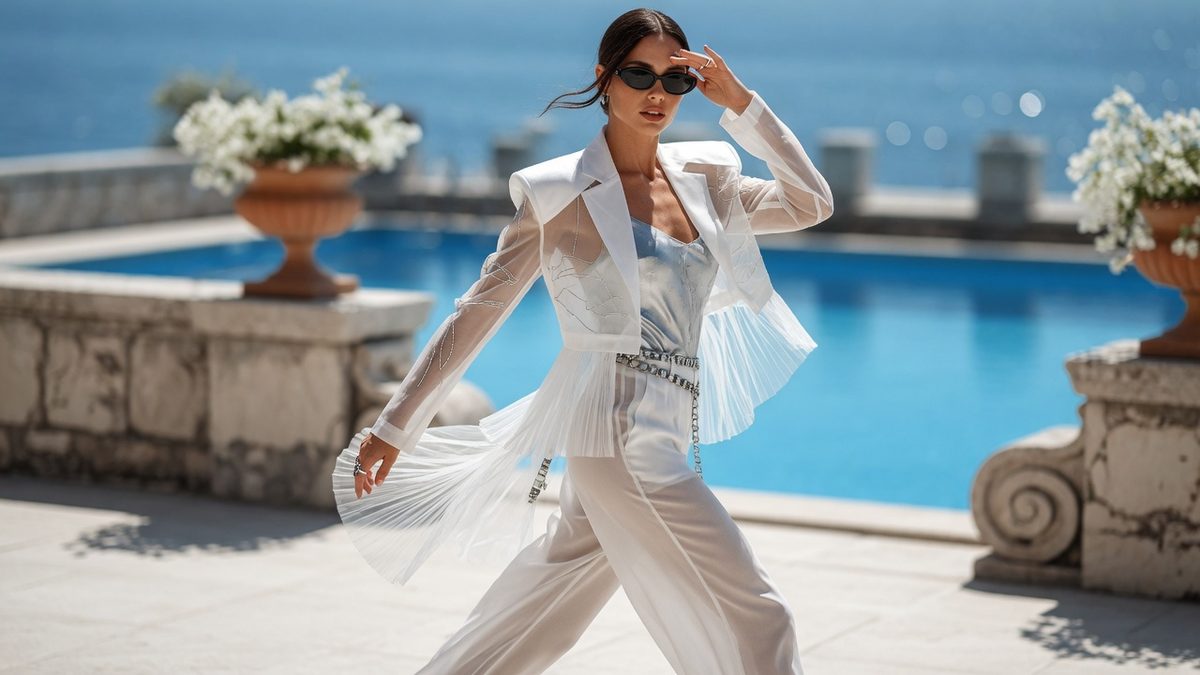
The layering technique that surfaces repeatedly in postpartum style writing, a long jacket over a short dress, a scarf worn over rather than under a coat, a cardigan over shorts, isn’t just aesthetic preference. With a shifted centre of gravity, longer outer layers create a vertical line that a changed torso and hip ratio can throw off, effectively resetting proportion from the shoulder down instead of fighting it at the waist.
Start with the waistband, not the size label: a curved or barrel-leg cut will do more for fit than sizing up in a straight style ever will. From there, retailers report rising demand for exactly this kind of considered, curve-aware maternity and postpartum design, which raises the obvious question of which mainstream UK denim brands follow Isabella Oliver and Turtledove London’s lead next, and which ones get left holding a rack of straight-leg 501s nobody postpartum is buying.