Scroll through TikTok’s fashion side right now and you’ll notice something unusual: every outfit breakdown, every styling hack, every trend explainer begins with the same two-word prefix. ‘If you want to look effortlessly put-together.’ ‘If you want to try quiet luxury without spending thousands.’ ‘If you want to lean into the coquette mood.’ The phrase ‘if you want to’ has become the invisible scaffold of fashion content in 2026, and it signals a profound shift in how we talk about, and ultimately wear, clothing.
This isn’t just semantic housekeeping. The move from prescriptive dressing (‘you must wear this’) to opt-in styling (‘if you want to achieve X, try Y’) reflects a broader rejection of the fashion rulebook that dominated the 2010s. It’s reader autonomy dressed as editorial guidance, and it’s rewriting the relationship between tastemakers and audiences. Sabrina Carpenter’s stylist Jared Ellner has quietly championed this approach for petite proportion dressing; Matthieu Blazy’s Chanel SS26 debut leaned into colour as choice, not diktat. Even French Connection UK’s latest campaign frames soft tailoring as a solution to a self-defined problem, desk-to-dinner dressing, rather than a seasonal imperative.
Why ‘if you want to’ has replaced the fashion rulebook
The traditional fashion editorial voice was built on authority: editors told you what was in, what was out, what you needed in your wardrobe. But that model crumbled under the weight of algorithmic feeds and hyper-personalised content. By 2024, readers were already skipping past declarative headlines (‘The only coat you need this season’) in favour of outcome-focused tutorials (‘How to look expensive in high-street basics’). The ‘if you want to’ construction formalises that shift.
It’s a linguistic trick that does two things simultaneously. First, it acknowledges that not everyone wants the same aesthetic outcome, some readers want to look polished, others want to signal subcultural allegiance, still others want to disguise a bad night’s sleep. Second, it positions the publication as a toolkit rather than a tastemaker. Mūsmūs respects that you know what you’re trying to achieve; we’re just here to show you the most efficient route.
This isn’t a retreat from editorial authority, it’s a recalibration. The best fashion content in 2026 doesn’t tell you what to wear; it tells you how to wear intention. That’s why Pharrell Williams, styling for petite proportions ahead of the Met Gala, framed his advice as a conditional rule: ‘If you’re petite, skip pants and use platform shoes to elongate.’ It’s not a universal mandate. It’s an if-then statement, and it works because it respects the reader’s agency.
From Sabrina Carpenter to Chanel SS26: the cultural rewiring
Sabrina Carpenter’s styling evolution has become a masterclass in opt-in dressing. Her Grammys 2026 Valentino pearl gown leaned into boho romanticism, but the accompanying press language was careful: ‘if you want to channel that mood, try tiered fabrics and low-slung belts.’ Her Prada SS26 look, high-cut micro shorts, collared shirt, pastel leather peacoat, was framed by Jared Ellner as a proportion solution for petite frames, not a blanket trend. The coquette aesthetic she’s associated with (bows, pastels, Y2K detailing) is never presented as compulsory; it’s always an option for those who want softness without sacrificing edge.
Matthieu Blazy’s Chanel SS26 debut took that logic to the runway. Butter yellow, a shade previously confined to spring pastels, appeared in floral knits, tailored coats, and cobalt-blocked separates. The collection wasn’t prescriptive about when or how to wear the colour; it simply offered it as a year-round neutral for those who wanted an alternative to beige or navy. London Fashion Week SS26 followed suit: bubble hems, voluminous skirts in sage green, suede trenches. All framed by designers as tools for achieving specific silhouettes, not as trends you had to adopt wholesale.
Even archival references are being recontextualised through this lens. Ralph Lauren’s SS2003 quilt print, now circulating on resale platforms, is being styled by influencers with the caveat: ‘if you want to do print without looking costumey, pair it with tailoring and keep everything else monochrome.’ The TikTok ‘that girl’ aesthetic, the hyper-optimised morning routine, the latte, the neutral activewear, has evolved into ‘be that girl if you want to,’ a knowing acknowledgment that aspiration is elective, not compulsory. Olivia Dean’s polka dot skirt moments on TikTok are dissected not as ‘you need polka dots,’ but as ‘if you want vintage femininity with modern proportions, this is the silhouette.’
How to wear the shift: three outcome-led outfit formulas
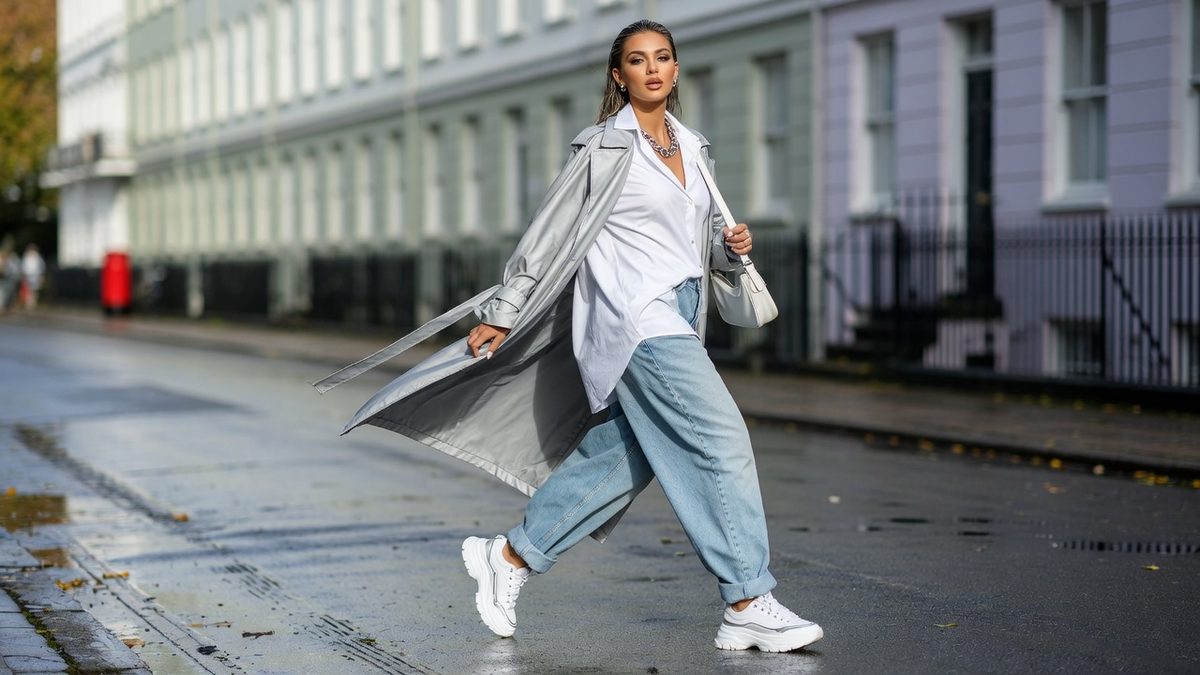
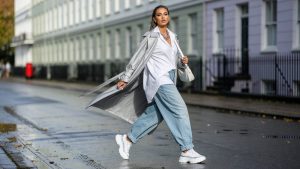
If you want to look effortlessly put-together without thinking too hard: voluminous bubble-hem skirt (knee-length, preferably in sage green or butter yellow) + simple ribbed knit tucked in + platform loafer or chunky-sole trainer. The proportions work because the volume stays below the waist, and the platform shoe elongates without requiring a heel. This is the formula currently dominating London street style, and it translates across body types because the skirt does the visual work.
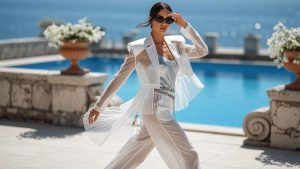
If you want to lean into quiet luxury without the price tag: French Connection UK’s soft tailoring in neutral tones, worn as a co-ord but styled with one intentionally casual piece, a white tank, a leather slide, a canvas tote. The trick is to keep the tailoring slightly oversized, which reads expensive rather than corporate. Add a single piece of jewellery (thin gold chain, sculptural ear cuff) and you’ve hit the sweet spot between polished and effortless.
If you want to try a colour trend without committing to a full outfit: take Chanel SS26’s cobalt and butter yellow cue, but introduce it through one statement piece, a leather peacoat, a knit polo, a structured handbag, and build the rest of the outfit in white or denim. The colour becomes a signature rather than a costume, and you avoid the matchy-matchy trap that makes trend-forward dressing feel try-hard. Platform shoes in a neutral tone will ground the look and add the height advantage Pharrell’s team swears by for petite frames.
The ‘if you want to’ framework isn’t just a copywriting trend, it’s a signal that fashion’s relationship with authority is being renegotiated in real time. The most influential voices in 2026 aren’t the ones telling you what’s next; they’re the ones showing you how to get where you already want to go, and whether that destination shifts again by SS27 is a question we’ll be watching closely.