The phrase ‘I never wear high heels’ has quietly become the fashion declaration of the year, whispered in fitting rooms and typed into search bars across the UK. It’s not defiance for the sake of it, it’s a confident recalibration of how British women want to move, dress, and be seen. The conversation has shifted from whether flats are acceptable to how to wear them with the same polish, intention, and leg-lengthening magic that heels once promised.
Yet timing matters. Just as flat-shoe dressing reached peak sophistication, the Spring 2026 runways tilted unexpectedly back towards heels. Matthieu Blazy’s Chanel debut and Jonathan Anderson’s Dior collection both centred towering stilettos and sculptural mules, signalling that the industry’s love affair with flats may be cooling. For the committed flat wearer, this makes the choice feel less like following a trend and more like planting a flag, a deliberate, counter-cultural stance that requires sharper styling, smarter silhouettes, and a deeper understanding of proportion.
So why does ‘I never wear high heels’ feel like a fashion statement in 2026?
Because it’s no longer about comfort alone. The flat-shoe wardrobe has matured into a coded language of refinement, anchored by high-vamp flats from Toteme, Jil Sander’s silver Spring 2026 styles, and Phoebe Philo’s cult Gathered Flat. These aren’t ballet pumps you slip on as an afterthought, they’re architectural, elevated, and visually ‘lifting’ in a way that mimics the silhouette a kitten heel used to provide. The extended upper creates the illusion of a longer leg line without the pitch, a proportion trick that most high-street flats miss entirely.
The British flat-shoe icon Alexa Chung has long understood this: her go-to flats are always pointed, often in leather or suede, and styled with cropped trousers or micro hemlines that avoid the visual dead zone of mid-calf midi skirts. It’s a deliberate edit, not a casual one. The ‘I never wear heels’ woman in 2026 is dressing with the same rigour as her heeled counterpart, she’s just chosen a different set of rules.
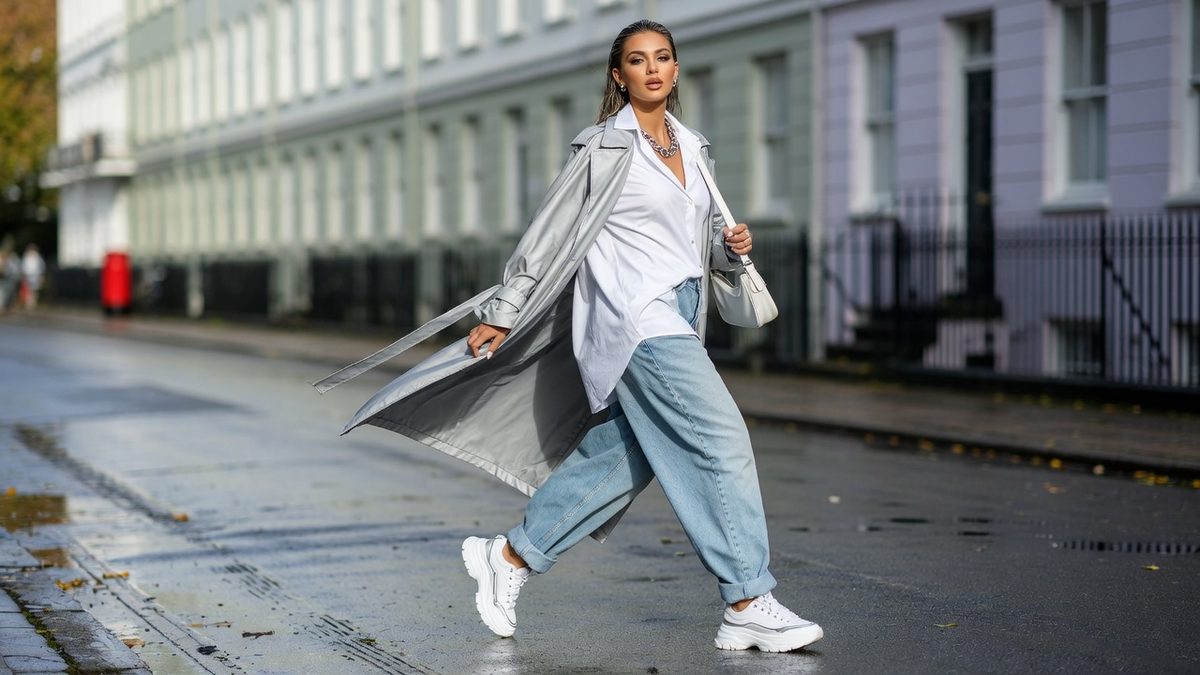
There’s also a stylist secret being quietly deployed: shorter hemlines and wide-leg trousers actually work better with flats than midi skirts do. The latter require careful cropping or a sharply pointed toe to avoid shortening the leg line, while micro minis and palazzo trousers create negative space that flats fill elegantly. It’s a counterintuitive truth that rewrites the ‘flats are dowdy’ narrative entirely.
Are flats really still winning when Chanel and Dior just brought heels back?
Not entirely, and that’s the tension. TagWalk data confirms that flat shoe sightings fell 15% on Spring 2025 runways, and the Spring 2026 collections doubled down on the reversal. Matthieu Blazy’s Chanel was a full-throated ode to the stiletto; Jonathan Anderson’s Dior featured heeled mules and slingback stilettos as the hero footwear. The runway, in other words, is swimming back towards height.
But the British high street and the women shopping it haven’t followed suit. The Row’s ballet flats and woven jelly shoes remain waitlist staples, Alaïa’s mesh Mary Janes are the investment flat of choice for editors, and Scandi labels like Acne Studios and Toteme continue to anchor their entire aesthetic around flat-footed dressing. The gap between runway directive and real-world wardrobe has rarely felt wider.
This makes ‘I never wear heels’ less a trend and more a lifestyle schism. If you’re committed to flats in 2026, you’re not riding a wave, you’re consciously opting out of the industry’s next chapter. That requires conviction, and it requires better flats. The casual ballet pump won’t cut it when the woman next to you is in Blazy’s sculptural stilettos. You need flats with presence, proportion, and a clear point of view.
Which flats should I actually buy, and how do I stop them shortening my legs?
Start with high-vamp flats. Toteme’s are the gold standard, but Jil Sander’s silver iterations from Spring 2026 and Phoebe Philo’s Gathered Flat are the long-term investments. The extended upper does the visual work a heel used to do, creating a seamless line from ankle to toe that reads as elongating, not truncating. Avoid rounded toes in canvas, they flatten the foot and shorten the leg. A pointed toe in leather or suede is non-negotiable if you want your flats to read as polished as a court shoe.
For the office, the ‘sneakerina’, a sporty ballet flat hybrid, is the most versatile option. It pairs with tailored trousers without looking underdressed, a specific gap that most corporate flat-dressing advice ignores. Carel Paris makes refined T-bar flats that walk this line perfectly, offering structure without stiffness. The Row’s woven jelly shoes work for creative industries but can read too casual for traditional workplaces.
Hemline strategy matters more than the shoes themselves. Micro minis and wide-leg trousers are your best friends, they create negative space that flats fill elegantly. Midi skirts are your enemy unless you’re in a sharply pointed flat and the hem hits just above the ankle, not mid-calf. Cropped trousers should end at the narrowest part of the ankle, not the widest part of the calf. These are the margins that separate a flat-shoe wardrobe that works from one that shortens and dulls.
The truth is, flat-shoe dressing in 2026 is harder than it was two years ago, precisely because the runway has moved on. But that’s also what makes it interesting, a deliberate choice, a refined wardrobe, and a set of rules that actually deliver on the promise of looking as polished, as intentional, and as leg-lengthening as heels ever did. The question now is whether you’re committed enough to learn them.