Gabbriette Bechtel, model, Nasty Cherry bassist, and now Mrs Healy, didn’t just marry Matty Healy in a Matières Fécales gown and vintage John Galliano heels. She turned the entire post-wedding cycle into a three-act style thesis that’s quietly rewriting the rules for what comes after the ceremony. Whilst the UK bridal press obsessed over her ceremony looks, her honeymoon wardrobe delivered something far more actionable: a repeatable formula that works for anyone who’s ever felt stuck between ‘special occasion’ and ‘real life’ dressing.
The real story isn’t the gothic romance, it’s the precision. Each phase of her post-wedding appearances followed a strict blueprint: ceremony white with controlled destruction, after-party leather tailoring, street-level black babydoll. It’s a wardrobe strategy that applies whether you’re honeymooning in Positano or just want to dress like someone who knows exactly who they are. And UK retailers are already responding.
So what actually happened at Gabbriette’s post-wedding appearances?
Phase one: the ceremony exit. Gabbriette wore a repurposed vintage Maison Margiela ‘Leigh’ gown she already owned, not a new commission, styled with a Stephen Jones veil and riding hat, plus those curved-heel Christian Louboutin x Matières Fécales collaboration boots. The fabric showed intentional déchiré detailing: controlled tears and raw hems that looked accidental but required serious technical skill. This wasn’t distressed denim energy, it was couture-level fabric destruction that Matières Fécales designers Hannah Rose Dalton and Steven Raj Bhaskaran (both mentored by Rick Owens and Michèle Lamy) have been pioneering since 2019.
Phase two arrived at the after-party. She swapped the gown for an archival Chanel Spring 2005 bachelorette suit, black leather, cropped jacket, knife-pleat mini, that nodded to her bachelorette weekend but read pure rock-and-roll pragmatism. No tulle, no trains, no bridal signifiers. Just sharp tailoring and hardware. It’s the look that’ll age best in five years when the ceremony photos feel dated.
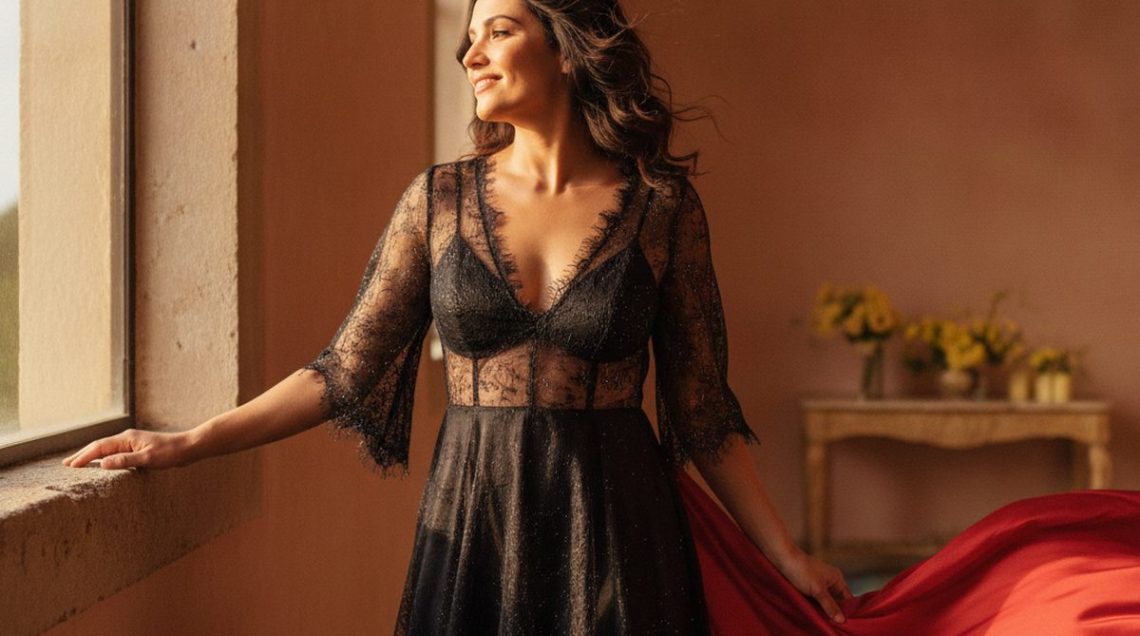
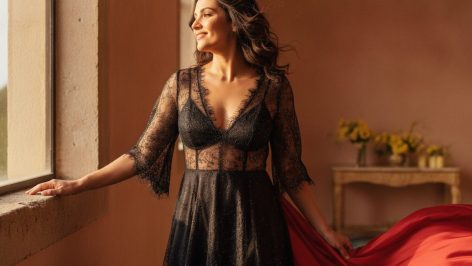
Phase three is where the UK fashion conversation really ignites. Post-honeymoon street appearances show Gabbriette in variations of the same silhouette: black babydoll mini-dresses, sheer or semi-sheer, always with one fabric disruption, feathered heels, a studded bag, distressed tights, but never more than one maximalist element per outfit. She’s operating on a strict ‘one disruption per look’ rule that makes the whole thing wearable rather than costume-y.
Why is everyone calling this a ‘gothic babydoll’ moment, and is it really new?
The term ‘gothic babydoll’ is everywhere right now, but it’s technically imprecise. What Gabbriette’s wearing isn’t Bram Stoker’s Dracula 1992 Francis Ford Coppola costuming, though that film’s on every mood-board her stylists are circulating. It’s closer to a dark-romantic take on the Nineties slip-dress revival, but shorter, sheerer, and worn with deliberate hardware contrast. Olivia Rodrigo, Hailey Bieber, and Kaia Gerber have all co-signed variations of the babydoll mini in recent months, but none with Gabbriette’s specific formula of distressed detailing plus clean silhouette.
The déchiré technique, controlled fabric tears and raw-edge finishes, is the actual trend to watch. It’s migrating out of bridal and couture into everyday pieces. UK brands like Simone Rocha and Erdem are already experimenting with frayed hems and unfinished seams in their pre-collections, and high-street labels will follow by autumn. The appeal is dual: it reads as expensive (hand-finished, one-of-a-kind) but also anti-precious, which suits the current mood of utility-meets-luxury that’s dominating UK fashion search.
The babydoll itself isn’t new, it’s a silhouette recycled every decade since the Sixties. What’s different now is the styling context: it’s not paired with Mary Janes and coquette-core accessories. Gabbriette’s version comes with Matières Fécales-level edge, worn like armour rather than whimsy. That’s the shift UK stylists are calling the ‘dark babydoll’ formula, and it’s the first post-wedding trend that doesn’t require you to actually be a bride to pull off.
How do I actually wear the Gabbriette formula without looking like I’m cosplaying a bride?
Start with the one-disruption rule. Pick a single statement piece, sheer black mini-dress, distressed tights, feathered mules, studded crossbody, and keep everything else clean-lined and minimal. If your dress has déchiré detailing, your shoes should be plain. If your bag has hardware, your jewellery stays simple. Gabbriette never stacks maximalist elements, and that’s why her post-wedding looks translate to real life instead of reading editorial-only.
For the ceremony-white phase, shop vintage or resale first. Gabbriette’s Maison Margiela ‘Leigh’ gown was a piece she already owned, not a new purchase, and that’s the energy UK buyers are responding to. Vestiaire Collective and eBay UK both report rising demand for pre-owned bridal and special-occasion pieces that can be reworked or distressed at home. You don’t need a couture atelier, just a good tailor and the confidence to cut a hem or fray a seam intentionally.
The after-party leather suit is the most wearable entry point. A cropped black leather jacket over a knife-pleat mini (Chanel Spring 2005 if you’re hunting vintage, or high-street alternatives from Mango or COS) works for weddings, nights out, or any event where you need to look pulled-together without trying too hard. It’s the anti-sequin, anti-sparkle option, and it photographs better than anything glittery under evening light.
Finally, the street-level babydoll: size up one, wear with opaque tights or bare legs depending on the season, and commit to flat or block-heel shoes if you’re not confident in stilettos. The silhouette only works if it moves, too tight and it reads club-wear, too loose and it’s a nightgown. Gabbriette’s versions all hit mid-thigh and skim rather than cling, which is the sweet spot for daytime wearability. The question isn’t whether this formula will trickle down to the UK high street, it’s already happening, and the only thing left to decide is which phase you’ll try first.