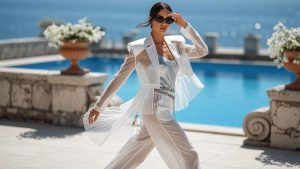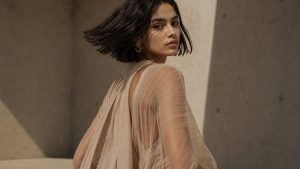
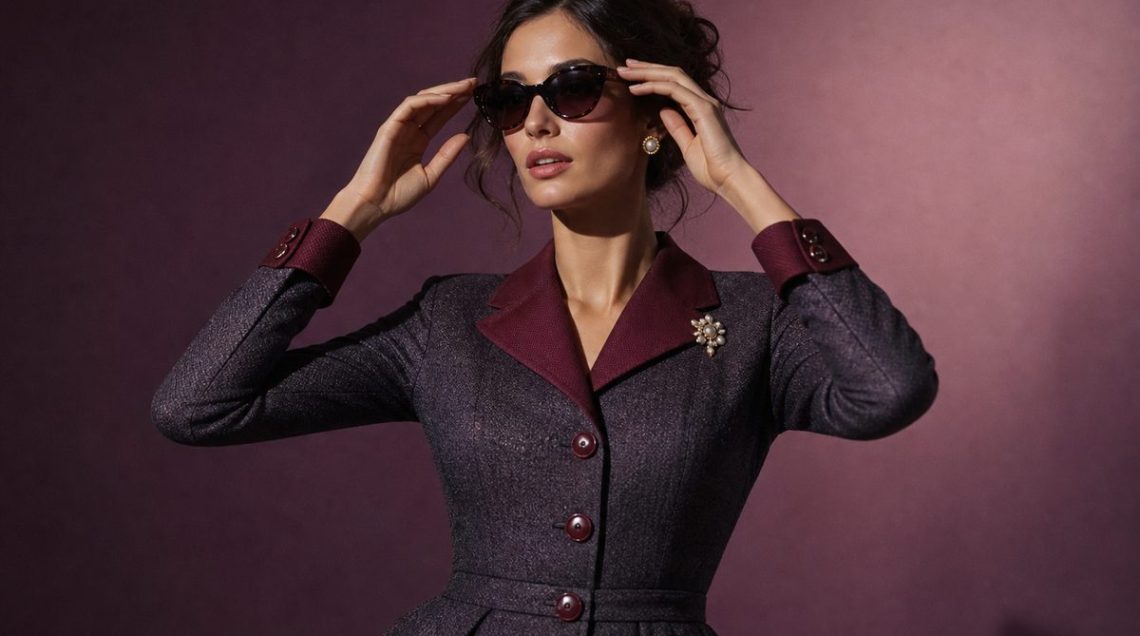
The search term ‘from Princess Diana to’ is spiking across UK Google Trends, and it’s not nostalgia driving it, it’s necessity. A generation raised on logo-heavy maximalism is reverse-engineering the wardrobe of a woman who dressed to disappear, only to become the most photographed person of her era. From Princess Diana to her nieces Lady Amelia Spencer and Lady Eliza Spencer, the through-line isn’t heritage or access; it’s a calculated approach to clothing as communication, not decoration.
What makes Diana’s resurgence culturally urgent now is the collapse of aspiration dressing. In an economy where quiet luxury has become shorthand for ‘I don’t need to prove anything’, Diana’s off-duty uniform, the Virgin Atlantic sweatshirt, the cycling shorts, the Sloane Ranger blazer worn with deliberate indifference, reads less like royal casualwear and more like the original blueprint for stealth wealth. She wasn’t trying to look expensive. She was trying to look unremarkable. And that, in 2025, is the loudest flex of all.
Princess Diana’s proportion rule was never really about clothes
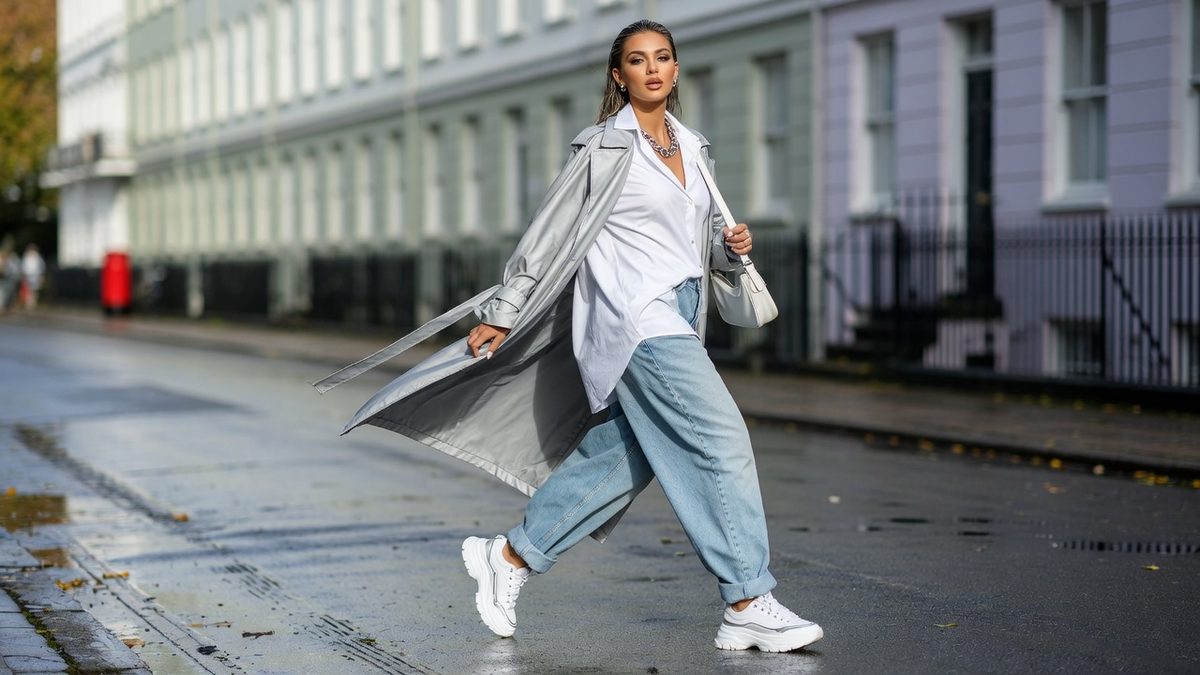
Diana’s most replicated silhouette wasn’t engineered by Catherine Walker or Bruce Oldfield. It was a formula she applied instinctively: one oversized piece balanced against one fitted piece. Boxy sweatshirt, skin-tight cycling shorts. Slouchy blazer, tapered joggers. The ‘Harvard’ crewneck with high-waisted jeans. This wasn’t royal protocol, it was spatial intelligence. She understood that proportion creates hierarchy in an outfit, and that hierarchy directs the viewer’s eye away from the body and toward the gesture.
This is why the formula works now, in an era of body neutrality and anti-trend dressing. It’s replicable without a stylist, without a budget, without even particularly good taste. ASOS reports a 300 per cent year-on-year increase in searches for rugby tops, the direct descendant of Diana’s sports-luxe pieces, and UK influencer Katie Impey has built an entire aesthetic around the oversized-fitted pairing. The rule isn’t about looking thin or expensive. It’s about looking considered without trying, which is the entire brief of contemporary British style.
Matthew Storey, curator of the Dress Codes exhibition at Kensington Palace (March-November 2025), notes that ‘Diana always made sure her clothing supported her work.’ That’s the deeper logic of the proportion rule. It wasn’t vanity. It was visual strategy. She needed to be seen, but not scrutinised. The oversized piece signalled approachability; the fitted piece maintained authority. Strip that framework down, and it’s applicable to any workplace, any body, any budget. It’s why Zara Tindall and Hailey Bieber, two women with nothing in common except access to stylists, are both mining the same proportional logic.
The bored paparazzi theory: why Diana invented quiet luxury before it had a name
Here’s the contrarian reading: Diana’s most copied looks today were considered her worst-dressed moments in the 1990s. The beige trench and loafers she wore to drop the boys at school. The navy rollneck and chinos she chose for a gallery visit. These weren’t fashion moments. They were anti-moments, deliberately engineered to bore the paparazzi into leaving her alone. She dressed down not as rebellion, but as a privacy tactic. And in doing so, she accidentally codified quiet luxury two decades before Loro Piana made it a business model.
The Christina Stambolian ‘revenge dress’ gets the headlines, but the real cultural residue of Diana’s wardrobe is the studied dullness of her off-duty choices. She understood that visual noise attracts attention, and that neutral palettes, minimal detailing, and familiar silhouettes create a kind of perceptual static. This is the logic underpinning the current wave of ‘boring’ dressing championed by ME+EM, Emilia Wickstead, and Erdem, brands that trade on the idea that the most powerful women in a room are wearing the least interesting clothes.
Catherine Walker’s use of silk velvet and crepe for Diana’s evening pieces gave structured drape without bulk, the same fabric intelligence that defines contemporary occasionwear. It’s not about the gown. It’s about the textile doing the work so the wearer doesn’t have to perform. Diana’s colour-blocking on foreign tours, incorporating host-nation flag colours as diplomatic signalling, was another form of intentional dressing that has been flattened into ‘good taste’ retrospectively. She wasn’t just stylish. She was semiotically fluent. And that fluency is what’s being excavated now, as the Julien’s Auctions June 2025 sale and the Kensington Palace exhibition turn her wardrobe into primary-source material for a generation learning to dress with purpose, not personality.
How to dress with intention, the Diana framework for your own wardrobe
Strip the Diana playbook down to its mechanics, and you’re left with three principles. First: dress for the context, not the camera. She wore Bellville Sassoon and Victor Edelstein for state functions, but Jasper Conran and high-street knits for school runs. The outfit matched the occasion’s emotional register, not its perceived importance. Second: use proportion to control the narrative. One oversized piece, one fitted piece. Always. It’s a formula that works whether you’re in Rayne courts or Manolo Blahnik slingbacks, whether you’re six foot or five-two. Third: choose colour and fabric with intention, not impulse. If you can’t articulate why you’re wearing something, you’re decorating, not dressing.
This isn’t about imitating Diana. It’s about extracting the system beneath the iconography. The British high street is already responding, retailers report rising demand for boxy blazers, longline trench coats, and neutral knitwear, all of which align with the proportion-and-purpose framework. Philip Treacy hats and Elizabeth Emanuel fairy-tale gowns are museum pieces now. What endures is the infrastructure: the idea that clothing is a tool, not a trophy, and that the best-dressed people are the ones you don’t remember seeing.
As the Dress Codes exhibition opens and auction houses monetise her wardrobe, the question isn’t whether Diana’s influence will fade, it’s whether we’re finally ready to understand what she was actually doing, beyond the photographs and the mythology, in the act of getting dressed every morning.