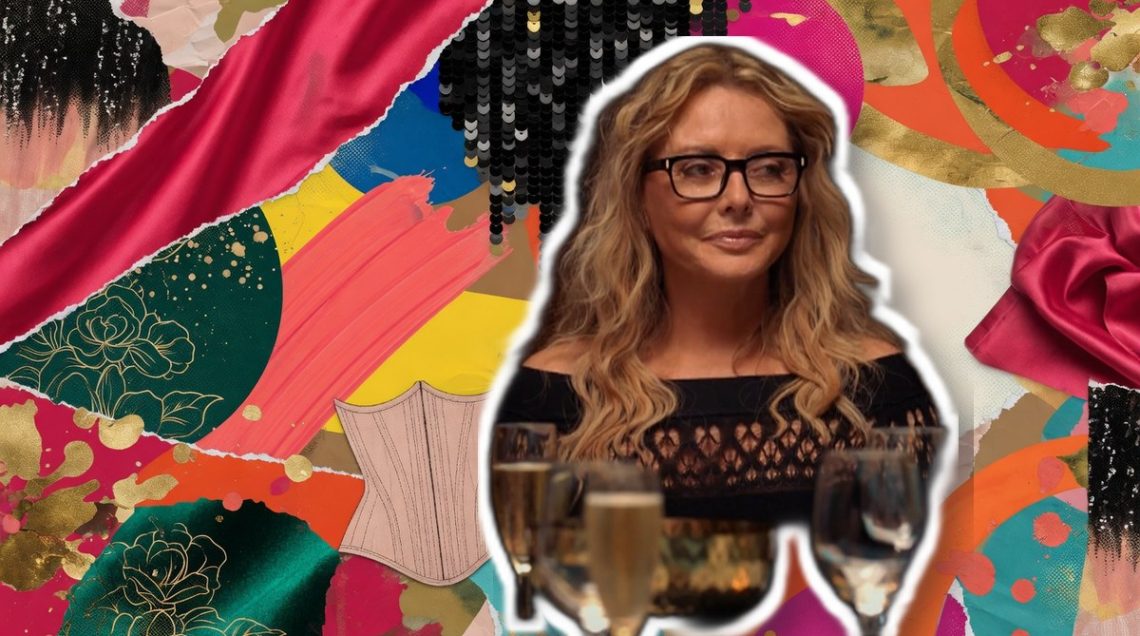

Carol Vorderman’s off-the-shoulder black sequin gown is the search term spiking across the UK this week, but she wasn’t dressing alone. The 2026 Pride of Britain Awards carpet, ITV’s annual showcase for charity and real-life heroes rather than industry glamour, turned into a genuine style fault line, with black sequins on one side and red silk on the other.
That split is the real story. Black has already been declared the defining colour of the 2026 awards season, with Marie Claire UK, Who What Wear, The Zoe Report and E! Online all pointing to the Golden Globes and Met Gala as proof. Pride of Britain’s carpet shows that thesis migrating somewhere far less expected, a feel-good telecast with no trophies to win.
The Pride of Britain Awards 2026 carpet split in two
Line the looks up and the division is immediate. Carol Vorderman went black and sequinned, off-the-shoulder with a sweeping train. Davina McCall paired a nude sheer corset bodice with a black skirt. Anna Friel chose black velvet with a metallic floral motif and structured shoulders. Zara McDermott kept it simple in a strapless black gown.
Facing them down was a red contingent that refused to cede the carpet. Narinder Kaur arrived in sequinned red, Susanna Reid in a strapless red dress with floral embellishment and a leg slit, Ashley James in a red satin off-the-shoulder mermaid gown, and Olivia Attwood in a red-and-black silk halterneck that hedged both camps at once. Kimberley Walsh added a green slit dress to the mix, while Galia Lahav’s three looks on the night, worn by Perrie Sian and Jess Wright among others, leaned into the same boned, embellished language as the black contingent.
Shirley Ballas and Nick Knowles rounded out a carpet that, rather than coalescing around one dominant colour, read as two competing codes: red as traditional showstopper, black as something newer and more controlled.
Black’s 2026 takeover was never really about mourning
Marie Claire UK and E! Online have both framed this year’s black-carpet surge, first at the Golden Globes and then at the Met Gala, as a mood piece, a collective reach for restraint at events shadowed by award-season tension and a more uncertain cultural moment. It’s a persuasive read when the backdrop is an industry handing out prizes to itself.
Pride of Britain has no such backdrop. It’s a charity broadcast built around ordinary people’s extraordinary stories, where celebrities are present to amplify, not compete. Black at this event isn’t borrowed grief, it’s borrowed restraint, repurposed so the glamour supports the night’s actual subject matter instead of overshadowing it. Vorderman and Friel in black sequins and velvet still look celebratory; they just don’t look like they’re trying to win anything.
That’s the detail competitors analysing Globes and Met Gala black have skipped: the construction doing the emotional work. Corset-boned bodices layered with sequin embroidery, visible on McCall’s nude-sheer-and-black combination and on Galia Lahav’s own posted descriptions of its pieces, is precisely what stops black reading as funereal. Structure and shine, not colour, are what separate a wake from a red carpet.
How to wear black sequins without looking funereal
Look closely at how the black looks on this particular carpet were built, and a usable rule emerges. Vorderman went with an off-the-shoulder neckline and a sweeping train, a silhouette that adds drama through movement and skin rather than colour. Friel went the opposite way, with structured shoulders and a flared sleeve creating drama through architecture instead.
Pick one axis of drama, not two: either bare skin with fluid movement, or a built, sculpted shoulder line, combining both tips black sequins from celebratory into severe. A boned, corset-style bodice, as seen on McCall and in the Galia Lahav pieces worn on the night, is the other reliable lever, since structured embroidery catches light differently from a loose sequin shift and reads as considered rather than sombre.
Retailers report rising demand for occasionwear in this register as the season’s party calendar builds, which raises the obvious question of what colour gets asked to do this same job next.
Photo: Marcus Liversedge, CC BY 3.0, via Wikimedia Commons, modified: subject cutout on an editorial collage background.