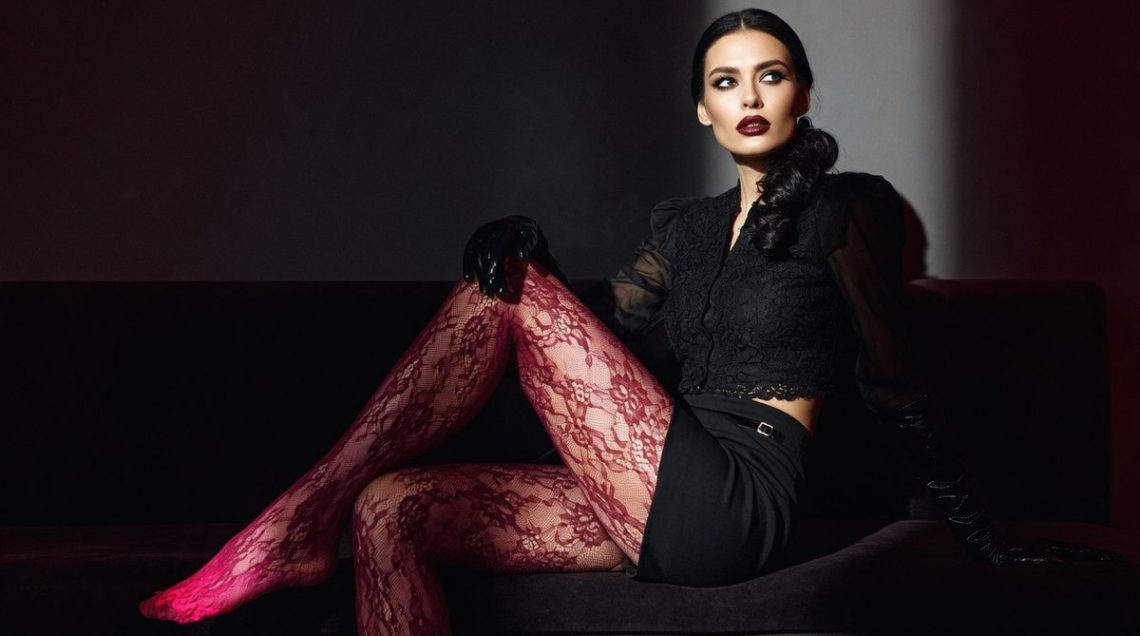
Fall skirt styling has quietly handed the real decision over to hosiery. Sheer black, lace, burgundy and rose-pink tights are now doing the job that used to belong to the skirt itself, turning up across the same outfit formulas as mini and micro skirts, tweed, leather and satin hemlines. Coverage from Elle’s shopping desk has framed sheer, lace, burgundy and pink tights as the thread tying this season’s skirt looks together, and the pattern is strong enough to count as a proper styling shift rather than a one-off red carpet moment.
What’s missing from most of that coverage is the practical bit: how deniers actually work once you move beyond a single denim skirt. The 60-80 denier sweet spot already recommended for denim, per Who What Wear’s stylist sourcing, doesn’t automatically carry over to tweed, leather minis or satin, each fabric pulls the eye differently, and the same tights that flatter denim can flatten a satin skirt completely. That’s the gap this piece is closing, fabric by fabric.
1. Sheer black tights: why 10-15 denier is the wrong October bet
Sheer black tights sit at the lightest end of the denier scale, 10-15, and they’re the pair most associated with the sharp, going-out version of the sheer-lace-burgundy-pink moment currently dominating skirt styling. They photograph beautifully under a mini skirt. They are also, for a UK October commute, close to useless.
This is the climate-honest point most style roundups skip: 10-15 denier offers next to no coverage against wind or rain, and wearing it to catch a bus or stand on a platform isn’t a styling choice, it’s a weather gamble. The fix isn’t abandoning sheer tights, it’s reserving them for door-to-door evenings and switching to 20 denier for daytime, where the look still reads sheer but actually survives the walk.
For skirts beyond denim, the denier logic needs adjusting again. A tweed mini wants something closer to 40 denier to stop the tights looking thinner than the fabric above them, while a leather mini or satin skirt, both of which already catch light, pair better with a matte 20-30 denier so the leg doesn’t compete with the skirt’s own sheen. Treat the fabric, not just the colour, as the variable that sets the denier.
2. Burgundy tights and the colour-column rule stylists keep repeating
Burgundy has become the jewel-toned hosiery colour of the season, showing up on runways from Miu Miu, Saint Laurent, Dior and Coperni alongside mini and micro skirts, tweed and leather pieces, and Mary Jane shoes or ballet flats underneath. UK retailers including M&S, Calzedonia, John Lewis and Uniqlo have broadened their hosiery ranges accordingly, and demand for coloured tights has reportedly been climbing on the back of it.
The rule stylists sourced by Who What Wear keep repeating is simpler than most mood boards suggest: match your tights to the skirt or to the boots, never build a separate colour column for each. With burgundy, that means burgundy tights under a burgundy or black skirt with black or burgundy boots, not burgundy tights, a navy skirt and tan boots all competing for attention. The same logic holds for pink: pink tights work when they echo one other piece in the outfit, not when they’re thrown in as a fourth, unrelated colour.
It’s a useful decision rule precisely because it removes the guesswork. Pick the one anchor colour, skirt or boots, commit the tights to it, and the rest of the outfit gets to stay quiet.
3. Lace tights: the one-soft-one-hard formula that makes them work
Lace tights are the trickiest of the four to get right, because delicate detailing can tip into fancy-dress territory fast. The fix several outlets have noted in passing, without quite spelling it out, is a contrast principle: lace only reads elevated when it’s set against something structured, sharp tailoring, a heavy knit, a stiff tweed skirt. Pair it with another soft or delicate piece and the whole look collapses into try-hard.
Call it a one-soft-one-hard formula: lace tights plus a tweed mini and a blazer works, lace tights plus a floaty blouse and a slip skirt doesn’t. The tailoring is doing the work the lace can’t do on its own.
There’s also an office-to-evening line worth drawing before you buy anything. Black lace over a mid-denier base, under a tailored mini or trouser-adjacent skirt, with Mary Janes or ballet flats, reads desk-appropriate. Sheer lace with no base layer, worn with heels, reads party. Knowing which register you need before you shop saves the pair from sitting unworn in a drawer, and once you’ve sorted sheer, burgundy and lace into their right outfits, the pink pair is the one most UK wardrobes still haven’t worked out what to do with.