Pedal pushers, the cropped, tapered trouser that clips the leg somewhere between the knee and the ankle, have spent this autumn refusing to be filed away as a 2000s throwback. They’re on the rails at Prada, Salvatore Ferragamo, Ralph Lauren and Proenza Schouler, and they’re splitting opinion in exactly the way a genuinely divisive trouser should: half the internet insists they’re the most elegant proportion trick of the season, the other half swears they can only ever read as gym kit.
Both camps are, technically, right, which is the whole point. The gap between the flattering version and the frumpy one comes down to a handful of decisions most coverage glosses over, and that’s precisely why the style is dominating UK search interest right now rather than quietly fading the way most micro-trends do.
Why pedal pushers became autumn’s most argued-over trouser
Part of the confusion is generational. Pedal pushers arrive trailing associations, cycling shorts, 1990s off-duty athleisure, the slightly awkward “capri” era, that make people distrust them on sight. But the version circulating this season bears almost no resemblance to that history. It’s tailored, high-waisted, and cut from fabric with actual structure, which changes the silhouette entirely.
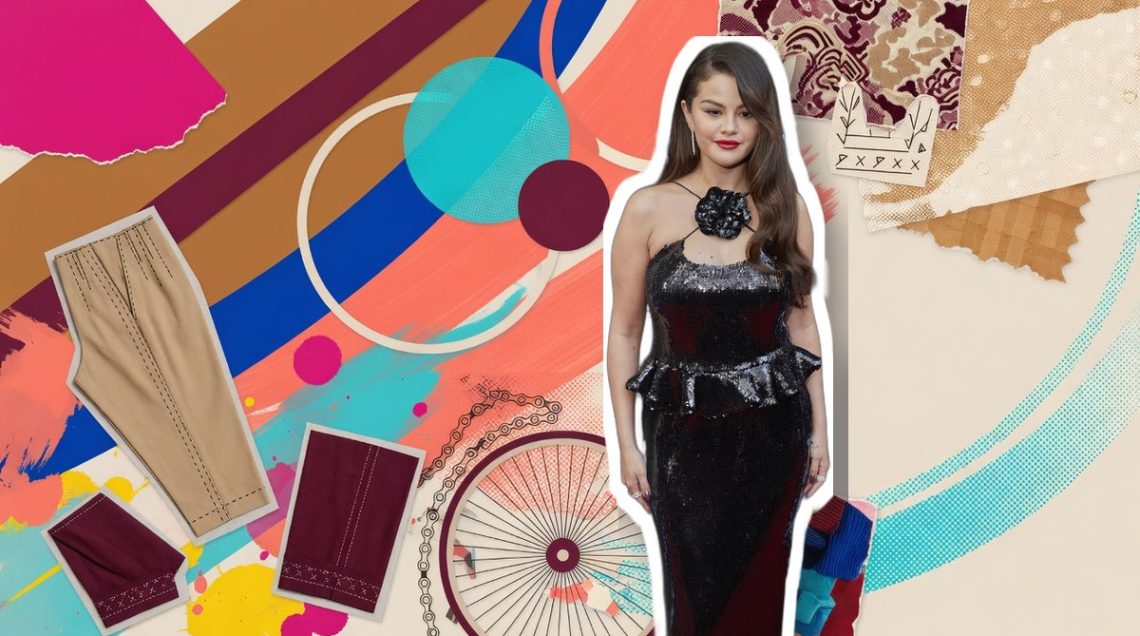
Selena Gomez, Hailey Bieber, Emily Ratajkowski, Kendall Jenner, Bella Hadid, Zoë Kravitz and Daisy Edgar-Jones have all been photographed this year in cropped, structured trousers that sit firmly in this camp, sharp at the waist, precise at the hem, nothing stretchy in sight. Even Rihanna, in Saint Laurent by Anthony Vaccarello, and Beyoncé, in Giuseppe di Morabito, have leant into the cropped-leg silhouette rather than the full-length trouser this year, which says something about where the industry’s attention has quietly shifted.
What none of that explains, though, is why some versions look expensive and others look like an accident. The answer isn’t the trouser at all, it’s a single, specific rule almost nobody spells out in full.
From Prada’s runway to the post-skinny identity crisis
Fashion has been quietly negotiating its exit from the skinny jean for several seasons now, and pedal pushers are arguably the cleanest resolution of that identity crisis yet. They keep the leg-lengthening logic of a slim trouser while rejecting the stretch-fabric uniform that defined the 2010s, a distinction that matters more than it sounds.
Back in April, Selena Gomez wore a look from Prada’s Spring/Summer 2026 collection built around exactly this proportion: a structured, cropped trouser rather than a legging-adjacent cut, worn with the kind of sharp footwear that reads as tailoring rather than sportswear.
That distinction, structure versus stretch, is the one Who What Wear and Grazia’s own styling coverage keeps circling without ever fully naming. Stretch jersey and ponte cling and pucker at the knee, creating the rounded, cyclist-adjacent silhouette everyone’s trying to avoid, while twill, wool suiting or structured poplin hold their shape away from the leg, falling the way a proper trouser should. It’s fabric physics, not styling flair, that separates the two readings of the same basic shape.
How to get the proportion right, whatever your height
The one-third-over-two-thirds ratio is the actual mechanism behind the flattering version: a fitted top taking up roughly a third of the visual line, with the trouser and leg carrying the remaining two-thirds. Get that balance wrong and even the correct fabric won’t save the outfit.
The hem is non-negotiable. It should break exactly at, or fractionally above, the ankle bone, never mid-calf, which is the point at which the leg visually shortens and the whole look drifts back towards sportswear. Taller frames can afford to let the hem sit right at the ankle bone itself, while shorter or petite frames read cleaner with the break an inch or so higher, exposing more skin to keep the leg line unbroken.
The footwear finishes the argument. Slingback heels, pointed kitten heels and open-toe heeled mules all elongate the exposed ankle in a way flat shoes simply can’t. And the detail almost nobody mentions: bare ankle skin reads as tailoring, while a visible sock instantly drags the look back towards trainers and a school run, it’s the fastest tell separating a considered outfit from an accidental one.
What to avoid is just as instructive as what to embrace: a baggy or oversized top that erases the waist, flip-flops or trainers instead of structured heels, a low-rise waistband that fights the proportion ratio, or a skinny, going-out-style top that overcorrects in the opposite direction. Get the fabric, the hem and the shoe right, and the rest of the wardrobe this autumn starts falling into place around it.
Photo: Frank Sun, CC BY-SA 4.0, via Wikimedia Commons, modified: subject cutout on an editorial collage background; montage licensed under CC BY-SA 4.0.