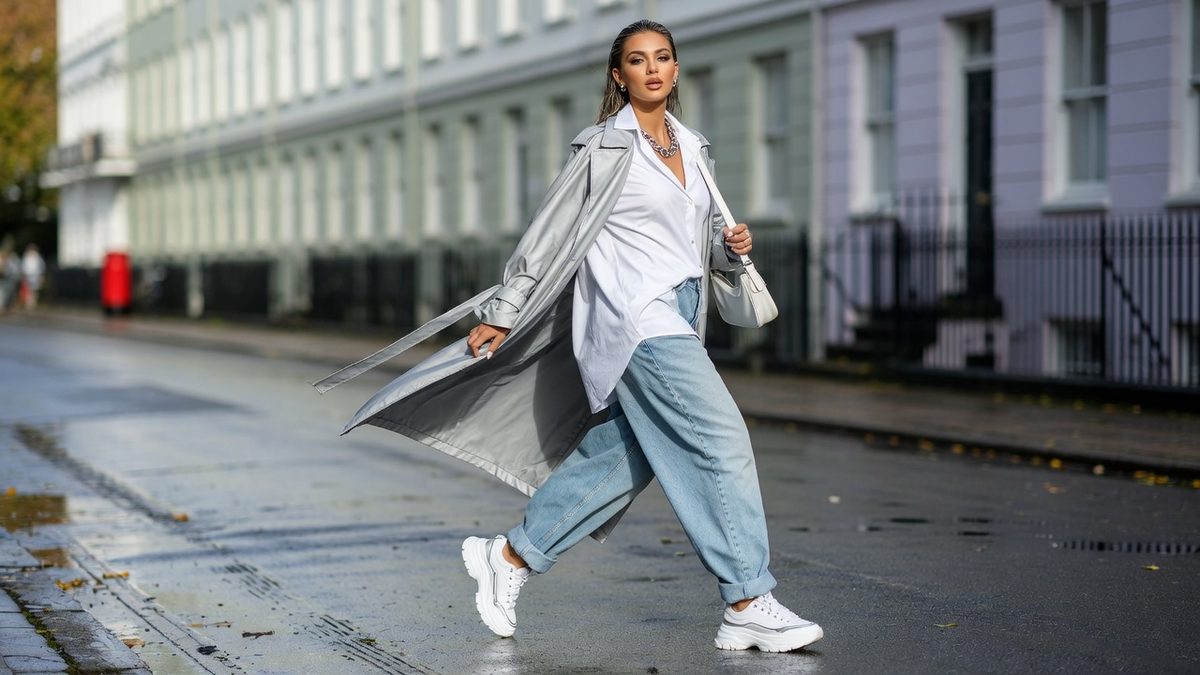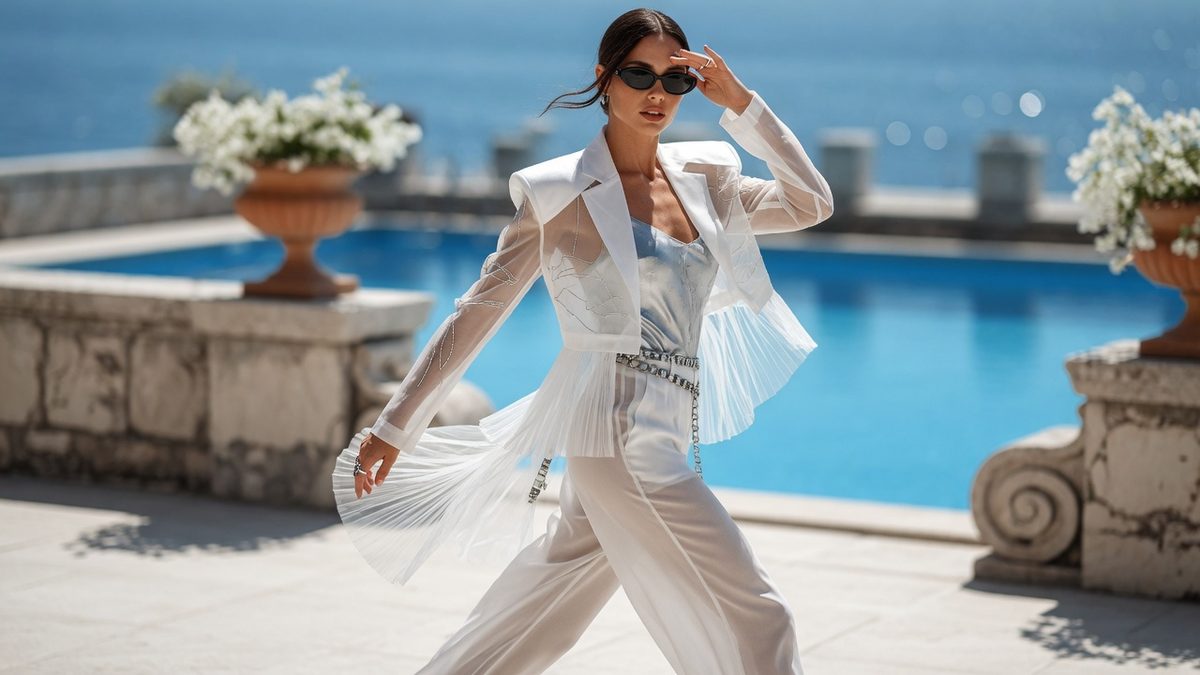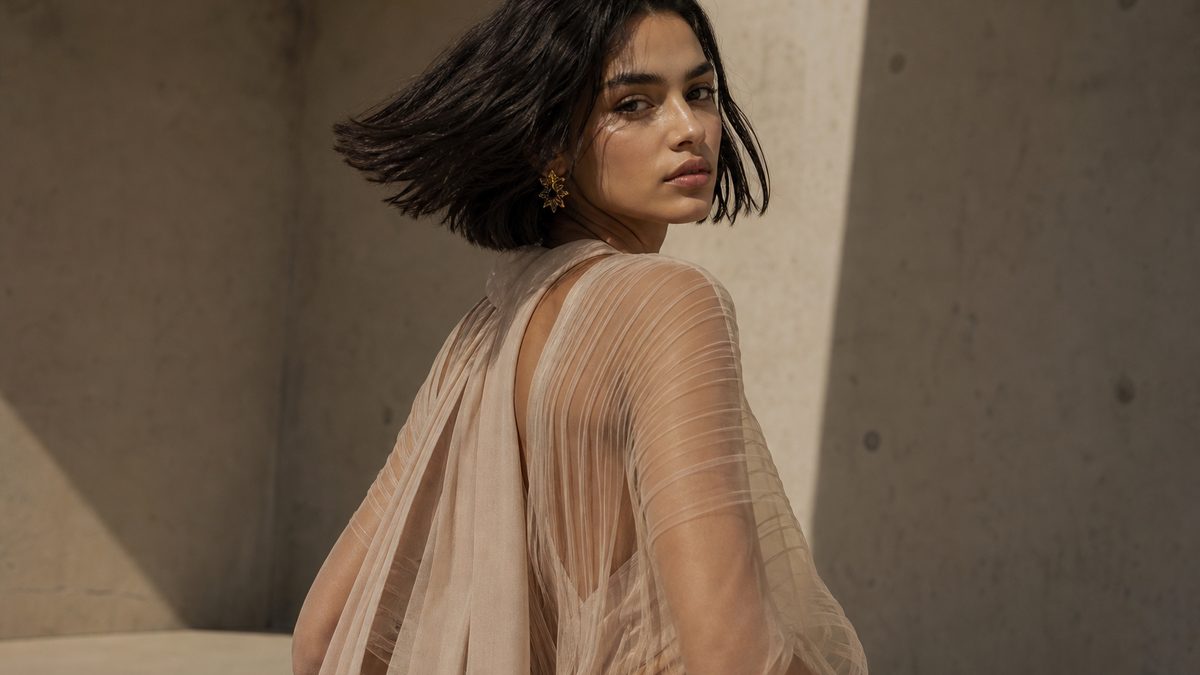
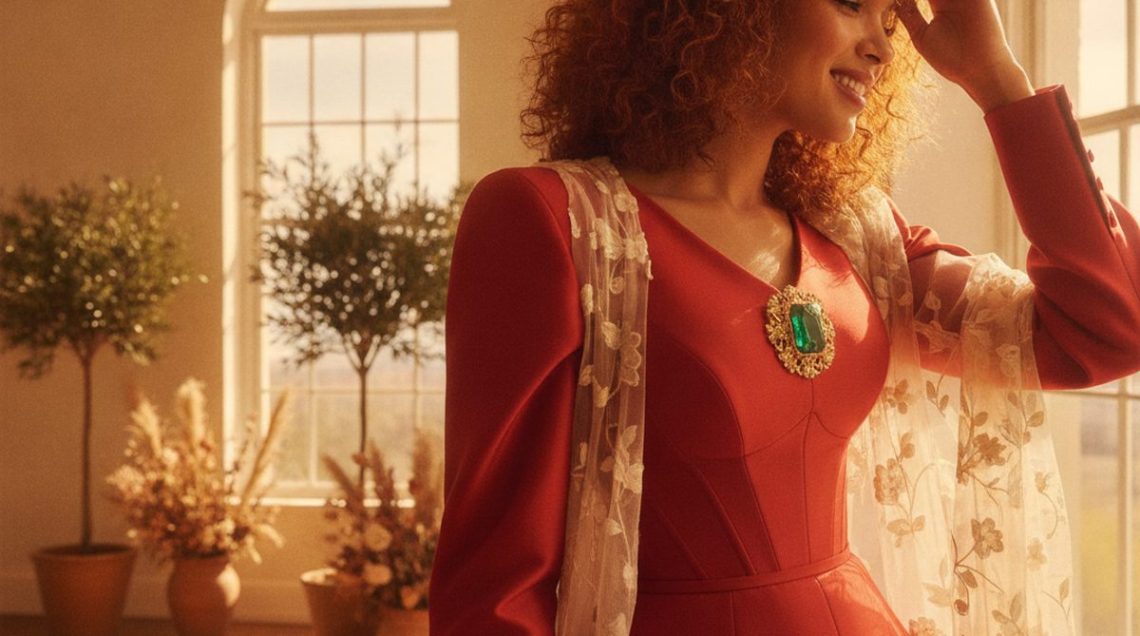
We need to stop pretending Nicola Coughlan’s red carpet dominance is accidental. The Bridgerton star’s unbroken run of show-stopping gowns, from her custom Dior SAG Awards A-line to the anatomical MISHO corset at the London photocall, isn’t the work of body positivity vibes or ‘celebrating curves’. It’s cold, calculated sartorial architecture, engineered by stylist Aimée Croysdill and rooted in 1950s Dior geometry. Coughlan’s petite hourglass frame is treated not as a ‘challenge’ but as a blueprint for proportion warfare: strong shoulders, natural waist emphasis, volume below. The formula is so precise it borders on mathematical.
And it’s working because it rejects every lazy styling trope the fashion industry lazily repeats for petite curvy women. No shift dresses. No dropped waists. No ‘slimming’ bodycon that clings and highlights. Instead, Croysdill deploys structural volume, tiered Simone Rocha tulle, strapless Rodarte sequins, Richard Quinn’s sculptural opera coats, to create length and balance. The result? Coughlan has become the most-copied red carpet dresser in Britain, her looks dissected on TikTok by amateur stylists hunting for the secret. The secret is this: she’s dressed like a 1950s couture client, not a 2025 Instagram influencer.
Why Nicola Coughlan’s flattering wins are pure Croysdill engineering
Let’s name it: the Croysdill Formula. Strong shoulder definition, achieved via off-the-shoulder necklines, cap sleeves, or structured bodices, balances the hip line and creates what we’ll call the ‘shoulder-to-hip equaliser’. Coughlan’s 2025 BAFTA Richard Quinn gown (her most-repeated designer since the 2022 Met Gala) deployed this ruthlessly: off-shoulder opera sleeves broadened the upper frame, a nipped natural waist anchored the silhouette, and a full skirt added vertical drama. The same principle governs her Emmys silver gown, her Gaurav Gupta Fashion Awards ball gown, even the pale yellow Molly Goddard tulle dress from her early Croysdill era at the 2021 Golden Globes. Every piece obeys the same three-part architecture.
Waist emphasis sits at the natural waist, never dropped, never obscured. This is non-negotiable. Dropped waists flatten a petite hourglass by erasing the shortest vertical distance on the body (waist to hip). Croysdill instead marks that waist with belts, seaming, peplums (see the Danielle Frankel white hourglass gown at the New York premiere), or corsetry (the 22-karat gold MISHO anatomical heart corset). The third pillar: volume below the waist. Not tight skirts that truncate the leg line, but A-lines, full skirts, tiered tulle, fabrics that skim and fall rather than cling. Coughlan’s custom Dior SAG gown was a 1950s A-line silhouette for exactly this reason: the skirt’s volume elongates by creating unbroken vertical lines from waist to hem.
@nicolacoughlan Meet Silky 🧚 #TheMagicFarawayTree
Croysdill has spoken to Vogue about applying ‘classic couture proportion’ to Coughlan’s frame, and the results read as modern only because the rest of the industry has forgotten how to dress curves with structure. Coughlan’s Sara Mrad Couture lavender gown at the Toronto Bridgerton premiere, her Rodarte strapless pink sequin moment at the London premiere, her Emilia Wickstead 1950s-style skater skirt at Glamour Women of the Year, every look is a masterclass in using volume strategically rather than fearfully. The irony? Coughlan herself has written in Harper’s Bazaar about being ‘deeply unfashionable’ off-duty. On the red carpet, she’s the most disciplined dresser in Britain.
The contrarian rule the industry keeps getting wrong on petite curves
Here’s the rule every high street brand and rental platform refuses to learn: for petite curvy frames, volume below the waist lengthens. Evenly distributed volume, shift dresses, jersey midis, bodycon that clings from shoulder to ankle, flattens and compresses. The fashion industry’s obsession with ‘slimming’ silhouettes for curvy women is optical sabotage. Coughlan’s SKIMS Soft Lounge collection ambassadorship illustrates this perfectly: the campaign’s hero product is drapey lounge-weight fabric that skims rather than clings. Skim not cling. That’s the principle. Soft fabrics that fall from the waist create shadow and movement; rigid fabrics that grip the body highlight every curve and read as shorter because there’s no vertical flow.
Compare Coughlan’s tiered Simone Rocha ruffle tulle dress (Elle Italia), where each tier adds length by breaking the eye’s path downward, to any high street bodycon midi she’d never wear. The Rocha dress uses volume as a lengthening device; the bodycon halts the eye at every curve. This is why pointed-toe shoes (Jimmy Choo, her go-to) matter in Croysdill’s formula: they extend the leg line on a petite frame, especially when paired with a full skirt that doesn’t truncate at the ankle. Even jewellery follows the rule: understated Tasaki pieces that don’t compete with the silhouette’s architecture. Every element serves the geometry.
The objection we hear: ‘But won’t a full skirt make me look bigger?’ This is where the industry gaslights curvy dressers. A full skirt on a defined waist creates an hourglass that reads as taller because the eye tracks a clear waist-hip transition, then a long unbroken skirt fall. A shift dress erases that transition and compresses the whole body into one short column. Coughlan’s Richard Quinn, Gaurav Gupta, and Rodarte moments prove this every time: the volume is the point, and the point is length.
How to steal the formula on the UK high street this weekend
Translation time. You don’t need custom Dior to apply Croysdill’s rules; you need a UK high street that finally stocks A-lines with natural waists. ASOS’s ‘bardot’ (off-shoulder) midi dresses with full skirts execute the shoulder-to-hip equaliser for under £60, look for structured bodices, not jersey. & Other Stories’ tailored fit-and-flare dresses with waist seaming deliver the natural waist emphasis and skirt volume in one piece, often in cottons and linens that skim rather than cling. Reiss occasionally runs ’50s-inspired full skirt styles (search ‘full skirt midi’) with the proportions Coughlan wears on repeat. Pair with pointed-toe courts from Office or Dune (not rounded toes, which shorten the leg line).
For eveningwear, Needle & Thread’s tulle and sequin gowns mimic the Rodarte and Simone Rocha tiered volume, shop their ‘ballerina’ styles with fitted bodices and full skirts. Coast does structured off-shoulder gowns that hit the Croysdill Formula’s three pillars for under £150. If you’re renting, Hurr and By Rotation both stock Emilia Wickstead and Molly Goddard archive pieces, search ‘fit and flare’ or ‘full skirt’ and filter by natural waist. The key is avoiding anything described as ‘bodycon’, ‘shift’, or ‘column’. Those are the silhouettes Croysdill has spent three years systematically rejecting.
The formula isn’t complicated; it’s just unfashionable to admit that flattery is engineering, not empowerment. Coughlan’s red carpet run has been so dominant because Croysdill treats her frame as a technical problem with a couture solution, and the solution is older than body positivity itself. It’s 1950s Dior geometry, applied without sentiment. The question now is whether the UK high street will finally learn to stock the architecture, or whether we’ll keep pretending that ‘celebrating all bodies’ means ignoring the proportions that actually work. Coughlan’s TikTok breakdowns suggest the audience has already moved on, and they’re hunting for the A-lines the industry refuses to cut.