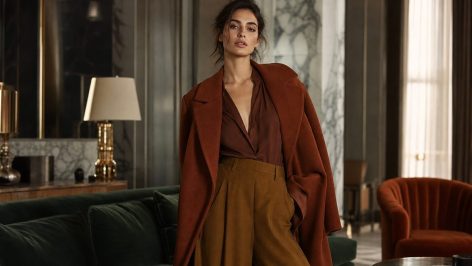
Mary-Kate and Ashley Olsen haven’t just built a fashion empire, they’ve codified a visual language so specific that copying it badly has become its own genre of failure. The twins’ latest public appearances have crystallised what insiders are calling the Olsen Proportion Rule: a non-negotiable formula governing hemlines, breaks, and vertical line that separates expensive-looking from expensive-trying. And it hinges on a single measurement most women get catastrophically wrong.
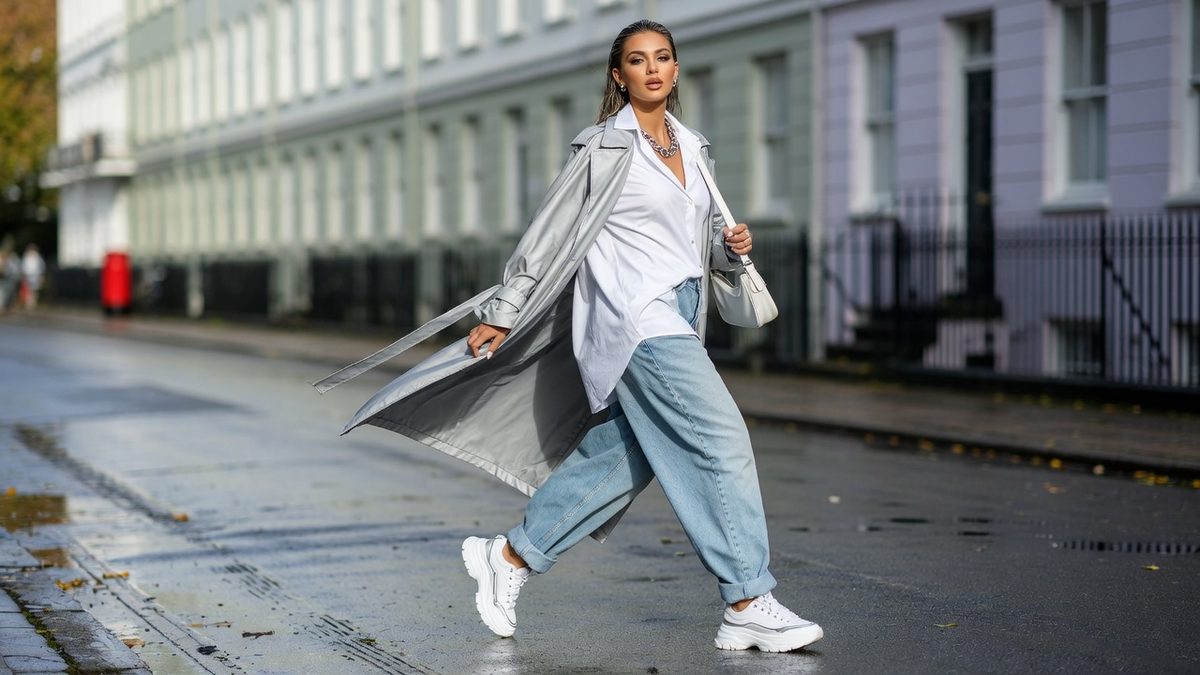
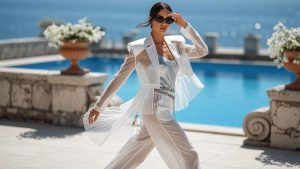
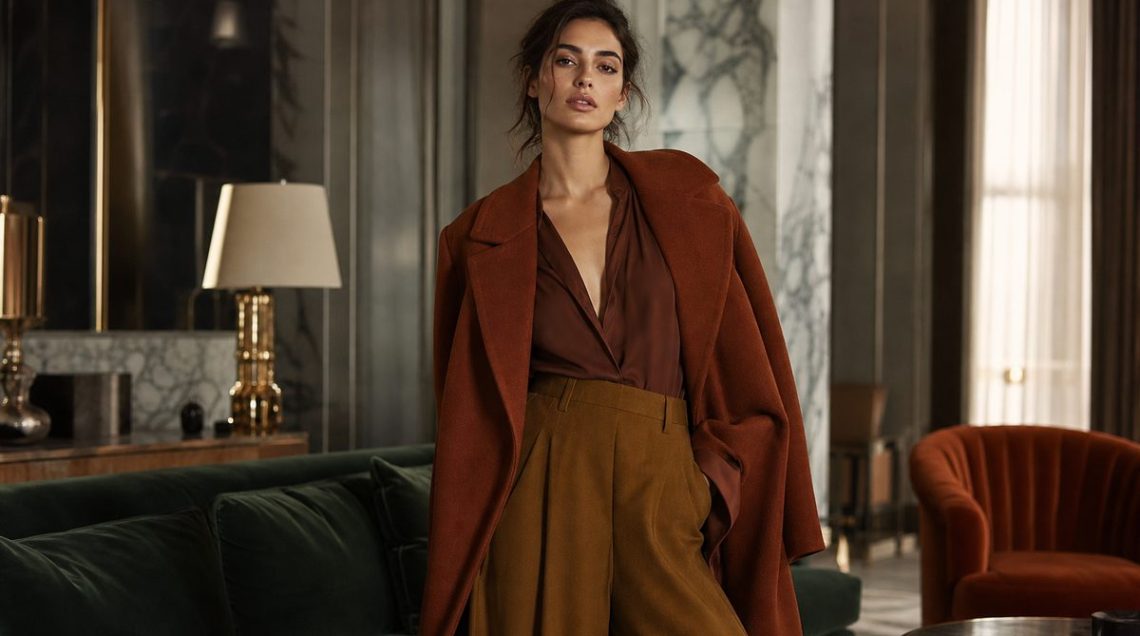
While UK high streets flooded with cropped wide-leg trousers this spring, the Olsens doubled down on a contrarian truth: mid-calf is the death of elegance. Their signature silhouette, long coat falling below the knee, wide trouser breaking cleanly at the ankle, creates an unbroken vertical that photographs like wealth. It’s a masterclass in optical engineering, and British retailers are only just catching on.
Inside Mary-Kate and Ashley Olsen new proportion doctrine
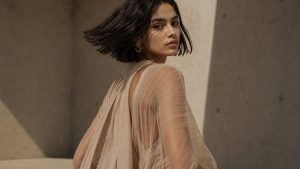
The formula is deceptively simple. Long outerwear must terminate below the kneecap. Trousers must pool slightly at the ankle, never crop above it. No exposed shin, no visual segmentation, no accidental frump. This creates what The Row’s atelier calls ‘the unbroken line’, a continuous fabric cascade that reads as considered wealth rather than accidental volume.
Mary-Kate’s recent Hamptons appearance in FreeCity sweatpants, a cult LA label retailing at roughly £180 per pair, exemplifies the doctrine’s real genius. Paired with leather flip-flops and a Black Amex visible in-hand, the look wasn’t casual. It was calculated nonchalance, the ultimate quiet luxury power move. Wearing expensive leisurewear as leisurewear, not as aspiration, signals you’ve transcended trying entirely.
The twinning phenomenon reveals another layer. Both sisters favour identical silhouettes and palettes, but differentiate through material and wash: suede mule versus leather, dark denim versus medium. It’s not matchiness, it’s a signature look system, a wardrobe architecture that allows infinite variation within tight parameters. Kendall Jenner and Hailey Bieber have adopted near-identical strategies, building entire public wardrobes on monochrome naturals and consistent proportions.
Why Savile Row heritage is the untold story behind The Row
The brand name isn’t accidental. The Row is a direct homage to Savile Row, London’s bespoke tailoring heartland, where British craftsmen have perfected the art of invisible construction since the 18th century. The Olsens studied those techniques, shoulder pitch, sleeve pitch, the way a proper coat hangs from the shoulder without pulling at the back, and transplanted them into womenswear at a moment when fast fashion had erased construction knowledge entirely.
This British lineage explains The Row’s obsession with natural fibres and internal structure. Every Margaux tote, every Ginza sandal, every bowling bag carries that Savile Row ethos: the luxury is in what you don’t see. No logos, no hardware theatre, just impeccable make. It’s why the brand won the CFDA Womenswear Designer of the Year in 2012, and why Phoebe Philo’s return to fashion feels like a direct conversation with what the Olsens have built.
UK consumers instinctively understand this. We grew up with bespoke tailoring heritage on our doorstep. The Row’s minimalism isn’t Californian zen, it’s Georgian restraint filtered through American pragmatism. And that makes it uniquely legible to British taste, even at price points most can’t access.
How to build the Olsen signature system on a UK high street budget
The single biggest mistake women make copying the Olsen look: buying monochrome black in synthetic fibres. Polyester black reads cheap regardless of silhouette. The Olsen effect only works in natural materials, wool, cashmere, brushed cotton, linen. That’s the secret. A £60 COS wool overcoat in charcoal will outperform a £300 polyester trench every time.
Start with Arket wide-leg trousers in heavyweight cotton drill, hemmed to break at the ankle. Pair with an M&S Pure Cashmere roll-neck and a COS longline wool coat that falls below the knee. Add & Other Stories leather mules in cognac or black. Total outlay: under £400. The proportion is identical to a £4,000 Row outfit, because proportion costs nothing, it’s knowledge.
The twinning system translates perfectly to capsule wardrobe building. Choose one silhouette, wide trouser, long coat, slim knit, and repeat it in three colourways: black, charcoal, camel. Differentiate through texture: matte versus sheen, smooth versus brushed. This creates the illusion of a considered wardrobe without requiring conscious thought every morning. It’s what the Olsens have been doing for two decades, and what the rest of fashion is only now beginning to properly decode.