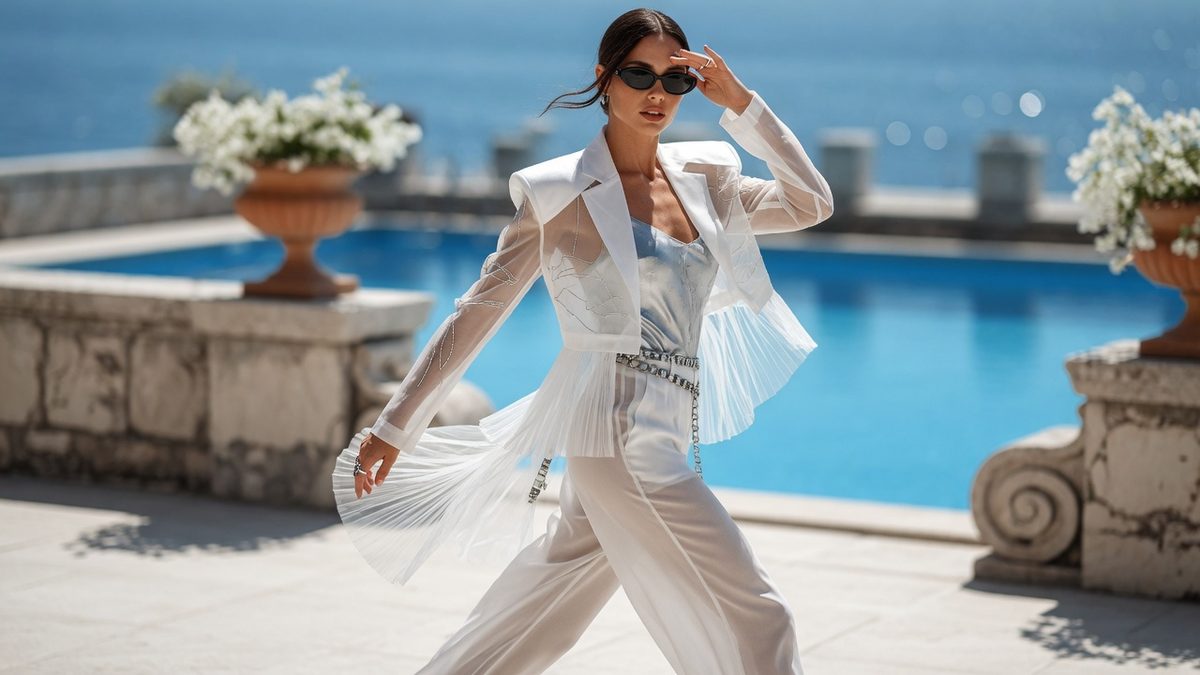


The UK’s current Google Trends data tells a precise story: searches for ‘not chrome not glitter’ have spiked as fashion insiders abandon the hard-edged metallic finishes that dominated autumn 2024 and spring 2025 runways. This isn’t rejection of shine itself, it’s the industry course-correcting toward a more intelligent, wearable luminosity that sidesteps both the clinical severity of chrome and the party-store associations of chunky glitter.
What’s filling the vacuum is something far more sophisticated: crepe satin, brushed lamé, liquid-metal jacquard, and matte-finish metallics that deliver visual interest without screaming for attention. The new vocabulary, intelligent shine, gives British shoppers permission to sparkle without the cultural baggage of looking overdressed or dated.
So what exactly is ‘not chrome, not glitter’, and why now?
At its core, this is a fabric revolution dressed as a trend. Crepe satin has emerged as the hero textile: its textured underside and glossy top layer create a liquid appearance with structure and body that standard satin lacks. Unlike slippery charmeuse that clings to every curve, crepe satin skims the body, making shine wearable for women who want luminosity without exposure. Bottega Veneta’s ultra-saturated colour blocking for FW25 showed the path forward, richness through pigment saturation rather than reflective surfaces.
The timing is deliberate. Chrome reached cultural saturation when Matthieu Blazy sent models down the Chanel FW26 runway with metallic-foil hair treatments, signalling that the finish had migrated fully into beauty and was no longer fresh territory for fashion. Simultaneously, quiet luxury’s matte gold jewellery aesthetic trained consumers to read refinement through subtlety, not flash. The result: a hunger for shine that whispers rather than shouts.
Retailers including & Other Stories, Arket, COS, and Reiss have responded with capsules built around matte satin and brushed metallic finishes, fabrics that photograph as luminous but feel tactile and lived-in rather than costume-like. The beauty industry offers a useful parallel: Kosas’ finely milled shimmer highlighters and Half Magic Beauty’s cool-toned shimmers (created by Euphoria’s makeup artist Donni Davy) deliver ‘lit-from-within’ radiance, not disco-ball glare. Celebrities including Tyla and Sabrina Carpenter have adopted this approach, strategic sparkle around the eyes or collarbone, luminous skin, diffused shimmer that reads as candlelit rather than glitter-heavy.
Isn’t foil still the big runway story I keep seeing everywhere?
Yes, and that’s precisely the problem. Sandy Liang’s foil pencil skirts, LaPointe’s head-to-toe foil looks, and Christian Siriano’s liquid-metal gowns at NYFW FW25 represent the peak of chrome’s runway dominance, but fashion history teaches that maximum visibility precedes rapid decline. When a trend achieves total editorial saturation, the smartest players are already positioning the counter-narrative.
Foil’s fundamental flaw is wearability. It photographs beautifully under controlled lighting but translates poorly to real-world contexts, office fluorescents, Tube lighting, pub interiors, where high-shine fabrics can read as fancy dress rather than fashion. The material also lacks breathability and structure, restricting movement and comfort. For British consumers navigating unpredictable weather and varied social settings throughout a single day, foil presents practical limitations that matte-metallic alternatives solve.
The fabric hierarchy offers a clear navigation tool for readers: chunky glitter sits at the loudest end of the spectrum, followed by chrome, then foil, glossy satin, crepe satin, and finally matte satin at the most refined pole. Understanding this gradient allows shoppers to make intentional choices about where they want to land, and right now, the smartest money is migrating toward the quieter, more versatile end. Brushed lamé and liquid-metal jacquard occupy the sweet spot: enough visual interest to register as special, enough subtlety to integrate seamlessly into existing wardrobes.
How do I actually wear intelligent shine without looking like a disco ball?
The stylist’s cardinal rule: one metallic piece at a time, styled against structured neutrals in matte or satin finishes. When the silhouette is clean and the rest of the look is calm, shine reads as sophistication rather than spectacle. A crepe satin skirt in matte gold works beautifully with a black rollneck and minimalist trainers; a brushed-lamé blazer pairs with straight-leg jeans and a white tee. The surrounding context determines whether metallics elevate or overwhelm.
Fabric choice matters as much as styling. Prioritise crepe satin for skirts and trousers, its structure prevents cling and drapes like liquid without the body-con effect of standard satin. For evening, matte satin in deeper tones (bronze, gunmetal, forest green) offers formality without the reflective intensity of foil. Accessories provide a lower-risk entry point: matte gold jewellery, brushed-metal bags, and satin-finish shoes deliver shine in controlled doses that complement rather than compete with the overall look.
The beauty crossover offers final guidance. Just as Kosas and Half Magic Beauty advocate finely milled shimmer over chunky glitter, fashion’s intelligent shine relies on texture and weave rather than surface coating. Seek out fabrics where the metallic thread is woven through rather than laminated on top, liquid-metal jacquard, brushed lamé, silk-blend satins with natural sheen. These materials age gracefully, develop character with wear, and integrate into wardrobes as workhorses rather than one-occasion pieces. The question isn’t whether to embrace shine in 2025, it’s which shine will still feel relevant in 2027, and the answer increasingly excludes both chrome and glitter.