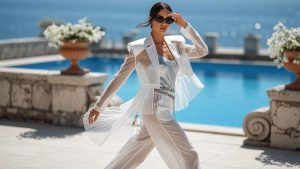
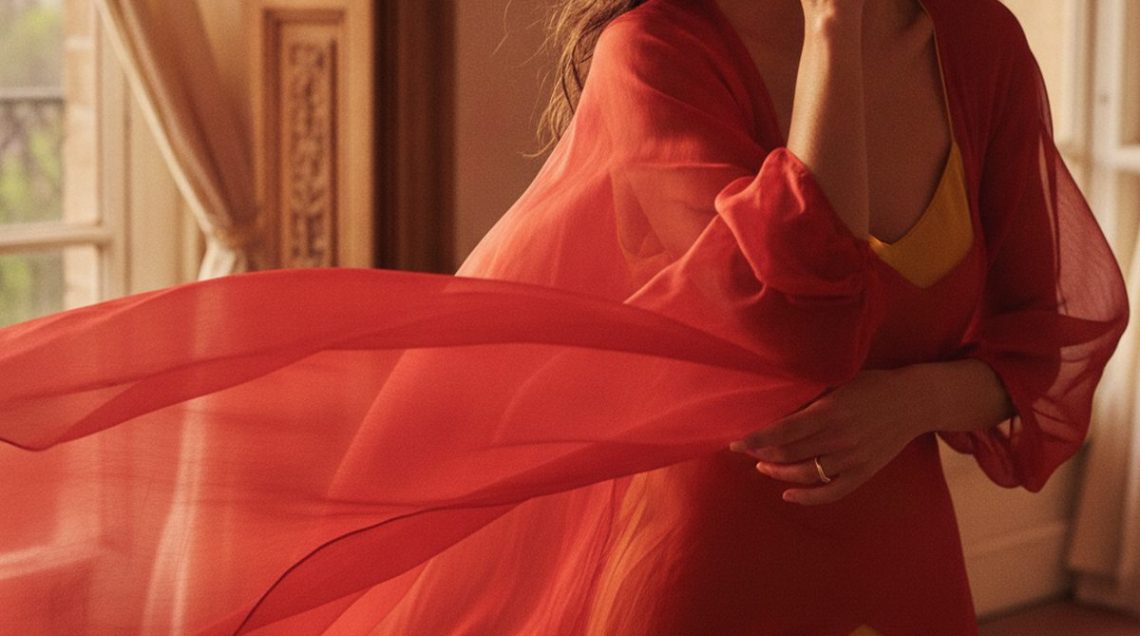

For the past three seasons, a peculiar phrase has circulated through London Fashion Week press rooms and Copenhagen street style captions: ‘slinky sheer’. It sounds like a contradiction, one suggests weight and drape, the other weightlessness and exposure, yet together they describe the dress code currently dominating runways from S.S. Daley’s FW25 sheer skirts to Christopher Esber’s barely-there SS25 cuts. What started as scattered sightings of bias-cut silk slips layered under organza overlays has crystallised into fashion’s most articulate, and most misread, visual language.
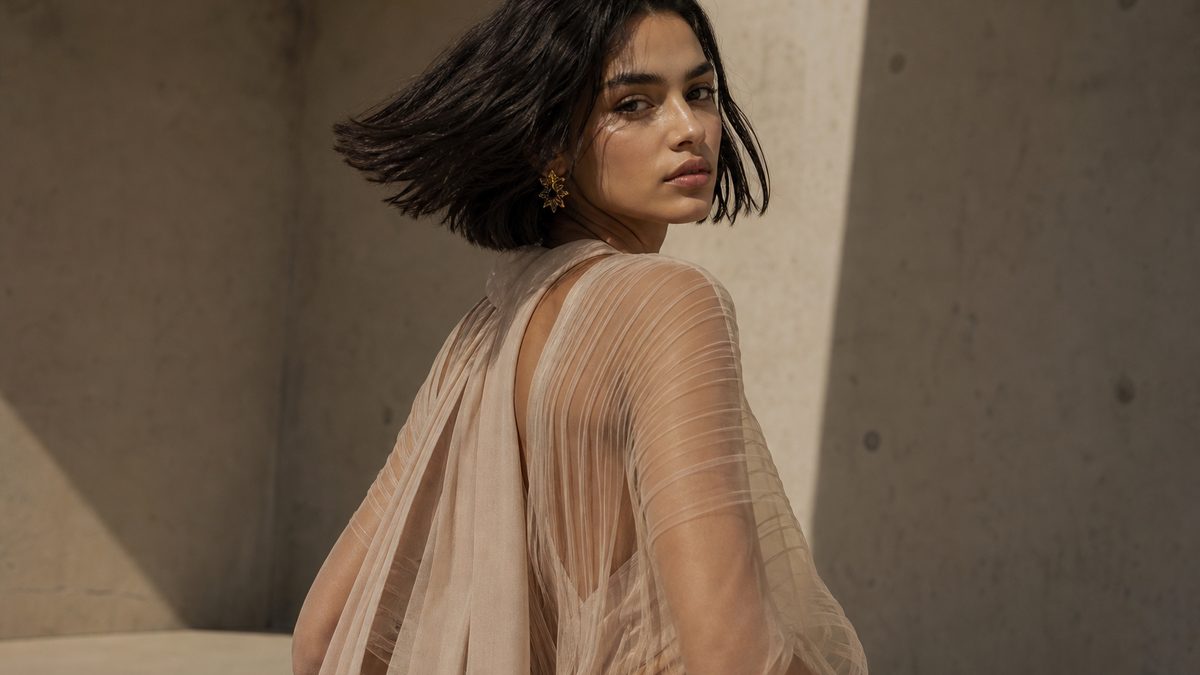
The UK search interest in ‘sheer slinky and barely’ reflects not just a trend but a shift in how we encode sophistication. This isn’t about showing skin; it’s about calibrating opacity, mastering the coverage spectrum that runs from wet-look charmeuse (opaque, slinky) through double-layered silk georgette (translucent, architectural) to single-layer tulle (sheer, vulnerable). The slinky-sheer hybrid, bias-cut slip plus floating overlay, has become the dress equation of SS25, and understanding it means decoding fashion’s current obsession with ambiguity over statement.
Why slinky sheer is fashion’s new grammar, not just a trend
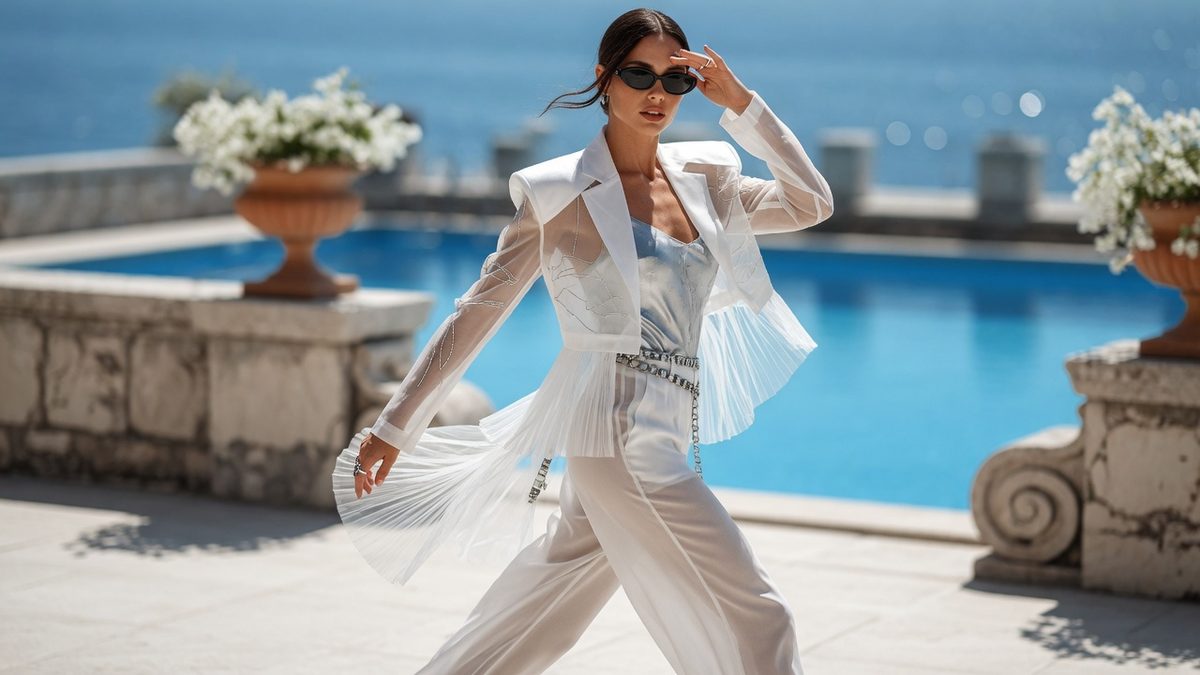
Trends come with a single mood; grammar gives you structure to build infinite sentences. The slinky-sheer pairing functions like syntax: the bias-cut slip (usually viscose jersey or silk charmeuse) provides the foundational clause, body-skimming, weighted, opaque enough to anchor, while the sheer overlay (organza, tulle, silk crepe) acts as the modifier, adding texture, movement, and crucially, a layer of remove. Bora Aksu’s layered sheer maxi at LFW and Mark Fast’s tonal blue sheer midi both deployed this formula, proving it works across aesthetics from romantic to minimalist.
The sophistication lies in opacity interplay. A single sheer layer over bare skin reads as provocation; double-layered sheer over a tonal slip reads as architecture. Simone Rocha’s frothy SS25 layers and Ganni’s barely-there cuts both exploit this, more fabric, paradoxically, creates more intrigue than less. The Row, Khaite, and Toteme have quietly adopted the bias-cut slinky slip as their Quiet Luxury anchor, understanding that ‘barely-there’ doesn’t mean minimal, it means precisely calibrated.
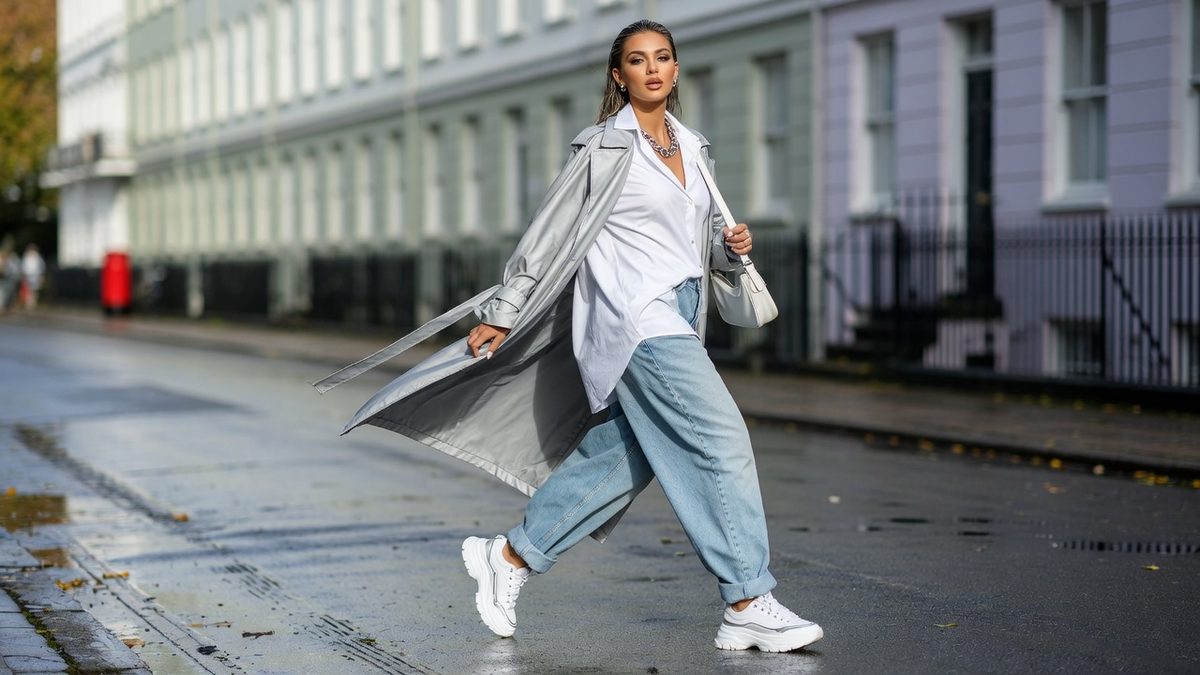
What separates this moment from past sheer waves is the proportion rule now emerging: anchor below, float above. Grounding a sheer organza top with wide-leg tailored trousers and Dear Frances mesh ballet flats, or pairing a slinky slip dress with a Whistles leather jacket, creates tension without tipping into the ‘forgot to get dressed’ zone that plagued early-2010s festival sheer. The coverage spectrum gives shoppers a practical framework: if you’re uncomfortable with single-layer tulle, shop double organza; if slinky feels too exposed, add the sheer overlay. It’s a confidence map, not a dare.
From Kate Moss to Simone Rocha: the cultural arc of barely-there
Kate Moss’s 90s silver sheer slip wasn’t styled, it was the styling. That decade treated sheer as the endpoint, the reveal. Fast-forward to John Galliano’s bias-cut chiffon archive and you see the first layering experiments, but still rooted in romantic excess. The current slinky-sheer hybrid, by contrast, comes from a post-Quiet Luxury, post-Indie Sleaze moment: we’ve cycled through logomania, minimalism, Y2K irony, and landed somewhere that values nuance over noise.
Margot Robbie’s Armani Privé sheer gown at the London premiere and Paris Hilton’s crystal-studded sheer piece both illustrate the red-carpet adoption, but it’s the runway, S.S. Daley, Simone Rocha, Mithridate’s SS26 sequin briefs as outerwear, that’s writing the new rules. Ludovic de Saint Sernin’s sheer gown at the 2025 VMAs positioned the aesthetic within a lineage of body-positive glamour, while Sydney Sweeney’s recent styling choices have normalised sheer layering for a TikTok-native audience who grew up watching mesh tops styled over ribbed vests.
The cultural shift is this: sheer used to signal rebellion or seduction; now it signals fluency. Wearing a double-layer organza blouse over a silk camisole communicates that you understand fabric weight, drape, and the semiotics of exposure. It’s fashion as second language, not fashion as costume. The UK high street has responded, Rise & Fall’s organza midi skirt is designed to layer, not stand alone, because the audience now expects that level of sophistication baked in.
How to wear slinky sheer without looking undressed
Start with the coverage spectrum. If you’re new to the trend, begin with wet-look satin or bias-cut viscose jersey, slinky, yes, but opaque. Add a sheer overlay (silk georgette or double organza) in a tonal shade, not contrasting. The goal is gradient, not collision. For AW25 longevity, pair a sheer organza blouse with tailored wide-leg trousers in charcoal wool and ankle boots, this grounds the barely-there top and gives the look winter weight without losing the airy contradiction that makes it compelling.
The outfit formula competitors miss: structured shoe + slinky-sheer top + tailored bottom. A mesh ballet flat or leather loafer provides visual ballast; the sheer element floats above. Avoid pairing slinky sheer with other floaty pieces (no sheer skirt + sheer top), you need material contrast to make the transparency read as intentional. If wearing a full slinky-sheer dress, add a leather jacket or structured blazer, but leave it open; the frame matters more than coverage.
For confidence, remember: the most impactful sheer looks are often the most layered. A single-layer tulle top over a black bra is a statement; a double-layer silk crepe blouse over a tonal camisole is a wardrobe. Shop with the spectrum in mind, ask yourself where on the opacity scale you want to land, then build around that anchor. The slinky-sheer equation isn’t about daring; it’s about calibration. And as SS25 rolls into AW25, the question won’t be whether you wear it, but how precisely you’ve learned to speak its dialect.