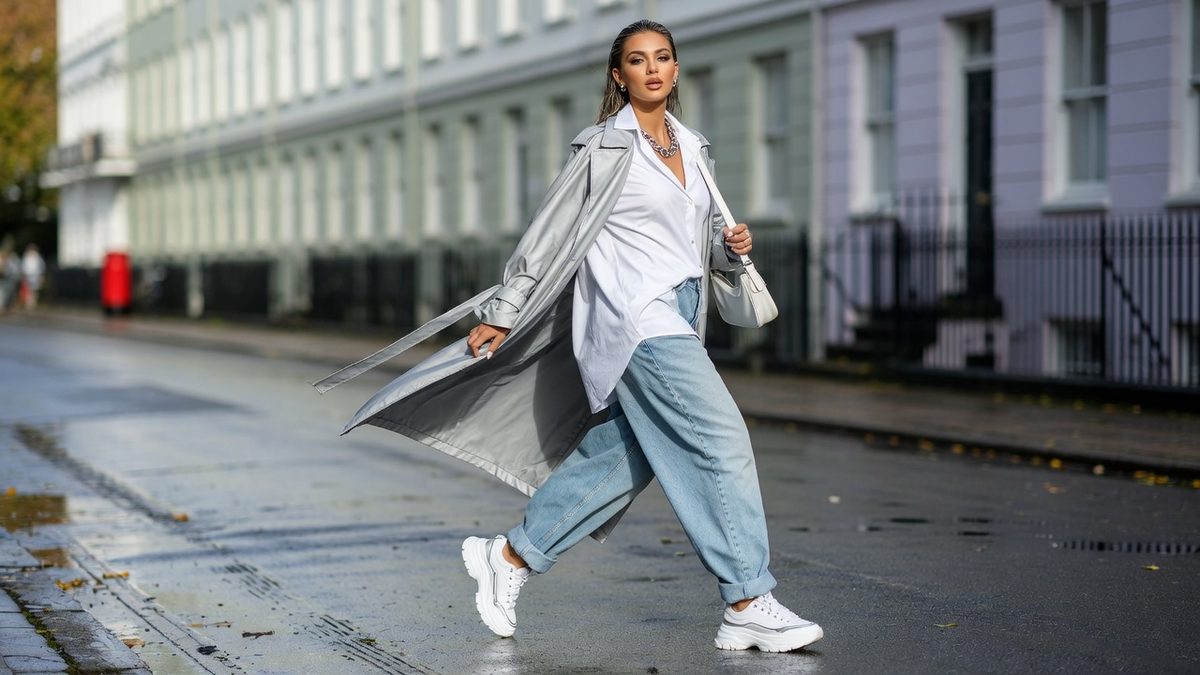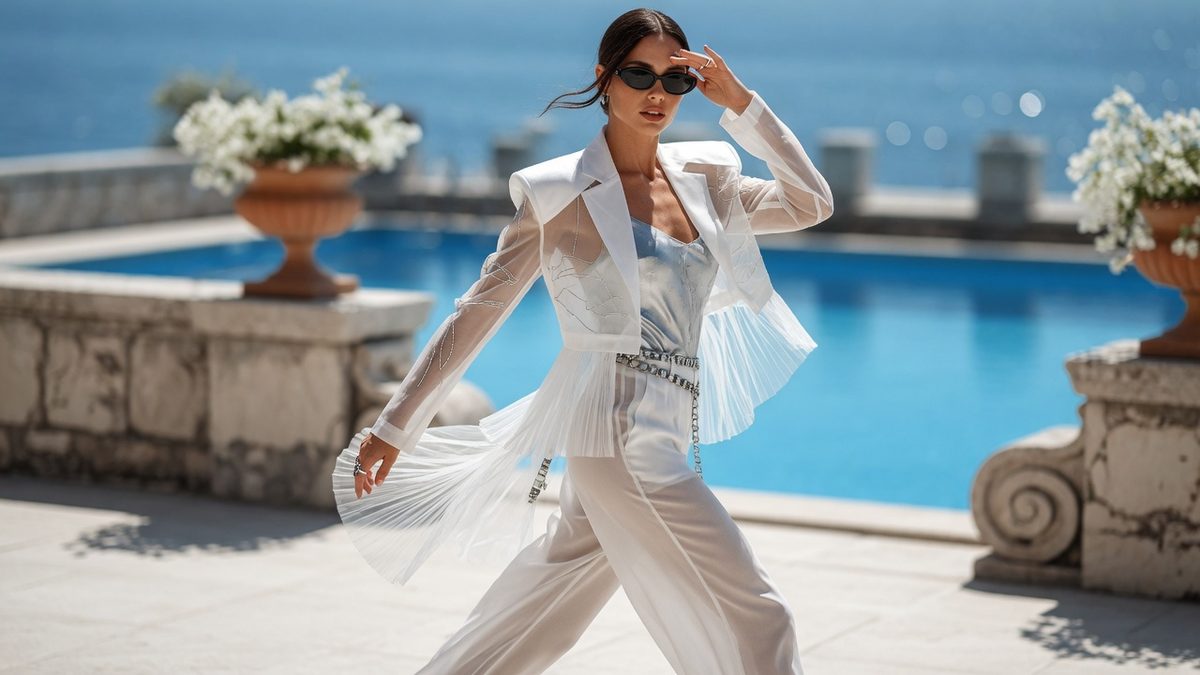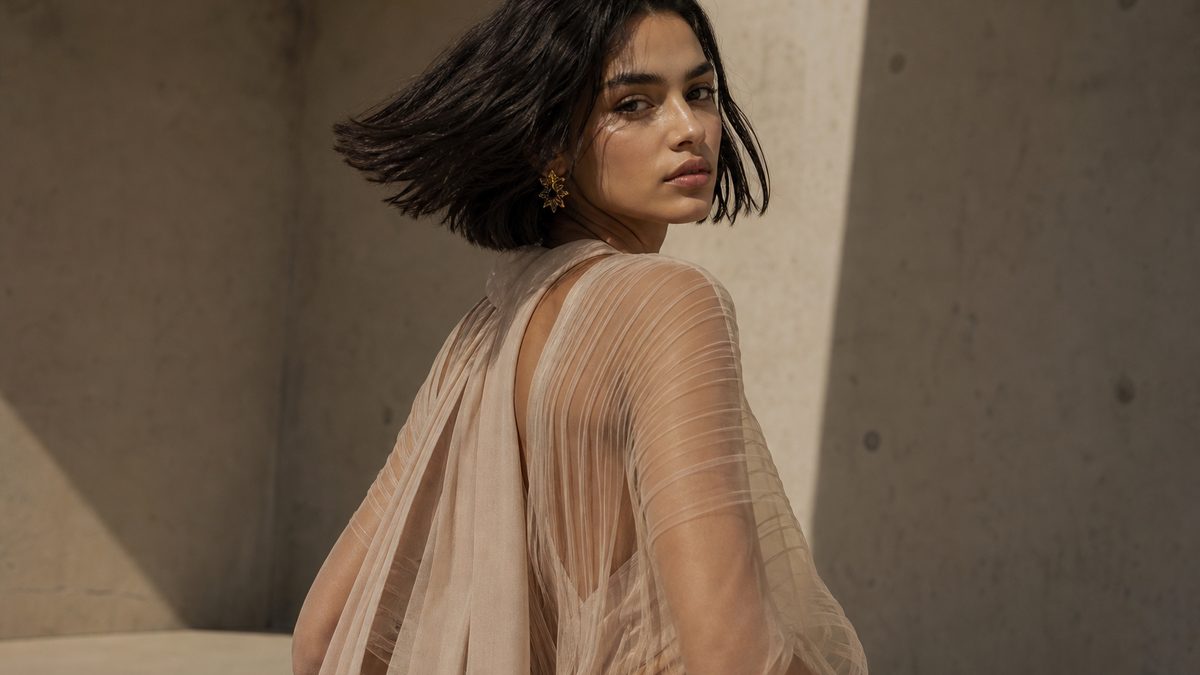
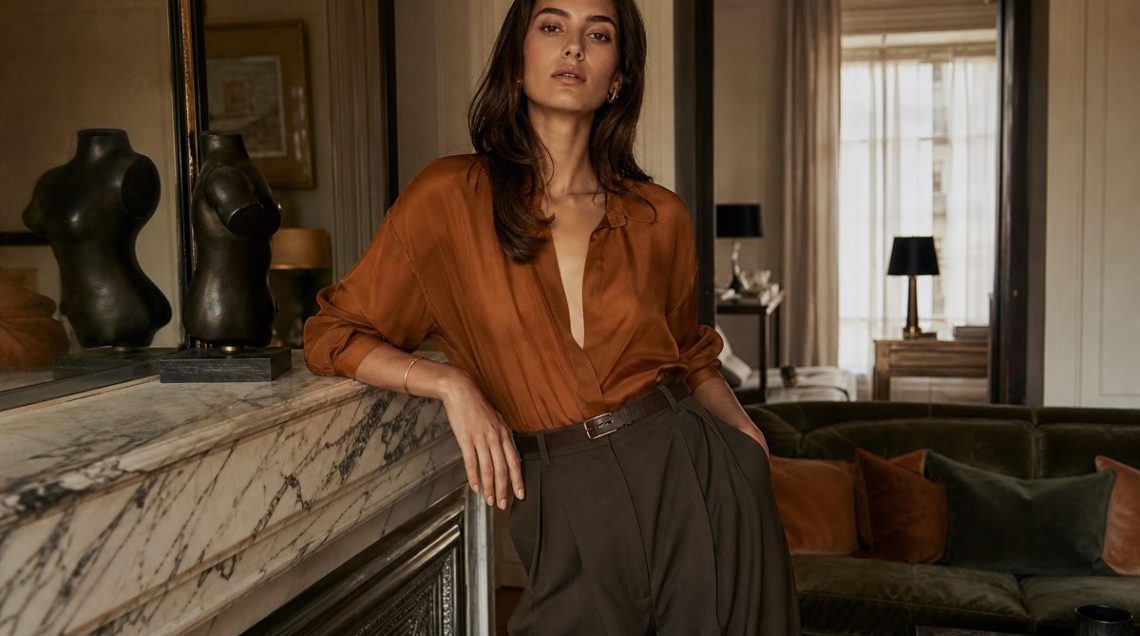
Spring/Summer 2026 has anointed an unlikely style icon: your minimalist friend. Not a celebrity, not a creative director, but the woman in your group chat who texts back a single full stop when you ask if she likes your new leopard-print midi. She’s the one who owns four near-identical blazers in chocolate, muted olive, pale pink and off-white, rotates the same three pairs of tailored shorts, and can identify cupro by touch in a Zara changing room. And right now, she’s everywhere, from The Row’s SS26 Alma and Dalia baguette bags to Toteme’s oversized blazer-and-short pairings that have become the visual shorthand for this season’s minimalist resurgence.
The search term ‘my minimalist friend likes’ has exploded across UK Google, surfacing a cultural appetite for exactitude over exuberance. This isn’t dopamine dressing’s antidote; it’s a parallel reality. Where maximalists layer print on print, your minimalist friend layers double-faced wool on Scottish cashmere, both in the same shade of ultraviolet. Where influencers buy trending pieces, she applies the three-item test: nothing enters her wardrobe unless it works with at least three things already in it. The result is a uniform that looks effortless but is architecturally precise, and SS26 runways from Khaite to Victoria Beckham have taken note.
The signal: how ‘my minimalist friend’ became SS26’s search-bar muse
The phrase itself, ‘my minimalist friend likes’, reads like the opening clause of a styling confession. It’s aspirational ventriloquism: women Googling what their most disciplined, least fussy peer would approve of. London stylists report clients requesting ‘the friend edit’, a curation exercise where only pieces that pass the minimalist-friend litmus test make the final rail. COS, Studio Nicholson and With Nothing Underneath, the British labels beloved by fashion editors for their architectural cuts and muted palettes, have become the entry points. But the real status plays are happening at The Row, where Alma and Dalia baguette bags in chocolate brown sold out within hours of the SS26 show, and at Toteme, whose blazer-shirt-shorts trifecta is now the minimalist’s answer to a capsule wardrobe.
What’s unusual is the specificity of the search behaviour. Users aren’t typing ‘minimalist fashion’ or ‘quiet luxury brands’, they’re invoking a fictional peer whose taste they trust more than any algorithm. This is personality-as-filter, and it’s rewriting how UK consumers navigate spring buys. The minimalist friend doesn’t follow trends; she adopts systems. Her SS26 palette has expanded beyond beige and grey to include chocolate brown, muted olive, pale pink and ultraviolet, colours that photograph as neutrals but carry a whisper of intention. She shops Arket for layering basics, Uniqlo for cupro slip dresses, Mango for tailored shorts, then splurges on a single Jil Sander coat that will outlast five trend cycles.
Celebrity minimalists like Sofia Richie Grainge have codified the look on Instagram, but the real blueprint comes from London-based consultants like Natalie Kingham, who told Who What Wear that the minimalist muse is a ‘Purist’, someone who dresses for her future self, not her current mood. That future self, it turns out, wears a lot of Lisa Yang cashmere and owns one sculptural ceramic earring that breaks every minimalist rule she claims to live by.
The cultural roots: quiet luxury is not minimalism (and she’s annoyed you conflated them)
Here’s the schism your minimalist friend wants you to understand: quiet luxury is an aesthetic; minimalism is a philosophy. Quiet luxury says ‘I can afford The Row’. Minimalism says ‘I don’t need The Row, but if I buy it, I’ll wear it for a decade’. The former is about wealth signalling through logo-free restraint. The latter is about cognitive load reduction, a Japanese ‘ma’ approach to negative space in the wardrobe. Your minimalist friend is quietly furious that Succession made her lifestyle look like cosplay for private equity wives.
The distinction matters because it dictates what enters the wardrobe. A quiet luxury adherent might buy a Khaite cashmere sweater because it photographs well and costs enough to confer status. A minimalist buys it because the double-faced construction means she can wear it inside-out for two different necklines, and the fabric won’t pill for five years. She’s not opposed to investment pieces, she owns Tove Studio trousers and a Joseph trench, but every purchase is an engineering decision, not an emotional one. Fforme, the New York label positioned as a Toteme alternative, has built its entire SS26 campaign around this tension: ‘Quiet luxury whispers. Minimalism doesn’t need to speak.’
This is also why your minimalist friend is the only person in your circle who can explain why Issey Miyake’s pleated pieces aren’t minimalist (too much visual texture) but his A-POC knits are (form follows function). She understands fabric taxonomy: cupro drapes like silk but washes like cotton; double-faced wool eliminates the need for lining; Scottish cashmere from Lisa Yang is warmer per gram than Italian. These are not styling tips. They’re material sciences.
How to wear it: the three-item test, cupro fluency and one loud accessory
The minimalist friend’s first rule is the three-item test, a discipline sourced by London stylists but rarely codified: she won’t buy anything that doesn’t work with at least three pieces she already owns. A pale pink Studio Nicholson shirt must pair with her muted olive shorts, her chocolate trousers and her off-white blazer, or it’s returned. This eliminates impulse buys and creates a wardrobe where every piece is a interchangeable module. Start by auditing your current rotation, if a garment only works in one outfit, it’s a liability, not an asset.
Second, develop cupro fluency. Your minimalist friend shops by hand, not by eye. She can distinguish cupro from polyester-viscose blends in three seconds of touch, and she knows that real cupro has a weight and a coolness that synthetics fake badly. Arket’s cupro slip dresses (under £100) are her entry-level recommendation; Lisa Yang’s cupro-cashmere hybrids are the grail. Fabric literacy is the minimalist’s edge in fast-fashion environments, she finds the one well-constructed piece on a rail of two hundred.
Finally, the rule she breaks: one loud accessory. The minimalist wardrobe is a monochrome stage, and the single disruptor, a chunky sculptural earring, a mustard baguette bag, a pair of oxblood loafers, becomes the only thing anyone remembers. This is where Toteme’s SS26 oversized blazer-and-short look delivers: same neutral palette, but the proportion is theatrical enough to read as a statement. Your minimalist friend isn’t afraid of drama; she’s just strategic about where it lives. And right now, that strategy is the one the rest of the UK is trying to reverse-engineer, one search query at a time.