
While London Fashion Week attendees were still debating kitten heels versus ballet flats, Copenhagen’s SS26 street style dropped a different playbook entirely. The Danish capital’s shows, anchored by Ganni, Stine Goya, and Rotate Birger Christensen, served up a masterclass in proportion, texture-mixing, and the kind of ‘effortless’ dressing that’s anything but accidental. And the UK high street, it turns out, has quietly stocked every single piece you need to replicate it.
This isn’t about chasing Scandi minimalism or hunting down another beige trench. It’s about cracking the actual formula that makes Copenhagen street style identifiable at fifty paces, and doing it with brands already on your doorstep: Arket, COS, & Other Stories, and Weekday. All H&M Group, all Copenhagen-adjacent in aesthetic, all radically cheaper than the Toteme and Acne Studios pieces they’re styled alongside at CIFF.
Inside Copenhagen’s SS26 street style: the looks I copied first
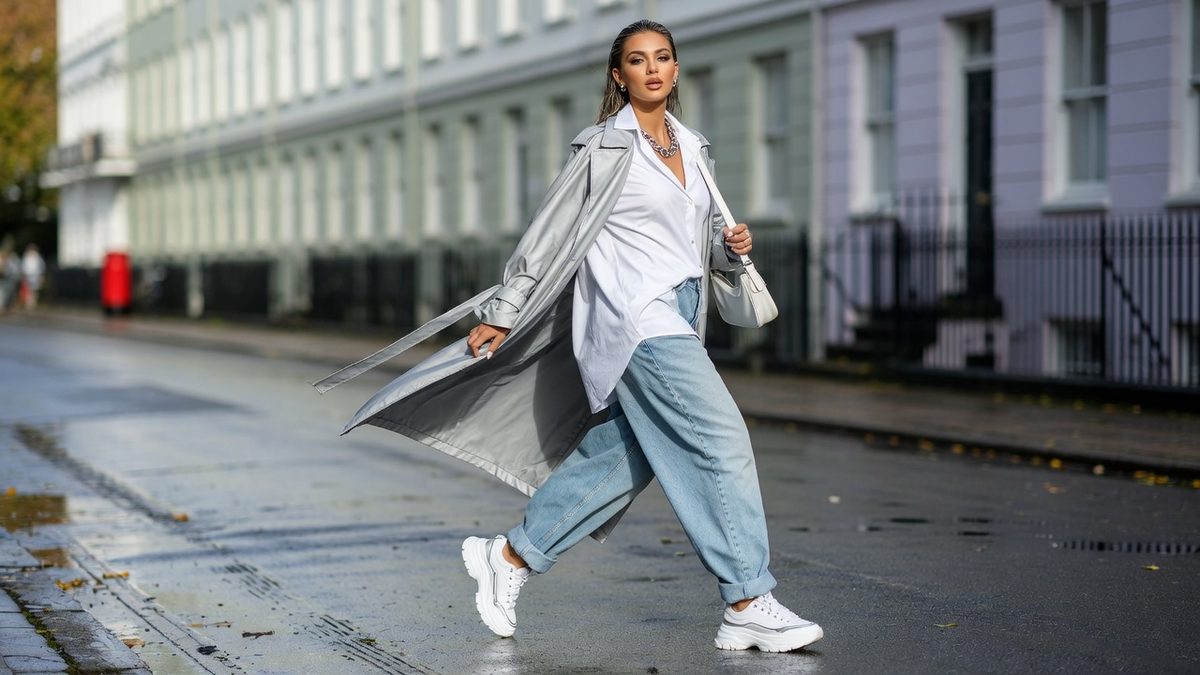
The first outfit I recreated came straight from the pavement outside Cecilie Bahnsen’s show: oversized parachute-fabric denim (wide-leg, low-slung, powder blue) paired with a cropped, fitted rib knit in charcoal. The proportions are everything here, one volume piece maximum. COS delivered the knit for £55, Weekday the denim for £60. The original worn by a Saks Potts PR featured Baum und Pferdgarten denim at triple the price, but the silhouette is identical.
Look two was pure Holzweiler energy: a fuzzy mohair vest layered over a crisp white poplin shirt, straight-cut black trousers, and chunky loafers. The texture contrast, soft over structured, is Copenhagen’s real signature, not the neutral palette everyone fixates on. & Other Stories’ mohair vest (£75) and Arket’s cotton poplin shirt (£49) nailed it. The trousers were Weekday’s tailored wool blend, £70, worn slightly cropped to show ankle.
Third was the wildcard: lace over leather. A sheer black lace midi skirt (A. Roege Hove-inspired) worn with a fitted leather tank and flat sandals. This look appeared outside OpéraSPORT’s presentation and immediately ended the myth that Copenhagen dressing is ‘safe’. COS had the lace skirt for £89, & Other Stories the leather tank for £135. The sandals were Arket, £69, and the entire outfit cost less than one piece from Anne Sofie Madsen’s mainline collection.
The ‘volume equation’, why Scandi style isn’t actually minimal
Here’s the proportion rule that every CPHFW attendee knows but nobody writes about: one oversized piece per outfit, everything else fitted or straight-cut. Baggy denim gets a cropped fitted knit. An oversized blazer gets slim trousers and a tight tank. Wide trousers demand a cropped, body-skimming top. The equation never breaks. When you see two loose pieces paired together, you’re looking at a tourist, not a Dane.
This is maximalist dressing with a restraint edit, and it’s the exact opposite of the ‘Scandi minimalism’ myth perpetuated by mood boards and Pinterest saves. The attendees I watched outside Freya Dalsjø and Mfpen shows were wearing oversized striped shirts tucked into voluminous linen trousers, but the shirts were half-tucked to reveal fitted waistbands, and the trousers were hemmed above the ankle to show skin. Every outfit had breathing room built in, but also a hard stop on volume.
The fabric-mixing is equally deliberate. Parachute nylon denim (Gestuz does this brilliantly) paired with chunky hand-knit textures. Crisp cotton poplin layered under fuzzy mohair. Smooth leather next to rough lace. The textures do the talking, which is why colour-blocking feels redundant. When Studio Bille and Myklé scarves appeared as accessories, they were the only pops of pattern in otherwise texture-heavy outfits.
How to build a Copenhagen-approved outfit on the UK high street
Start with the four-brand rule: Arket, COS, & Other Stories, Weekday. All are stocked in major UK cities, all ship next-day, and all operate within the Copenhagen aesthetic universe without requiring a plane ticket or a Toteme budget. Pick one oversized anchor piece, wide denim, an oversized blazer, a voluminous skirt, then build everything else fitted or straight-cut around it.
Layer textures, not colours. A fuzzy knit vest over a crisp shirt will always read more Copenhagen than a tonal beige-on-beige situation. Add one statement accessory (Myklé-style scarf, chunky loafers, a structured leather bag from Fine Chaos if you’re splashing out) and stop there. The Danes don’t over-accessorise. They pick one hero piece and let the proportions do the rest.
Final rule: nothing matchy-matchy. If your trousers are parachute nylon, your top should be rib knit or poplin. If your skirt is lace, your top is leather or cotton jersey. The contrast creates the tension that makes the outfit work. And when NN07 or Acne Studios drops a new collection next season, you’ll already know exactly which high street piece can replicate it, because the formula doesn’t change, only the fabric weights and hemlines shift slightly with the calendar.