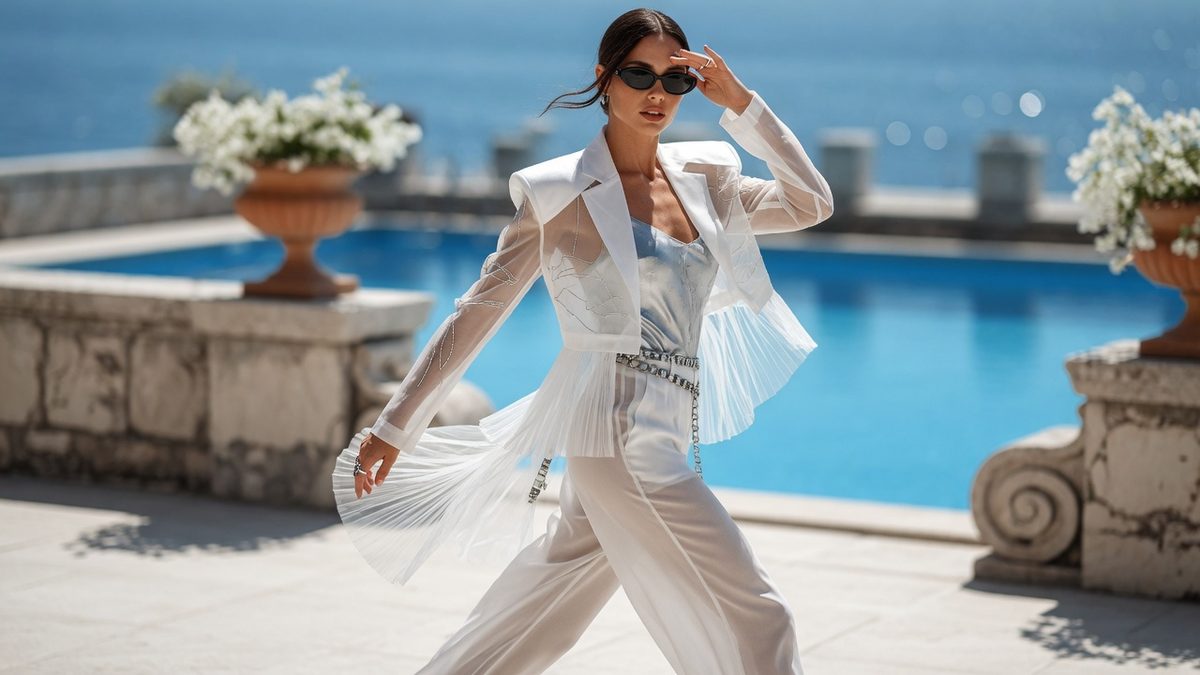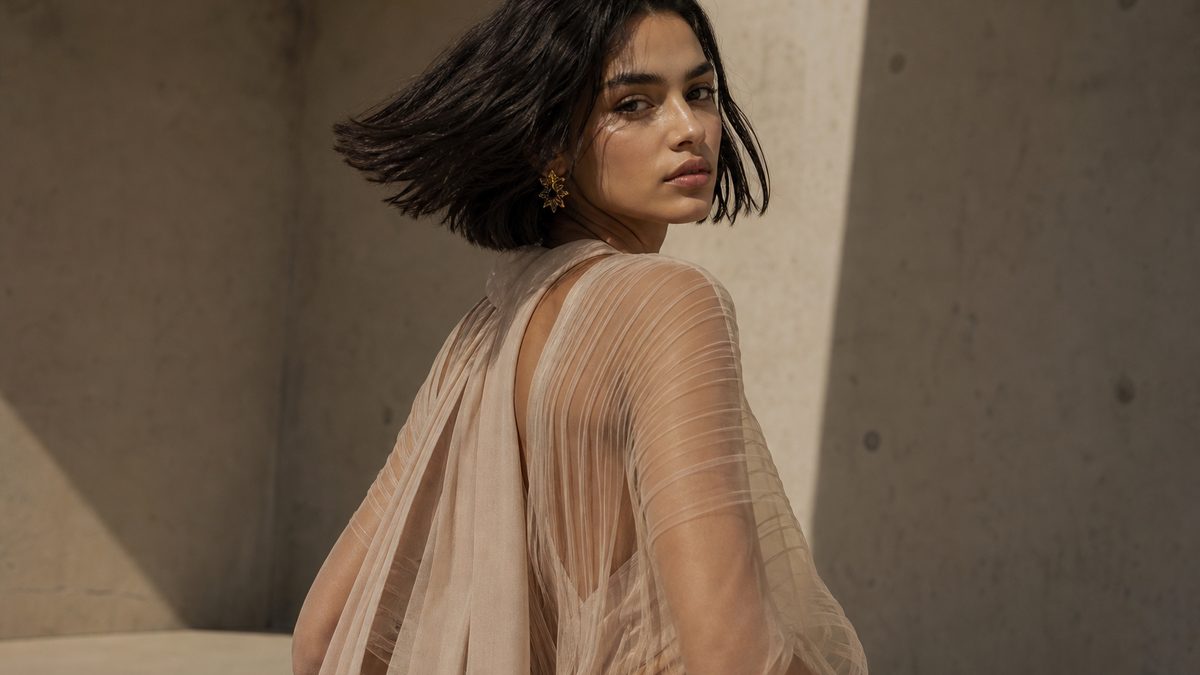


Chartreuse is the most divisive colour on the British high street this June, and the honest answer to “can I wear it” depends on three things: the sub-shade you pick, where the colour sits in relation to your face, and which summer event you are dressing for. Reiss, Arket, COS and & Other Stories are all stocking versions of it, Simone Rocha and Erdem have shown it on London runways, and the question Googled most often in the UK right now is whether it works for fair, cool-toned British complexions. Below, a stylist’s breakdown of the sub-shades, the skin-tone truth, and three precise occasion formulas built around the British summer diary.
The three sub-shades of chartreuse (and why the distinction matters)
Calling everything “chartreuse” is the problem. There are three distinct versions on the rails this summer, and they behave very differently against skin.
- Golden chartreuse leans yellow. Warm, almost mustard-adjacent in flat British light. Reiss’s Priya twill suiting sits here.
- Acid or neon-lime chartreuse is the sharpest, the one that reads electric under cloud cover. Simone Rocha used a version of this on her London show.
- Blue-leaning chartreuse (sometimes mis-shelved as sage-adjacent) has a cool, slightly mineral cast. This is the one that quietly flatters pale British skin.
If you have only ever tried the golden version against your face and decided chartreuse “isn’t you”, try the blue-leaning one before writing the colour off entirely. They are not the same garment.
The honest skin-tone and hair-colour breakdown
Most coverage of this trend tells you there is a version for everyone. There isn’t, quite. Here is the actual map.
Cool-toned fair skin with pink undertones. This is the combination that genuinely risks looking sallow in golden chartreuse, because the yellow base pulls the pink in your skin towards grey. The fix is to keep the colour below the waist (a midi skirt, trousers, a shoe) or, if you want it near the face, reach for the blue-leaning sub-shade. A pale, cool-toned woman in a sharper, cooler chartreuse can look genuinely modern; the same woman in golden chartreuse often looks tired.
Warm-toned fair skin with peach or golden undertones. Golden chartreuse near the face works here. A blouse, a blazer, a scarf. Avoid the neon-lime, which fights with the warmth already in the skin.
Olive and medium skin. The most flexible category. Any of the three sub-shades works; the neon-lime is the most flattering against olive undertones because the slight green in the skin and the green in the dye agree with each other.
Deep skin tones with warm undertones. Golden chartreuse looks expensive here, full stop. This is the one combination that genuinely carries head-to-toe chartreuse without compromise.
Deep skin tones with cool undertones. Blue-leaning chartreuse, or the neon-lime. Stay away from the mustard end.
Hair colour matters too, and almost no one mentions it. Auburn and copper-red hair clashes with the yellow base in golden chartreuse: the two warm tones compete and neither wins. The fix for redheads is the cooler, greener sub-shade. Ash-blonde and dark brunette both complement the full-strength hue, which is why a pale, cool-toned brunette like Daisy Edgar-Jones is the natural reference point for the sharper, cooler version of this trend.
Fabric truth for British summer light
A Pinterest pin linking to W Magazine’s “Chartreuse Is the New Slime Green” editorial, showcasing chartreuse fashion week street style looks that visually anchor the article’s case for the colour’s enduring runway relevance into summer 2026.
Britain’s flat grey light is unkind to shiny saturated colour. Polyester satin in chartreuse, the kind that photographs well under studio lights, can look garish on a drizzly day in W1. Matte natural fibres (linen, cotton poplin, crêpe de chine, dupion, broderie anglaise) read more expensive and more wearable under overcast skies. Save the satin for evening events indoors, where artificial light brings the lustre back.
There is also a practical question for Glastonbury specifically: a neon polyester satin will not survive a rain-drenched field. A waxed cotton or matte ripstop will.
Want this kind of frank, stylist-led trend breakdown in your inbox every week? Our Mūsmūs newsletter sends one considered edit each Friday: what is genuinely worth buying on the British high street, what to skip, and how to style what you already own for the events actually in your diary. No hype, no filler, just the styling logic. Sign up below.
Formula one: Royal Ascot (16 to 20 June)
The complication this year is that Royal Ascot has named Bright Tomato as its inaugural Colour of the Year, and Gold Cup Day on Thursday 18 June is the day racegoers are specifically encouraged to wear it. Chartreuse is technically a counter-move. The smart play is to wear chartreuse as the dominant colour and echo (not match) Bright Tomato in the millinery or a small accent.
For the Royal Enclosure, the dress code is non-negotiable: dresses or skirts of modest length (just above the knee or longer) with straps more than 1 inch, and hats rather than fascinators. That immediately eliminates most of the halterneck and strapless chartreuse dresses currently on the high street, including the Massimo Dutti halterneck doing the rounds on styling sites.
The compliant build:
- A golden-chartreuse column or A-line midi in a structured woven fabric (dupion, mikado, jacquard or ponte) with proper straps, or a sleeved jacket layered over a sleeveless dress. Reiss and Coast both stock options that read formal enough.
- A hat with at least a four-inch brim. A burgundy or deep oxblood hat against chartreuse is the smartest colour-clash combination of the season: bold, seasonally correct, and quietly nods to Bright Tomato without going full red.
- A block heel, not a stiletto. The car park, the lawn and the gravel between enclosures are not stiletto terrain.
Burgundy plus chartreuse is the pairing to commit to memory. It has gone viral on TikTok but has had almost no UK editorial treatment. It works because the deep red-brown anchors the acidity of the green and reads expensive rather than novelty.
Formula two: Glastonbury (25 to 29 June)
Glastonbury chartreuse is a different architecture entirely. The colour earns its place as outerwear because it is visible across a dark field at distance, but the fabric has to survive mud and drizzle.
- A waxed cotton or matte ripstop jacket in golden or acid chartreuse, worn over a black or charcoal vest and a black cargo or wide-leg trouser. Arket and COS both do utility outerwear in saturated tones that work here.
- Chunky boots in black or chocolate. Never a heel.
- If you want the colour lower down instead, a chartreuse cargo trouser in matte cotton with a black tee and a black cropped jacket reads intentional rather than costume.
Avoid satin, avoid anything that goes translucent when wet, avoid pale suede.
Formula three: a London garden party
The garden party is the easiest of the three because the dress code is softer and the light is usually kinder (gardens at golden hour flatter saturated colour in a way overcast lawns at noon do not).
- A linen or broderie-anglaise midi in a softer chartreuse-lime, proportioned to knee or just below. & Other Stories and Arket both stock versions in natural fibres.
- A flat or low block heel in tan, bone or chocolate. A chartreuse suede flat from Dune is the lowest-commitment way in if you are still sceptical of the trend: it keeps the colour away from the face and works against navy, brown or cream.
- Gold jewellery for warm undertones, brushed silver for cool. Keep it small. Chartreuse is already doing the talking.
Silhouette and proportion, briefly
Chartreuse is a high-saturation colour, and saturation adds perceived volume. On petite frames, restrict it to one zone: a midi skirt, a blazer, a shoe. Keep the other zone in a deep neutral (black, navy, chocolate, oxblood) to stop the colour swallowing the silhouette. On taller frames, full monochrome chartreuse works because the height distributes the colour mass across a longer line. This is why the head-to-toe Reiss suit reads confident on a tall woman and overwhelming on a 5’3″ one wearing the same cut.
The one-piece commitment, if you want to try it now
If you are reading this two weeks before Ascot and wondering where to start, the single best entry point is a chartreuse suede shoe or small bag worn with navy or chocolate brown. It works across every skin tone because it keeps the colour off the face, costs less than a dress, and tells you within one wear whether you want to commit further. From there, a blazer. From there, the midi. The trend rewards staging, not panic-buying.